
Stunning 90s Fashion Trends That Transformed Style Forever
Introduction
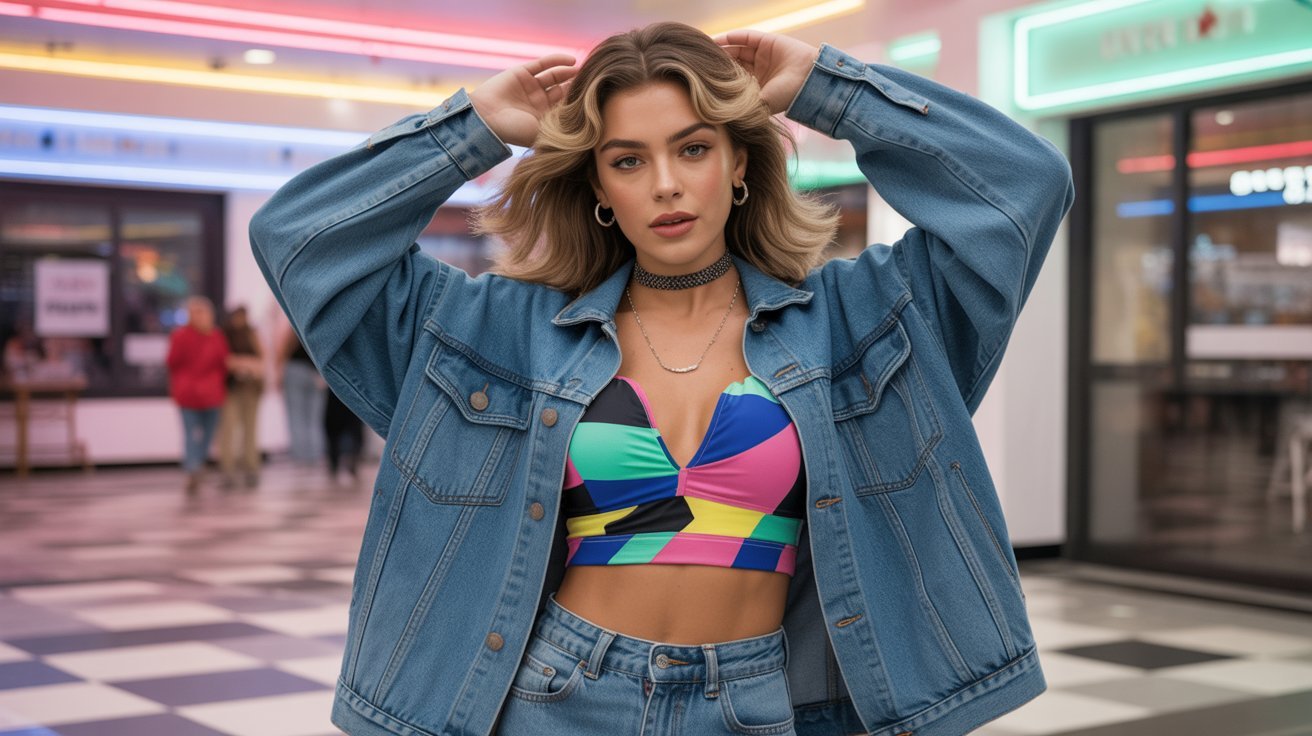
Remember when everyone wore chokers, platform shoes, and baggy jeans without a second thought? The 90s was a decade that completely changed how we think about 90s fashion. It wasn’t just about following rules anymore. It was about breaking them.
If you flip through old photos from the 90s, you’ll notice something incredible. People weren’t afraid to experiment. They mixed high 90s fashion with streetwear. They paired grunge flannel with designer pieces. This decade gave us some of the most iconic looks that continue to influence what you see in stores today.
The 90s fashion scene was raw, rebellious, and unapologetically diverse. From the runways of New York to the streets of Los Angeles, style became more democratic. You didn’t need a massive budget to look cool. You just needed attitude and creativity. Whether you lived through this era or you’re discovering it now, understanding 90s fashion helps you appreciate how modern style evolved into what it is today.
The Grunge Movement That Changed Everything
Grunge didn’t just appear out of nowhere. It emerged from Seattle’s music scene and quickly became one of the most influential fashion movements of the decade. Bands like Nirvana and Pearl Jam weren’t trying to make fashion statements. They just wore what felt comfortable and authentic.
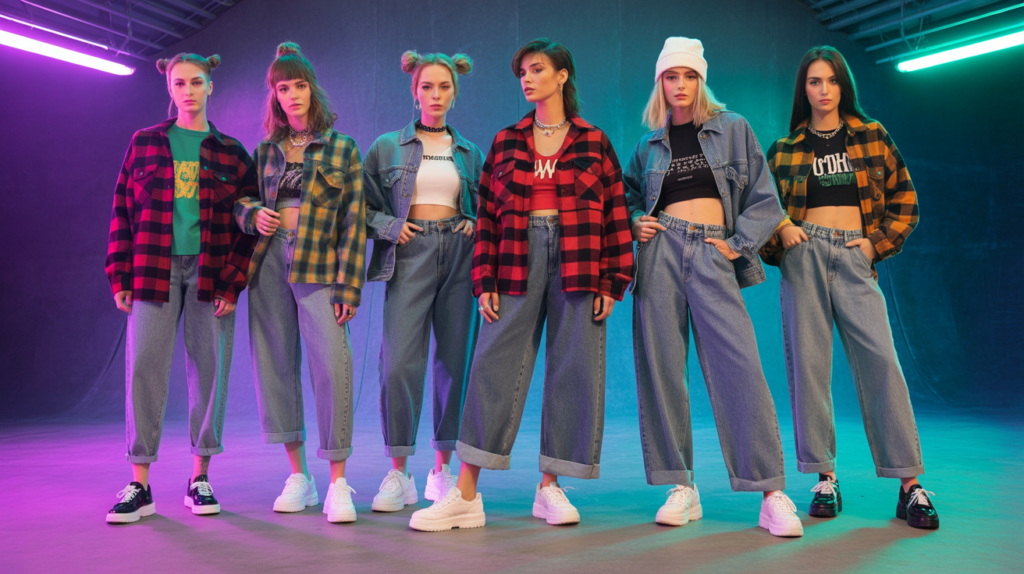
That authenticity became the foundation of grunge style. Flannel shirts became the uniform of an entire generation. You’d throw one over a band tee, pair it with ripped jeans, and you were set. The beauty of grunge was its accessibility. You could find everything you needed at thrift stores for just a few dollars.
Combat boots and Doc Martens replaced preppy loafers. These weren’t delicate shoes. They were sturdy, practical, and made a statement with every step. The heavier, the better. You’d see them paired with floral dresses, creating that perfectly imperfect contrast that defined the era.
Oversized silhouettes dominated grunge 90s fashion. Nothing was supposed to fit perfectly. Baggy sweaters, loose jeans, and layers upon layers created a look that said you didn’t care about traditional beauty standards. But here’s the irony. This “I don’t care” aesthetic required careful curation. You had to look effortlessly cool, which actually took effort.
Minimalism Meets High Fashion
While grunge ruled the streets, something completely different was happening on runways. Minimalism emerged as the sophisticated counterpoint to grunge’s chaos. Designers like Calvin Klein and Jil Sander championed clean lines and neutral palettes.
The slip dress became an iconic piece of 90s minimalist fashion. Kate Moss made it famous, wearing simple silk dresses that looked elegant yet understated. You could dress it up with heels or down with sneakers. This versatility made it perfect for the modern woman who wanted options.
Neutral colors dominated minimalist wardrobes. Black, white, beige, and gray became staples. The focus shifted from loud patterns to quality fabrics and impeccable tailoring. A simple white tee and well-fitted jeans could make as much impact as an elaborate outfit.
Minimalism in the 90s wasn’t about being boring. It was about intentionality. Every piece in your wardrobe served a purpose. This approach to fashion emphasized quality over quantity, a philosophy that feels especially relevant in today’s sustainable fashion conversations.
Hip-Hop Style Goes Mainstream
Hip-hop fashion in the 90s was bold, oversized, and impossible to ignore. What started in urban communities became a global phenomenon that influenced how everyone dressed. Baggy jeans weren’t just pants. They were a cultural statement.
Brands like FUBU, Cross Colours, and Karl Kani created clothing specifically for the hip-hop community. These weren’t hand-me-downs from mainstream fashion. They were original designs that celebrated Black culture and creativity. Wearing these brands meant you understood the culture and respected its origins.
Tracksuits became high fashion. Brands like Adidas and Puma saw their athletic wear transformed into everyday style staples. The matching tracksuit, worn with fresh sneakers, became a look that transcended sports. It represented comfort meeting style in the most effortless way possible.
Oversized everything was the rule. Your jeans should pool at your ankles. Your shirts should hang well past your waist. Your jackets should look like you borrowed them from someone twice your size. This aesthetic rejected the fitted, tailored looks of previous decades and created something entirely new.
Gold chains, hoop earrings, and baseball caps completed the look. Accessories weren’t subtle. They were meant to be seen and celebrated. Jewelry told your story and showed your success. The bigger and bolder, the better.
The Tech Wear Revolution
The late 90s brought an obsession with futuristic fashion. As the millennium approached, designers became fascinated with what clothing might look like in the year 2000. Metallic fabrics, vinyl, and PVC suddenly appeared everywhere.
Space age aesthetics influenced everything from everyday wear to high fashion. Designers experimented with unconventional materials. You’d see shirts made from reflective materials that caught the light in unexpected ways. Pants came in shiny vinyl that made noise when you walked.
The color palette shifted toward metallics and neons. Silver became as common as black. Bright colors returned after years of grunge neutrals and minimalist beige. Fashion became playful again, embracing a optimistic view of the future.
Tech accessories became fashion statements. Pagers clipped to belts. Chunky watches with multiple functions. Even early cell phones became style accessories rather than just communication tools. Technology and fashion merged in ways we’d never seen before.
Denim Everything Everywhere
The 90s took denim to new heights. Or maybe new lows, depending on your perspective. This wasn’t your parents’ denim. This was denim reimagined, reconstructed, and pushed to its absolute limits.
Double denim became acceptable and even fashionable. You could wear a denim jacket over a denim shirt with denim jeans and somehow make it work. This Canadian tuxedo, once considered a fashion disaster, became a legitimate style choice.
Low-rise jeans changed everything. They sat on your hips rather than your waist. You needed a flat stomach and confidence to pull them off. Brands like Diesel and Miss Sixty made low-rise jeans that defined late 90s style.
Embellished denim added personality to your outfit. Rhinestones, embroidery, and patches turned basic jeans into statement pieces. You could customize your denim to reflect your personality. Some people covered their jeans in band patches. Others added glitter and jewels.
Different washes and treatments created variety. Acid wash came back briefly. Stone washing created that perfectly worn look. Bleached spots and intentional tears made new jeans look vintage. The more distressed, the better.
Accessories That Defined The Decade
Accessories in the 90s were never subtle. They were bold declarations of your style and personality. Chokers wrapped around nearly every neck in America. Black velvet, plastic, or metal, it didn’t matter. You needed one.
Platform shoes gave everyone extra height. Spice Girls made them famous, but everyone from your favorite celebrities to your classmates wore them. Some platforms were so tall they became safety hazards. But they looked amazing, and that’s what mattered.
Mini backpacks replaced purses for many people. These tiny bags could barely hold anything, but they looked cute. You’d wear them to school, to the mall, or to concerts. They were practical enough to be functional but small enough to be fashionable.
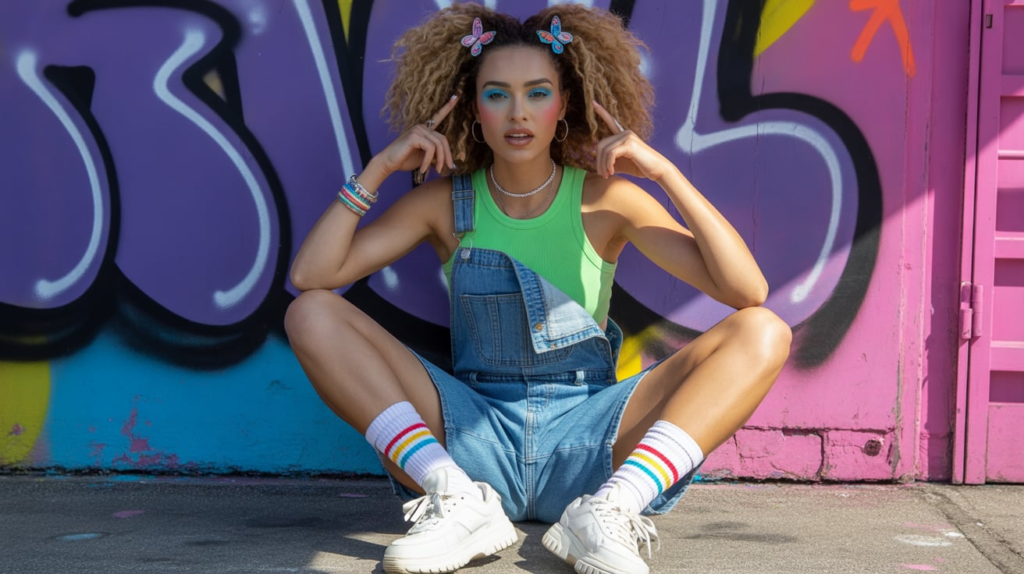
Butterfly clips scattered through hair created that carefree, youthful look. You’d use dozens of them to create patterns and designs. The more clips, the better. This hairstyle required patience and plenty of these tiny accessories.
Tiny sunglasses became a thing despite offering minimal sun protection. They were more about style than function. Celebrities wore them, so everyone else followed. These glasses were often tinted in unusual colors like pink, blue, or yellow.
The Influence Of Pop Culture Icons
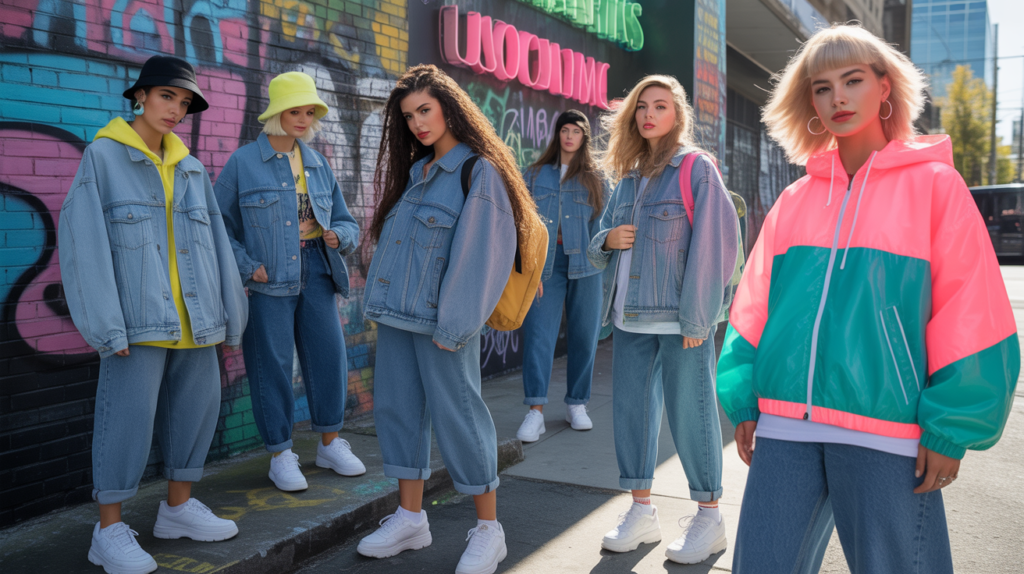
Pop culture shaped 90s fashion more than any designer could. Television shows, music videos, and movies created style moments that everyone wanted to recreate. “Friends” influenced casual wear. Rachel’s haircut became more famous than some movie stars.
The Spice Girls brought girl power and platform shoes to the mainstream. Each member had a distinct style that fans could identify with and copy. Sporty, Scary, Baby, Ginger, and Posh Spice showed that one group could encompass multiple aesthetics.
Will Smith in “The Fresh Prince of Bel-Air” showcased colorful, bold streetwear. His character’s wardrobe became a blueprint for fun, confident dressing. Bright colors, pattern mixing, and oversized silhouettes all got the Will Smith treatment.
Supermodels like Kate Moss, Naomi Campbell, and Cindy Crawford weren’t just fashion models. They were cultural icons who influenced how millions of people dressed. Their off-duty style was just as important as their runway looks.
Musicians influenced fashion in unprecedented ways. Kurt Cobain made thrift store shopping cool. Tupac Shakur elevated bandanas and Timberlands. Britney Spears introduced school girl chic, while TLC brought futuristic R&B style to music videos.
Color Palettes And Patterns
The 90s didn’t commit to one color story. Different subcultures embraced different palettes. Grunge stuck with earth tones and dark colors. Minimalists chose neutrals and whites. Hip-hop fashion celebrated bold primary colors.
Tie-dye made a major comeback. This wasn’t just a hippie holdover from the 60s. It was reimagined and made fresh again. You’d see tie-dye on everything from shirts to dresses to accessories. Making your own tie-dye became a popular activity.
Plaid and flannel patterns dominated casual wear. These patterns came in every color combination imaginable. Red and black became the classic choice, but you’d also see green, blue, and purple variations. Plaid wasn’t reserved for shirts either. It appeared on pants, skirts, and even shoes.
Neon colors peaked in the early 90s before fading toward more subdued tones. Hot pink, electric blue, and lime green were everywhere. These colors didn’t whisper. They screamed for attention and usually got it.
Animal prints added edge to any outfit. Leopard print became especially popular. It appeared on everything from coats to accessories. Zebra stripes and cow prints also had their moments in the spotlight.
Beauty And Hair Trends
Fashion isn’t complete without talking about beauty trends. The 90s brought distinctive makeup looks that matched the era’s bold fashion choices. Brown lipstick and lip liner became iconic. Darker shades paired with lighter centers created that signature 90s lip.
Thin eyebrows replaced the fuller brows of previous decades. People plucked them into thin lines, sometimes almost to nothing. This trend is one that many people now regret, as eyebrows were slow to grow back.
Hairstyles were just as dramatic as the clothing. The Rachel haircut influenced millions of women to visit their hairdressers with photos of Jennifer Aniston. Chunky highlights in contrasting colors created dimension. Blonde streaks in dark hair or dark streaks in blonde hair became common.
Men’s hair got experimental too. Frosted tips became popular thanks to boy bands like NSYNC. Cornrows and braids crossed cultural boundaries. Long hair on men was acceptable and even fashionable in certain circles.
Hair accessories added personality to any style. Scrunchies weren’t just functional. They were fashion statements. You could match them to your outfit or use them to add a pop of color. Zigzag headbands kept hair back while adding a trendy touch.
Gender Fluidity In 90s Fashion
The 90s started conversations about gender in fashion that continue today. Androgynous looks became more acceptable. Women borrowed from men’s wardrobes regularly. Oversized button-downs, baggy jeans, and boxer shorts became unisex staples.
Designers like Jean Paul Gaultier challenged traditional gender norms on the runway. Men wore skirts and dresses in high fashion contexts. While this didn’t immediately translate to mainstream fashion, it planted seeds for future change.
Unisex fragrances like CK One celebrated the idea that scent didn’t need to be gendered. This represented a broader cultural shift toward questioning traditional categories. Fashion became more about personal expression than following prescribed rules.
Women in power suits redefined professional wear. The suit wasn’t just for men anymore. Designers created feminine versions that maintained power and authority while fitting women’s bodies properly. This wasn’t about copying men. It was about claiming equal space in professional environments.
The Athletic Wear Explosion
Athletic brands became fashion brands in the 90s. You didn’t need to play sports to wear sports clothing. Sneakers became collectibles rather than just functional footwear. Limited editions and collaborations made certain shoes highly valuable.
Nike Air Jordans transcended basketball. They became cultural symbols that represented success and style. People camped outside stores for new releases. The sneaker culture that dominates today started in the 90s.
Windbreakers and track pants left the gym. You’d wear them to school, to the mall, or just hanging out. They were comfortable and looked good. Brands covered these pieces with logos and branding, turning wearers into walking advertisements.
Sports jerseys became everyday wear. Basketball and football jerseys appeared everywhere, even on people who’d never played the sport. This represented the growing influence of sports culture on mainstream fashion.
Sustainable Fashion Before It Was Trendy
Thrift shopping in the 90s wasn’t primarily about sustainability. It was about finding unique pieces and saving money. But this practice laid groundwork for today’s vintage and sustainable fashion movements.
Vintage clothing became cool rather than just cheap. You could find one of a kind pieces that no one else had. Band tees from the 70s, leather jackets from the 80s, and unique accessories became treasures worth hunting for.
Customization and DIY fashion encouraged people to modify their clothing. You’d cut your own jeans, add patches to jackets, and bleach shirts to create custom designs. This hands on approach to fashion created personal style that couldn’t be bought in stores.
The anti-fashion sentiment of grunge indirectly promoted sustainability. By rejecting fast fashion and embracing secondhand clothing, grunge kids accidentally became early adopters of sustainable practices. They proved you didn’t need to buy new to look good.
Regional Differences In 90s Style
Fashion in the 90s varied significantly by location. West Coast style differed from East Coast fashion. Southern states had their own take on trends. Regional differences added richness to the decade’s fashion landscape.
California brought laid back beach style to 90s fashion. Surfer brands like Quicksilver and Billabong influenced casual wear. Sun bleached hair, board shorts, and relaxed silhouettes reflected the lifestyle. This aesthetic spread beyond California but always maintained its coastal roots.
New York fashion leaned more toward hip-hop influences and minimalist chic. The city’s fashion scene encompassed both street style and high fashion. You’d see cutting edge looks that pushed boundaries alongside classic minimalist pieces.
The South maintained its own distinct style. Country influences appeared in mainstream fashion. Cowboy boots, denim, and Western inspired details created a look that felt both traditional and contemporary. This style eventually influenced mainstream fashion as country music grew in popularity.
How 90s Fashion Influences Today
Walk into any mall today and you’ll see 90s fashion everywhere. The revival isn’t just nostalgia. It’s recognition that the 90s got something right about style. Modern designers constantly reference this decade for inspiration.
Low-rise jeans have returned, though not quite as low as before. Gen Z has embraced them enthusiastically. Platform shoes appear in every shoe store. Chokers make appearances on runways and in street style. These aren’t exact replicas. They’re updated versions that work for today.
The mixing of high and low fashion that started in the 90s is now standard practice. You’ll pair designer pieces with fast fashion without thinking twice. This democratic approach to style feels normal now, but the 90s pioneered it.
Athleisure, one of today’s biggest trends, has direct roots in 90s athletic wear fashion. The idea that gym clothes could be everyday clothes started then. Now it’s a multi-billion dollar industry that continues to grow.
Conclusion
The 90s fashion scene was messy, experimental, and absolutely transformative. It gave you permission to mix styles that shouldn’t work together. It encouraged thrift shopping and DIY customization. It made fashion more accessible and democratic.
Whether you prefer grunge flannel, minimalist slip dresses, or bold hip-hop style, the 90s had something for everyone. This diversity made the decade special. Fashion wasn’t dictated by a single authority. It emerged from multiple communities and subcultures simultaneously.
Looking back at 90s fashion helps us understand where current trends come from. Those platform shoes in your closet? Thank the Spice Girls. Your favorite oversized flannel? That’s pure grunge influence. The way you mix athletic wear with regular clothes? The 90s pioneered that approach.
What’s your favorite 90s fashion trend? Have you brought any of these looks back into your wardrobe? The beauty of fashion is that everything eventually comes back around, usually with a modern twist that makes it fresh again.
FAQs
What were the most popular 90s fashion trends?
The most popular trends included grunge flannel and combat boots, minimalist slip dresses, oversized hip-hop clothing, low-rise jeans, platform shoes, and chokers. Athletic wear as everyday fashion also became mainstream during this decade.
Why did grunge fashion become so popular in the 90s?
Grunge fashion emerged from Seattle’s music scene and resonated because it felt authentic and anti-establishment. It rejected expensive, perfect fashion in favor of comfortable, accessible thrift store finds. The style represented a cultural shift toward valuing substance over superficial appearances.
How did 90s fashion differ from 80s fashion?
The 90s moved away from the 80s power dressing, bright neons, and structured silhouettes. Fashion became more relaxed, with looser fits and more muted colors. The 90s embraced minimalism and grunge, which contrasted sharply with the 80s excess and maximalism.
What accessories defined 90s fashion?
Chokers, platform shoes, mini backpacks, butterfly hair clips, tiny sunglasses, and scrunchies were essential 90s accessories. These pieces were bold and often prioritized style over function, creating distinctive looks that instantly evoke the decade.
Which celebrities influenced 90s fashion the most?
Kate Moss popularized minimalist heroin chic. The Spice Girls brought platform shoes and girl power style. Will Smith showcased bold streetwear. Kurt Cobain defined grunge aesthetics. Jennifer Aniston’s Rachel haircut became a cultural phenomenon. Tupac Shakur elevated hip-hop fashion.
Is 90s fashion coming back?
Yes, 90s fashion has experienced a major revival. Low-rise jeans, platform shoes, chokers, and slip dresses have all returned to stores. Many Gen Z consumers are embracing these trends, sometimes without knowing their original context. Designers regularly reference the 90s in their collections.
What were popular 90s clothing brands?
Popular brands included Calvin Klein, Tommy Hilfiger, FUBU, Gap, Abercrombie & Fitch, Diesel, Guess, and Nike. These brands defined different aspects of 90s style, from minimalism to hip-hop fashion to preppy casual wear.
How did hip-hop influence mainstream 90s fashion?
Hip-hop brought oversized clothing, athletic wear, and bold accessories into mainstream fashion. Brands like FUBU and Karl Kani created clothing specifically for this community. As hip-hop music grew in popularity, its fashion influence spread globally, affecting how everyone dressed.
What hairstyles were popular in the 90s?
Popular styles included the Rachel cut, frosted tips for men, chunky highlights, thin eyebrows, space buns, zigzag parts, and hair decorated with butterfly clips. Braids and cornrows also became more mainstream during this decade.
Why is 90s fashion considered iconic?
The 90s fashion is iconic because it represented freedom and experimentation. Multiple styles coexisted without one dominating. It democratized fashion by showing you could look cool without spending lots of money. The decade created lasting trends that continue influencing fashion today, proving its enduring impact.
Also Read : Ring Alarm System