
China Russia Veto UN Security Council Resolution on Strait of Hormuz
Introduction
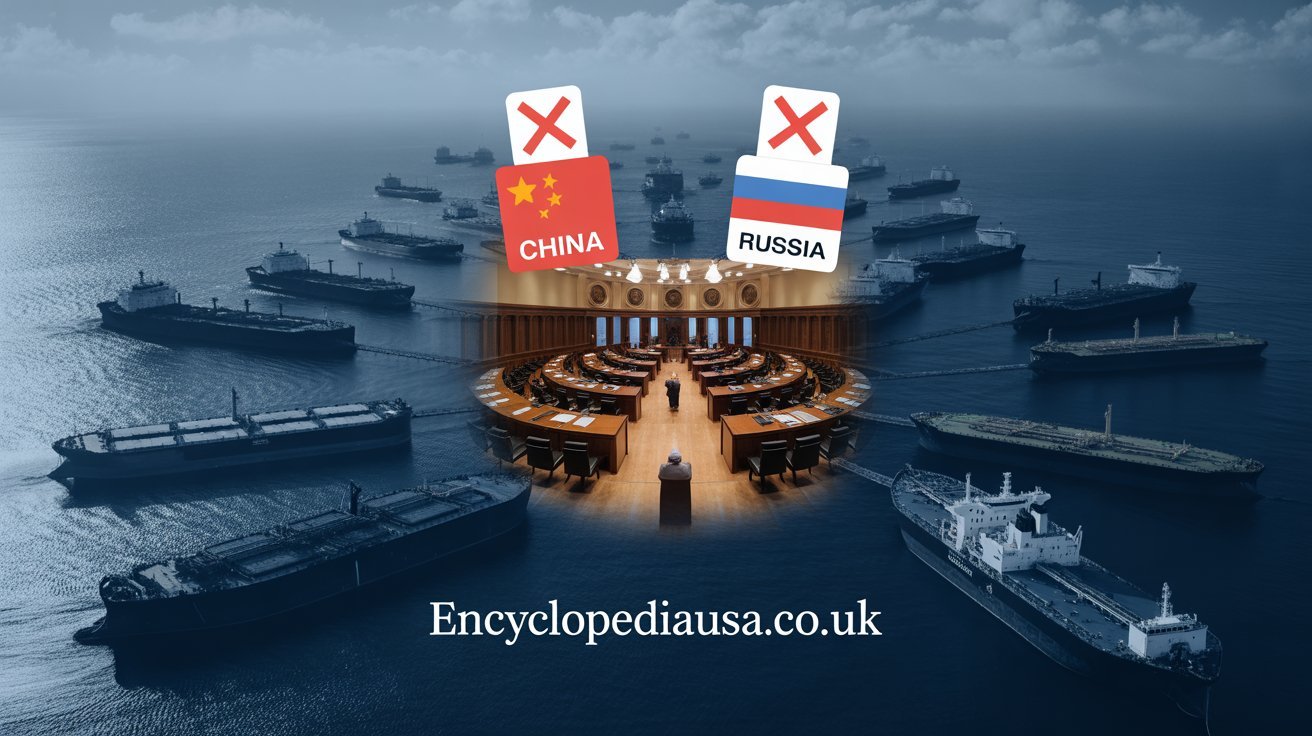
You are watching one of the most consequential diplomatic failures of this decade unfold in real time. On April 7, 2026,China Russia Veto UN Security Council Resolution on Strait of Hormuz aimed at reopening the Strait of Hormuz a waterway that carries roughly 20% of the world’s oil supply. The vote happened just hours before U.S. President Donald Trump’s hard deadline for Iran to reopen the strait or face strikes on its power plants and bridges.
The China Russia veto at the UN Security Council on the Strait of Hormuz did not just block a resolution. It sent a message to the entire world: that two of the most powerful nations on earth chose geopolitical positioning over global economic survival.
In this article, you will understand exactly what happened in that Security Council chamber, why Beijing and Moscow made this choice, what the resolution actually said, and what this means for your energy bills, global trade, and the months ahead. Newsbeverage
What the Resolution Actually Said
Before you judge the veto, you need to understand how much the resolution had already been stripped down.
The original draft, proposed by Bahrain, called for countries to use “all necessary means” to ensure safe transit through the strait. That language, in UN terms, directly authorizes military force. It also invoked Chapter Seven of the UN Charter, which allows sanctions and the use of military action.
Russia, China, and even France strongly opposed that language. So the resolution was revised. Then revised again. And again.
By the time the vote happened on April 7, the final text had been reduced to something almost symbolic. It simply “strongly encouraged” member states to coordinate defensive efforts to keep shipping lanes open. It eliminated all references to force. It removed Security Council authorization language entirely. It limited its scope strictly to the Strait of Hormuz, dropping references to adjacent waters.
The vote came out 11 in favor, 2 against, and 2 abstentions from Pakistan and Colombia.
Even that bare minimum was too much for Beijing and Moscow.
Why China and Russia Vetoed It
Russia’s Stated Position
Russia’s UN Ambassador Vassily Nebenzia described the resolution as “unbalanced, inaccurate, and confrontational.” He argued that the text framed Iran as the sole source of tension while completely ignoring what he called “illegal attacks” by the United States and Israel. In his view, passing such a resolution would have killed any chance of peace negotiations.
Russia has a long-standing strategic relationship with Iran. Tehran and Moscow have been deepening military and economic ties for years. Backing a resolution that essentially puts international pressure on Iran would have broken that alliance at a time when Russia relies on Iran for military supplies and diplomatic solidarity.
China’s Stated Position
China’s UN Ambassador Fu Cong said the draft “failed to capture the root causes and the full picture of the conflict in a comprehensive and balanced manner.” He said China wants peace and stability, but that the resolution did not address what caused the crisis in the first place.
China also has enormous economic skin in this game. China is the world’s largest crude oil importer, and approximately 40% of its oil imports pass through the Strait of Hormuz. China also purchases more than 80% of Iranian oil. Voting against Iran at the Security Council would have directly damaged one of China’s most important energy supply relationships.
Additionally, a limited number of vessels linked to China have reportedly been permitted to cross the strait under arrangements with Iran. China has something of an informal carve-out from the blockade. Supporting a resolution that could trigger conflict around the strait risked collapsing that arrangement.
The Deeper Geopolitical Reality
Both Russia and China used Trump’s own words against the resolution. On the day of the vote, Trump threatened that “a whole civilization will die tonight” if Iran did not reopen the strait. Russia and China pointed to that exact statement as proof that passing the resolution would give Washington and Tel Aviv political cover to escalate military action, while shielding them from accountability for the consequences.
This argument had some traction. Even though the resolution had been stripped of all military authorization, Russia and China framed it as a diplomatic blank check for further aggression.
The Strait of Hormuz: Why This Waterway Rules the World
You might be wondering why a narrow channel between Iran and Oman has the entire planet on edge. Here is the simple answer.
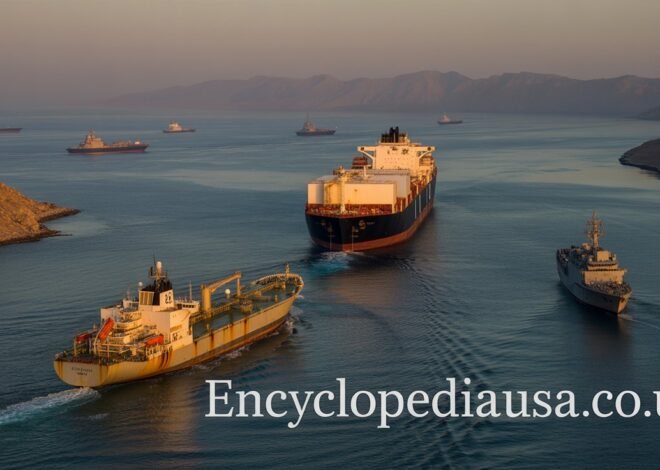
The Strait of Hormuz is only 21 miles wide at its narrowest point. Through that sliver of water flows approximately 20 million barrels of oil per day. That represents roughly 20% of global daily oil consumption and more than one-quarter of all seaborne oil trade on earth.
In 2024, about 84% of crude oil and condensate shipments through the strait went to Asian markets. China receives about a third of its total oil through this single chokepoint. Japan, South Korea, India, and much of Southeast Asia all depend heavily on it. Europe gets between 12% and 14% of its liquefied natural gas from Qatar, routed through the strait.
The blockade, which began when the U.S. and Israel launched a military campaign against Iran on February 28, 2026, sent immediate shockwaves through global markets. Brent crude surpassed $100 per barrel on March 8, 2026, for the first time in four years. At its peak, prices climbed to $126 per barrel. Some analysts now warn prices could reach $170 or even $200 per barrel if the closure continues.
Tanker traffic dropped by approximately 70% almost immediately after Iranian warnings went out. Then it dropped to near zero.
Experts at the Federal Reserve Bank of Dallas describe this as the largest disruption to global energy supply since the 1970s oil crisis.
What the Vote Looked Like on the Ground
The Security Council meeting on April 7 was tense, direct, and historically significant.
Bahrain, which holds the rotating presidency of the Security Council this month and which drafted the resolution in coordination with Gulf Cooperation Council members, made its case plainly. Bahrain’s Foreign Minister Abdullatif bin Rashid al-Zayani said the resolution was meant as “a step toward a permanent solution.” He warned that failing to adopt it sends “the wrong signal to the world.”
U.S. Ambassador Mike Waltz was blunt. He said, “No one should tolerate that they are holding the global economy at gunpoint, but today, Russia and China did tolerate.”
Iran’s ambassador, Amir Saeid Iravani, thanked Russia and China and called the resolution an attempt to punish Iran for “defending its sovereignty.” He reaffirmed that Iran would retaliate against any military action and take all measures necessary to protect its national interests.
The 11 countries that voted in favor included Bahrain, the United States, France, the United Kingdom, Denmark, Greece, Latvia, Liberia, Panama, Somalia, and the Democratic Republic of Congo.
Who Gets Hurt Most by the Blockade
Asia Bears the Heaviest Burden
China, India, Japan, South Korea, Thailand, and the Philippines face the most serious disruptions. India imports about half of its crude oil through the strait. Pakistan and Bangladesh get nearly all of their LNG from Qatar and the UAE, routed through Hormuz. For these smaller economies, the crisis means energy rationing, surging electricity costs, and real risks to food security.
Europe Faces a Stagflation Threat
The European Central Bank has warned that a prolonged conflict could trigger stagflation across major energy-dependent economies, possibly pushing Germany and Italy into recession by end of 2026. European airports have already started rationing jet fuel. Airlines across the continent are canceling summer flights.
Fertilizer and Food Prices
Here is a detail that rarely makes headlines: roughly one-third of the world’s fertilizer trade normally transits the Strait of Hormuz. The Persian Gulf accounts for 30 to 35% of global urea exports and 20 to 30% of ammonia exports. A prolonged closure during the spring planting season in the Northern Hemisphere could reduce crop yields into 2027 and drive food prices sharply higher.
The United States
The U.S. is better insulated than most. It does not depend on Hormuz for domestic energy. American LNG production is operating near capacity and is partly filling gaps in international markets. However, oil is a globally priced commodity. Higher prices anywhere raise prices everywhere, including at U.S. gas pumps. Gas prices in the U.S. had already surged past $6 per gallon in parts of California by early April 2026.
How the UN Security Council Has Handled This Crisis So Far
This was not the first Security Council action on the conflict. On March 11, 2026, the Council adopted a Bahrain-sponsored resolution condemning what it called “egregious attacks” by Iran on Gulf nations, passing by a vote of 13 to 0, with Russia and China abstaining rather than vetoing. That resolution also called for an immediate end to Iran’s actions in the strait and called them a threat to international peace and security.
But that earlier resolution had no enforcement mechanism. It condemned; it did not act.
The April 7 resolution was supposed to go further, giving countries a legal basis to escort merchant ships and defend vessels. Even that modest step was blocked.
The pattern is clear. Russia and China abstained in March when the language condemned Iran mildly. They voted no in April when the resolution asked countries to actually do something about it.
What Happens Next
Trump’s Deadline and the Diplomatic Path
Trump set an 8 p.m. Eastern deadline on April 7 for Iran to open the strait. Iran’s president said 14 million Iranians were ready to “sacrifice their lives” rather than comply. Iran also dismissed a Pakistani proposal for a 45-day ceasefire as “unrealistic,” insisting on a permanent end to hostilities.
Trump later announced what he described as a “double sided ceasefire” that some parties claimed was in effect, though the situation on the ground remains fluid and contested.
Military Operations in the Strait
On March 19, 2026, the United States launched a military campaign to open the strait by force. Operations are ongoing. Iran has confirmed attacks on more than 21 merchant ships as of mid-March, and the IRGC continues to warn vessels away from the waterway.
Alternative Routes
Saudi Arabia has been pushing oil through its East-West pipeline at maximum capacity, roughly 7 million barrels per day, redirecting exports to the Red Sea coast. The UAE also has limited bypass pipeline capacity. But together, these alternatives cover only a fraction of the normal Strait of Hormuz throughput. They cannot replace what the world normally gets from this route.
What the Veto Says About the UN Security Council’s Future
This veto is more than a moment in a Middle East conflict. It raises a serious question about whether the UN Security Council can function as a peacekeeping body when great-power competition makes every resolution a chess move.
China and Russia have used their veto power repeatedly in recent years to block action that they believe serves Western interests. The U.S. and its allies do the same on other issues. The result is a council that talks loudly but rarely acts decisively on the crises that matter most.
For the nations that rely on international institutions to protect their interests — especially smaller, trade-dependent economies — this veto is a sobering reminder of how little the multilateral system can do when permanent members dig in.
The Bahrain foreign minister put it cleanly: failing to act sends the wrong signal. What he meant was this: when the world’s biggest oil chokepoint gets weaponized and the UN cannot agree on even a defensive response, every nation with a stake in global commerce has to start asking what it is actually protected by.
Conclusion
The China Russia veto at the UN Security Council on the Strait of Hormuz was not a surprise. It was the logical outcome of a world where geopolitical alliances matter more than global economic stability, at least in the short term. Both nations had clear reasons to protect Iran from international pressure. Both framed their veto as principled. Neither acknowledged the 20% of the world’s oil that remains stranded.
What you should take away from this is straightforward. The strait is too critical to global trade for the world to ignore. The blockade is already driving up your energy costs, threatening food prices, disrupting aviation, and pushing major economies toward recession. The diplomatic path is blocked. The military path is active but unresolved.
The coming weeks will determine whether the world finds a path back to open shipping lanes or whether the world’s most critical energy chokepoint becomes the defining crisis of 2026.
What do you think? Should the UN Security Council be reformed to limit the use of the veto in global energy emergencies? Share your thoughts and keep the conversation going.
Frequently Asked Questions
1. Why did China and Russia veto the UN Security Council resolution on the Strait of Hormuz? China and Russia argued the resolution was one-sided and blamed Iran without accounting for U.S. and Israeli military actions. They also feared it would give Washington legal cover to escalate military strikes in the region.
2. What did the vetoed resolution actually propose? In its final, heavily watered-down form, the resolution simply encouraged countries to coordinate defensive efforts to keep the strait open and demanded Iran stop attacking merchant vessels. It contained no authorization for military force.
3. How much of the world’s oil passes through the Strait of Hormuz? About 20 million barrels per day, representing roughly 20% of global daily oil consumption and more than one-quarter of all seaborne oil trade globally.
4. What was the vote count? The resolution received 11 votes in favor, 2 against (China and Russia), and 2 abstentions from Pakistan and Colombia.
5. How has the Strait of Hormuz blockade affected oil prices? Brent crude surpassed $100 per barrel in early March 2026 and peaked near $126 per barrel. Some analysts warn prices could reach $170 to $200 per barrel if the closure continues.
6. Which countries are most affected by the Strait of Hormuz closure? China, India, Japan, South Korea, Pakistan, Bangladesh, and the Philippines face the most acute energy disruptions. Europe is also at risk of stagflation and industrial shortages.
7. Has the UN Security Council taken any other action on this crisis? Yes. On March 11, 2026, the Security Council passed a resolution condemning Iran’s attacks on Gulf states by a 13-0 vote, with Russia and China abstaining. That resolution had no enforcement mechanism.
8. Are there any alternative routes for oil if the strait stays closed? Saudi Arabia’s East-West pipeline is running at full capacity, and the UAE has some bypass routes. Combined, these alternatives can carry only a fraction of the strait’s normal volume.
9. What role did Trump’s deadline play in the Security Council vote? The vote happened just hours before Trump’s 8 p.m. April 7 deadline for Iran to open the strait or face strikes on civilian infrastructure. Both Russia and China cited Trump’s threats as proof the resolution would have enabled further military escalation.
10. Is the Strait of Hormuz closure a violation of international law? Many analysts and legal experts argue that Iran’s effective blockade violates the UN Convention on the Law of the Sea, which guarantees the right of transit passage through straits used for international navigation.
Read More: Iran Ceasefire
Author Bio
James Harrington is a geopolitical analyst and foreign affairs writer with over a decade of experience covering international security, energy policy, and multilateral institutions. He has written for leading policy journals and digital publications focusing on the intersection of great-power competition and global trade. James holds a master’s degree in international relations and follows UN Security Council dynamics closely.