

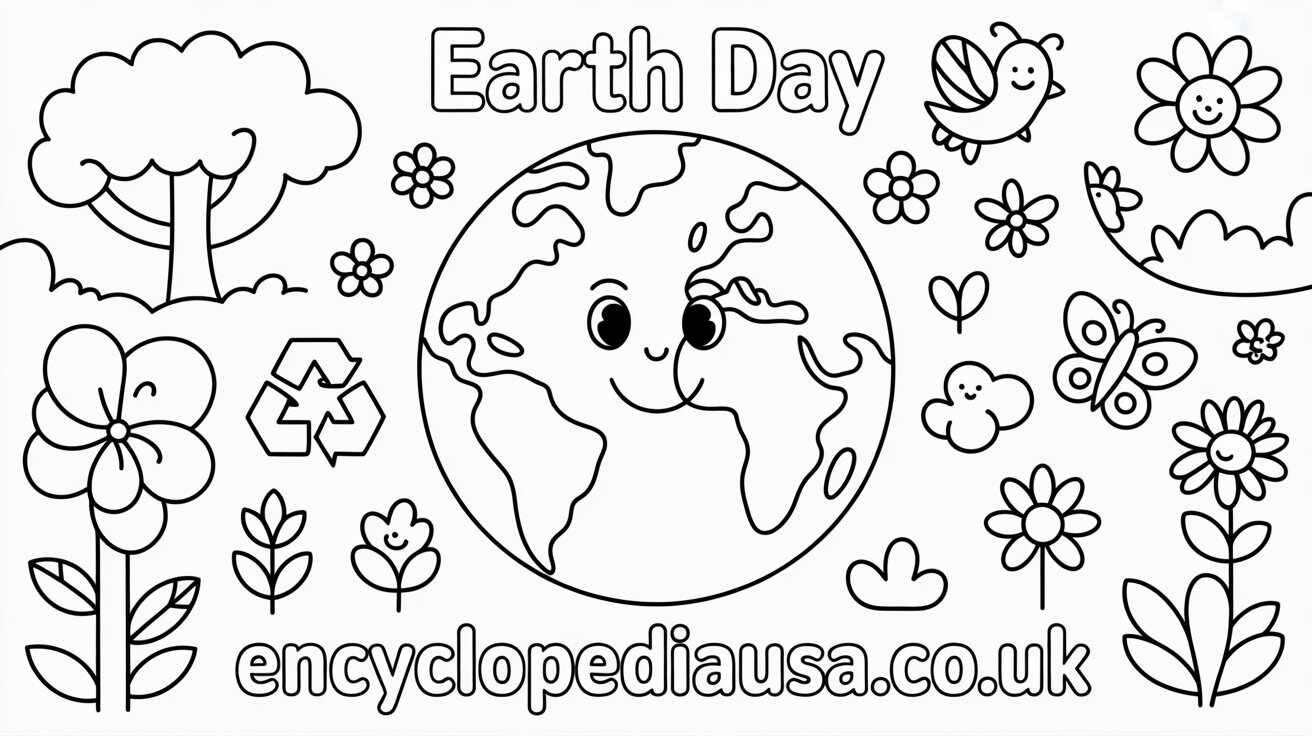
Earth Day Coloring Pages: Fun, Free & Powerful for Kids and Adults
Introduction
Every year, April 22 rolls around and reminds us to slow down, look at the world we live in, and think about how we treat it. And one of the most joyful, hands-on ways to celebrate? Earth Day coloring pages.
You might think coloring is just for kids. But that idea is quickly changing. Teachers use coloring sheets to open conversations about the environment. Parents print them out for rainy afternoon activities. Adults grab them for mindful, screen-free relaxation. Even classrooms and community centers use them as part of Earth Day events and displays.
In this article, you will find everything you need to know about Earth Day coloring pages. We cover what makes a great coloring page, where to find the best ones, how to use them creatively, what themes work for different age groups, and how they actually teach environmental values in a way that sticks.
Whether you are a parent, teacher, or someone who simply loves art and nature, this guide is for you.
Why Earth Day Coloring Pages Matter More Than You Think
At first glance, a coloring page looks simple. A child picks up a crayon and fills in a drawing of a tree or a globe. But there is much more happening beneath the surface.
Research in early childhood education consistently shows that visual and tactile activities help children retain information better than passive listening. When a child colors a page showing a recycling bin, a rainforest, or an endangered animal, they are building a mental connection to that concept. They are not just hearing “recycle.” They are spending focused time with the idea.
For adults, coloring has been widely recognized as a stress-reducing activity. Studies published in outlets like Art Therapy: Journal of the American Art Therapy Association have found that coloring structured designs lowers anxiety and promotes mindfulness. Pair that with an Earth Day theme, and you get a meaningful, calming activity that also reinforces environmental awareness.
The bottom line is this: Earth Day coloring pages are not just pretty pictures. They are tools for learning, reflection, and connection to the planet.
What to Look for in a Great Earth Day Coloring Page
Not all coloring pages are created equal. Some are too simple and lose a child’s interest fast. Others are too complex and frustrate beginners. Here is what separates the good ones from the great ones.
Age-Appropriate Complexity
A preschooler needs thick outlines, large shapes, and simple subjects like a smiling sun or a single flower. A ten-year-old can handle intricate leaves, detailed animals, and layered landscapes. Teens and adults often enjoy mandala-style designs with environmental themes woven in.
Always match the complexity to the age group you are working with.
Meaningful Themes
The best Earth Day coloring pages connect directly to things that matter. Look for designs featuring:
- Recycling and composting
- Endangered or beloved wildlife
- Oceans, rivers, and clean water
- Trees, forests, and deforestation
- Renewable energy like wind turbines and solar panels
- Hands holding the Earth or planting seeds
- Inspirational Earth Day quotes and slogans
These themes give children and adults something to talk about while they color. A drawing of a whale surrounded by ocean trash opens up a conversation about plastic pollution. A page showing a child planting a tree invites questions about why trees matter.
Clean, Print-Ready Lines
For printable versions, the line quality matters a lot. Blurry or pixelated outlines make coloring frustrating. Always look for high-resolution files, ideally in PDF or 300 DPI PNG format, so the printed result is crisp and clean.
Space for Creativity
The best pages leave room for personal expression. Open skies beg to be colored with creative sunsets. Large background areas invite texture and pattern. When coloring pages give children artistic freedom within the structure, the results are more personal and the experience is more rewarding.
Best Themes for Earth Day Coloring Pages
Let us go through the most popular and most effective themes in detail.
1. Planet Earth Designs
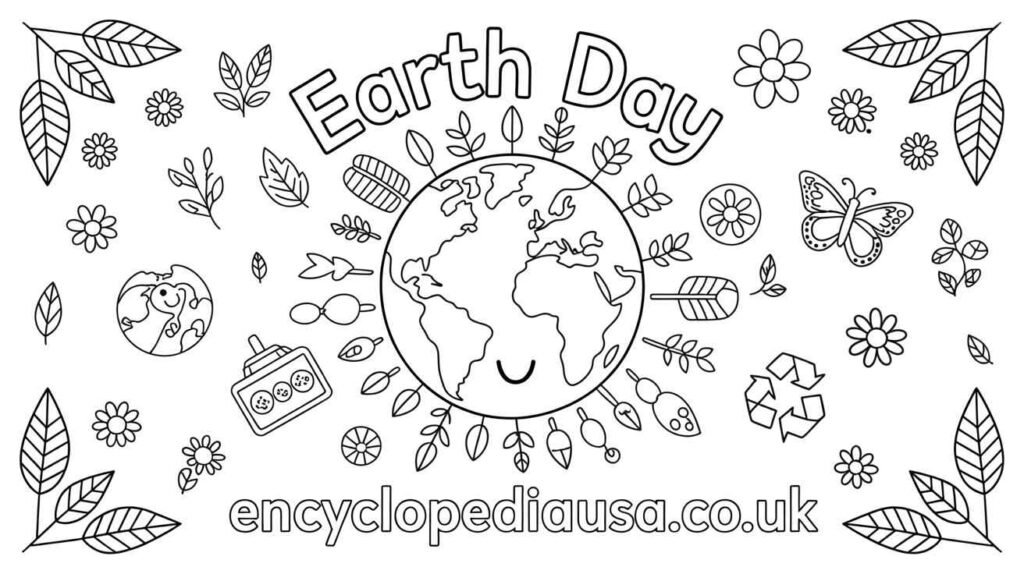
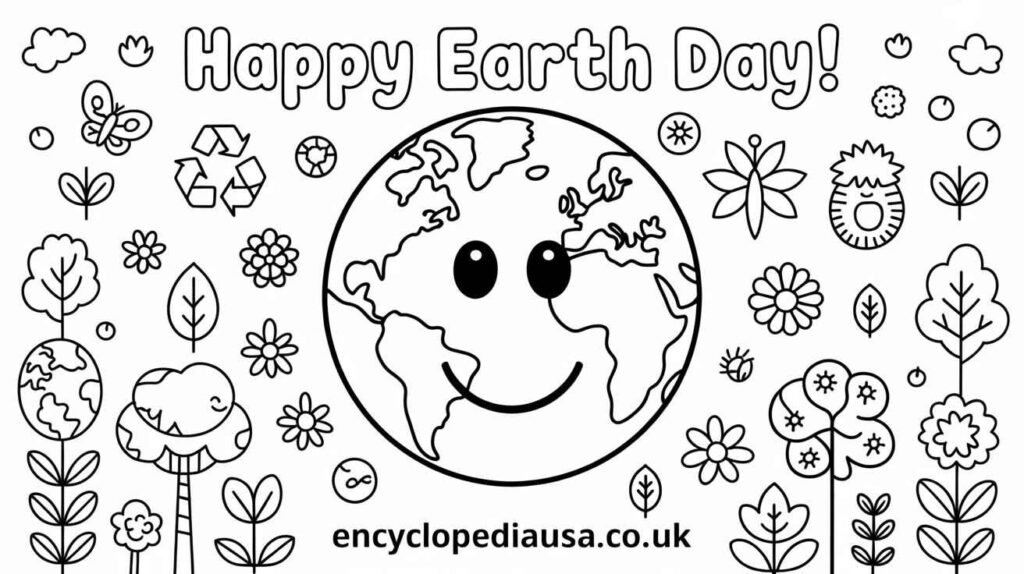
A smiling globe or a detailed world map is a classic. These pages remind us that we all share one home. They work well as centerpieces for bulletin boards or classroom displays after Earth Day activities.
2. Animals and Endangered Species
Children feel deeply about animals. Coloring pages featuring elephants, sea turtles, polar bears, or butterflies are always popular. You can pair each design with a short fact about the animal and the environmental threats it faces.
3. Nature Landscapes
Forests, mountains, rivers, meadows, and coral reefs make stunning coloring subjects. These pages encourage appreciation for natural beauty. They also work well for older children and adults who enjoy more detail and shading.
4. Recycling and Eco Habits
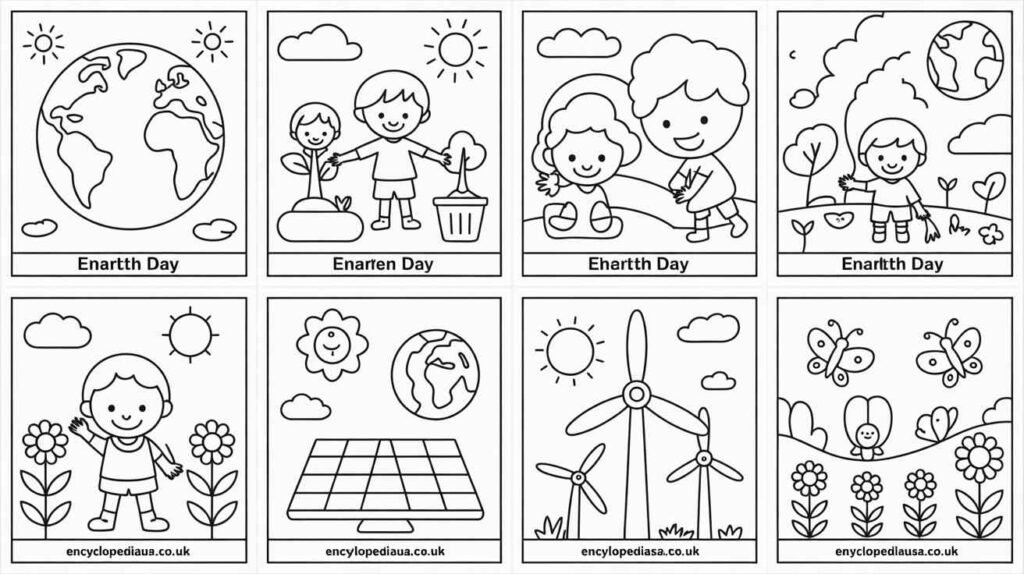
Pages that show kids sorting waste, turning off lights, using reusable bags, or riding bikes instead of driving are both fun and educational. They depict actions children can actually take in their daily lives.
5. Flowers, Trees, and Plants
Botanical designs are some of the most satisfying to color. Detailed leaves, flowers in bloom, and towering trees make for rich coloring experiences. They also double beautifully as home decor once finished.
6. Earth Day Quotes and Banners
Some coloring pages combine illustrated text with art. Phrases like “Reduce, Reuse, Recycle,” “Every Day is Earth Day,” or “Be the Change” surrounded by floral or natural designs give the finished piece a message that can be displayed proudly.
7. Underwater and Ocean Scenes
Ocean-themed pages featuring fish, coral, dolphins, and sea turtles are perennial favorites. You can use them to open conversations about ocean pollution, plastic waste, and the importance of protecting marine ecosystems.
Earth Day Coloring Pages for Different Age Groups
The right coloring page depends heavily on who is doing the coloring. Here is a breakdown by age group.
Toddlers and Preschoolers (Ages 2 to 5)
At this age, children are still developing fine motor skills. They need very simple designs with thick, bold outlines and large coloring areas. Think a single sun, a big flower, a simple tree, or a round Earth with a smiley face.
Keep expectations low and fun high. The goal is not a perfect picture. It is a happy, engaging experience that plants early seeds of environmental curiosity.
Early Elementary (Ages 6 to 8)
Children this age can handle slightly more complex designs. Animals with a bit of detail, a simple landscape, a child planting a garden, or a recycling scene all work well. Adding a short caption or label to the page helps reinforce vocabulary and concepts.
Older Children (Ages 9 to 12)
Preteens often gravitate toward more detailed and intricate designs. Forest scenes with multiple layers, detailed animal portraits, or pages with environmental messages in decorative lettering are great choices. You can also introduce pages that require more color mixing and shading.
Teenagers and Adults
Do not count adults out. Earth Day coloring pages designed for grown-ups often feature mandala patterns built around environmental symbols, highly detailed botanical or animal illustrations, or artistic interpretations of climate concepts. These pages double as stress relief and creative expression.
Many adults are returning to coloring as a mindfulness practice. An Earth Day theme adds intentionality and purpose to that practice.
How to Use Earth Day Coloring Pages in the Classroom
Teachers, this section is for you. Earth Day coloring pages are not just filler activities. When used thoughtfully, they become anchors for rich learning experiences.
Before You Color: Set the Stage
Do not just hand out a page and say “color this.” Take two minutes to introduce the theme. If the page shows a rainforest, show a short photo slideshow of real rainforests. Ask students what they notice, what they wonder.
While You Color: Open Discussion
Coloring is a low-pressure activity that naturally opens children up to conversation. Use that time. Ask open-ended questions. “What do you think happens to the animals when forests are cut down?” “What are three things we do in our school that help the Earth?”
After You Color: Extend the Learning
Use finished pages as springboards. Display them on a bulletin board with student-written captions. Turn them into a class book. Have students write one Earth Day promise on the back of their page. Connect the image to a related science or social studies lesson.
Earth Day Coloring Stations
Set up themed coloring stations around the classroom, each focused on a different environmental topic: oceans, forests, wildlife, energy, recycling. Students rotate through and color one page at each station. At the end, debrief as a class.
Creative Ways to Use Earth Day Coloring Pages at Home
Parents and caregivers, you have more options than you might think.
You can turn finished coloring pages into greeting cards for Earth Day. Fold the page, write a message inside, and give it to a grandparent, teacher, or neighbor. It is a personal, handmade gift with a meaningful message.
You can also frame finished pages and hang them as seasonal art. A beautifully colored forest scene or flower mandala looks wonderful on a child’s bedroom wall.
Try a family coloring session where everyone works on the same large scene together. Some sites offer giant, poster-sized Earth Day printables that become collaborative family art projects.
Another idea is to use coloring pages as journaling prompts. After coloring a page about water conservation, ask your child to write or dictate three things they can do to save water at home.
Tips for Making the Most of Your Coloring Experience
Whether you are coloring with kids or on your own, a few simple tips make the experience much better.
Print on good quality paper. Thin paper bleeds easily when using markers or watercolors. A slightly heavier stock makes a big difference.
Gather your supplies before you start. Crayons, colored pencils, markers, watercolor paints, even oil pastels all work beautifully on coloring pages. Having options ready keeps momentum going.
Try different coloring styles. You do not have to color everything solid. Try blending two colors in one area, leaving some white space, or adding patterns to backgrounds. These techniques add depth and make the final piece more visually interesting.
Put on some music or an audiobook while you color. This turns coloring into a full sensory, relaxing experience.
And if you are coloring with a child, sit down and color alongside them. Your participation signals that this activity is worth their time and attention. It also gives you a natural opportunity to talk about the Earth and why we care for it.
Free vs. Premium Earth Day Coloring Pages: What Is the Difference?
You will find both free and paid Earth Day coloring pages online. Here is what you should know.
Free pages are widely available and perfectly fine for most uses. They tend to be simpler in design and sometimes lower in resolution. For basic classroom use or casual home activities, free pages work great.
Premium or paid coloring pages often come in higher resolution, include a larger variety of designs in a single download, and sometimes offer commercial use licensing if you are creating materials to distribute. For professional teachers, homeschool curriculum creators, or those who want top-quality prints, a premium set can be worth the small investment.
Either way, always check the licensing terms before distributing or printing in bulk, especially for school or community events.
Earth Day Coloring Pages and Environmental Education
There is a growing body of evidence that art-integrated learning improves retention of environmental concepts. When children engage with environmental topics through creative activities, they form stronger emotional connections to those ideas.
A child who colors a detailed drawing of a sea turtle entangled in plastic waste is more likely to think twice before throwing trash on the ground than a child who simply hears a lecture about ocean pollution.
Earth Day coloring pages work not because they are clever educational tools, but because they are genuine, enjoyable experiences that give children agency. They make something. They feel proud of it. And they associate that positive feeling with caring for the Earth.
That is a powerful thing.
Conclusion
Earth Day coloring pages are so much more than simple holiday activities. They are bridges between creativity and environmental awareness, between art and action, between a child’s imagination and the real world that needs their care.
Whether you print a single page for your child on April 22 or build an entire curriculum unit around a coloring activity, you are giving something valuable. You are making space for children and adults alike to sit with nature, think about it, and express something about it through color and form.
So this Earth Day, pull out the crayons, print some pages, and color together. Talk while you color. Wonder while you color. And let those conversations become the seeds of a lifelong love for this planet.
Which Earth Day coloring theme is your favorite? Share it in the comments and inspire someone else to create something beautiful.
Frequently Asked Questions
1. What age is best for Earth Day coloring pages? Earth Day coloring pages are suitable for all ages. Simple designs with bold outlines work well for toddlers and preschoolers. More detailed and intricate pages suit older children, teenagers, and adults. There is a design for every skill level.
2. Are Earth Day coloring pages good for the classroom? Yes, absolutely. They work beautifully as part of Earth Day lessons, art projects, and discussion starters. They can be used before, during, or after a lesson to reinforce environmental concepts in a hands-on way.
3. What themes are most popular for Earth Day coloring pages? The most popular themes include planet Earth, endangered animals, forests and nature landscapes, recycling habits, ocean life, and inspirational eco-friendly quotes.
4. Can adults use Earth Day coloring pages? Definitely. Adult coloring has grown in popularity as a mindfulness and stress-relief activity. Earth Day-themed designs with intricate botanical patterns, mandalas, and detailed wildlife illustrations are widely enjoyed by adults.
5. How do I make Earth Day coloring pages look more vibrant? Use good quality paper to prevent bleeding. Blend colors by layering lighter shades first, then building up to darker tones. Try colored pencils for subtle shading or markers for bold, solid areas. Leaving small white highlights also adds vibrancy and dimension.
6. Where can I find free Earth Day coloring pages? Many educational websites, teacher resource platforms, and family activity blogs offer free printable Earth Day coloring pages. Search specifically for “printable Earth Day coloring pages PDF” to find high-resolution options.
7. Can Earth Day coloring pages be used for Earth Day events? Yes. They make great activity stations at community events, school fairs, and Earth Day celebrations. Large collaborative coloring murals can also become impressive visual displays.
8. What supplies work best for coloring these pages? Colored pencils are the most versatile and forgiving. Crayons are great for young children. Washable markers work well for bold designs. Watercolor paints can create beautiful effects on thicker paper. Choose based on age and preference.
9. How can I turn a coloring page into an Earth Day gift? After coloring, fold the page into a card format, frame it, or use it as wrapping paper or a gift tag. A beautifully colored Earth Day page makes a heartfelt, handmade gift for teachers, grandparents, or friends.
10. Do Earth Day coloring pages actually teach children about the environment? Yes, research in education consistently shows that art-integrated learning strengthens concept retention. When children engage creatively with environmental topics, they form deeper emotional connections to those ideas, making them more likely to care about and act on environmental issues.
Also Read Encyclopediausa.co.uk
About the Author:
Sarah Mitchell is a former elementary school teacher turned educational content writer with over a decade of experience creating learning resources for classrooms and families. She is passionate about making environmental education accessible, engaging, and fun for children of all ages. When she is not writing, Sarah can be found hiking local trails, tending her garden, and yes, coloring.