

The Persistence of Memory by Salvador Dali Brilliant, Haunting Masterpiece 2026
Introduction
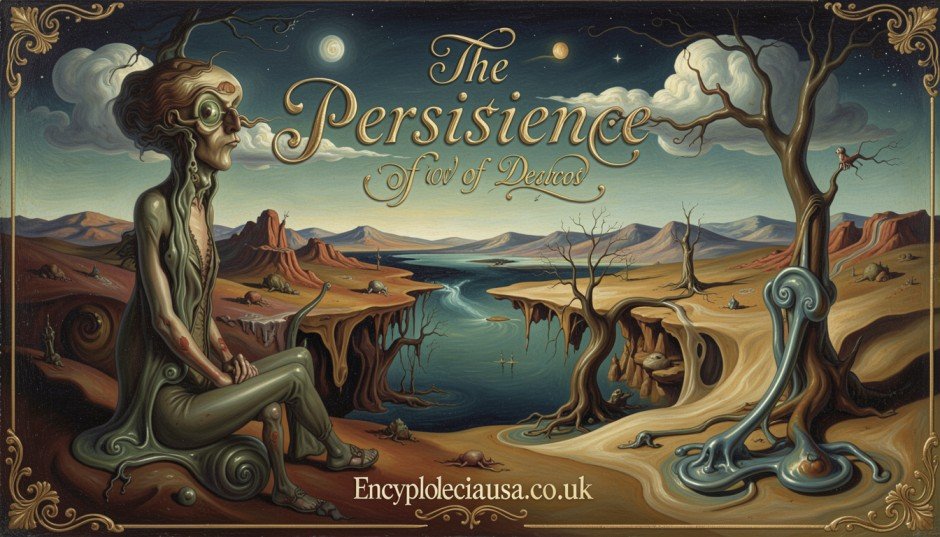
Some paintings stop you cold the moment you see them. The Persistence of Memory by Salvador Dali is one of those rare works. You probably know it even if you cannot name it right away: soft, melting clocks draped over a bare landscape, a strange fleshy figure lying still, and an eerie silence that somehow comes through a canvas.
Dali painted this small but enormously powerful piece in 1931. It now lives at the Museum of Modern Art in New York, and it draws crowds every single day. But what does it actually mean? Why do those drooping clocks feel so unsettling, so deeply familiar?
In this article, you will get a complete, clear breakdown of the painting. We cover its history, its symbols, its psychological roots, and the reason it still speaks to people almost a century later. Whether you are a first-time viewer or someone who has studied art for years, there is something here that will sharpen the way you see this iconic work.
What Is The Persistence of Memory?
The Persistence of Memory is a small oil painting on canvas. It measures just 24 cm by 33 cm, roughly the size of a sheet of paper. Despite its tiny dimensions, it packs one of the most recognizable images in the history of Western art.
Salvador Dali painted it in 1931 while living in Cadaques, on the Catalan coast of Spain. He reportedly completed it in a matter of hours. The story goes that Dali was eating camembert cheese when the idea for the melting clocks came to him. Whether that story is true or a piece of Dali mythology, the painting itself arrived fast and hit hard.
The work belongs to the Surrealist movement. Surrealism was a cultural and artistic revolution that began in Paris in the early 1920s. It rejected rational thinking and embraced the unconscious mind, dreams, and the strange connections the sleeping brain makes. Dali was not one of its founders, but he became its most famous face.
The Story Behind the Painting
Dali’s Life in 1931
By 1931, Dali was 27 years old and in the middle of a creative explosion. He had recently met and fallen in love with Gala Éluard, who would become his wife and lifelong muse. He had also formally joined the Surrealist group in Paris, led by writer André Breton.
Dali used a technique he called the “paranoiac-critical method.” He would deliberately put himself into a state of controlled paranoia, almost like a waking dream, and then paint what he saw in his mind. The results were hyper-realistic in their detail but completely irrational in their content. That tension is exactly what makes The Persistence of Memory feel so strange and so alive.
The Landscape
The setting of the painting is the Cap de Creus peninsula in Catalonia, near Dali’s childhood home. You can recognize the rocky cliffs in the background. This was real geography filtered through a dreamlike light. Dali often placed his hallucinated objects inside familiar landscapes. It made the impossible feel grounded.
Breaking Down the Symbols
This painting is dense with meaning. Every object carries weight. Here is what each element likely represents.
The Melting Clocks
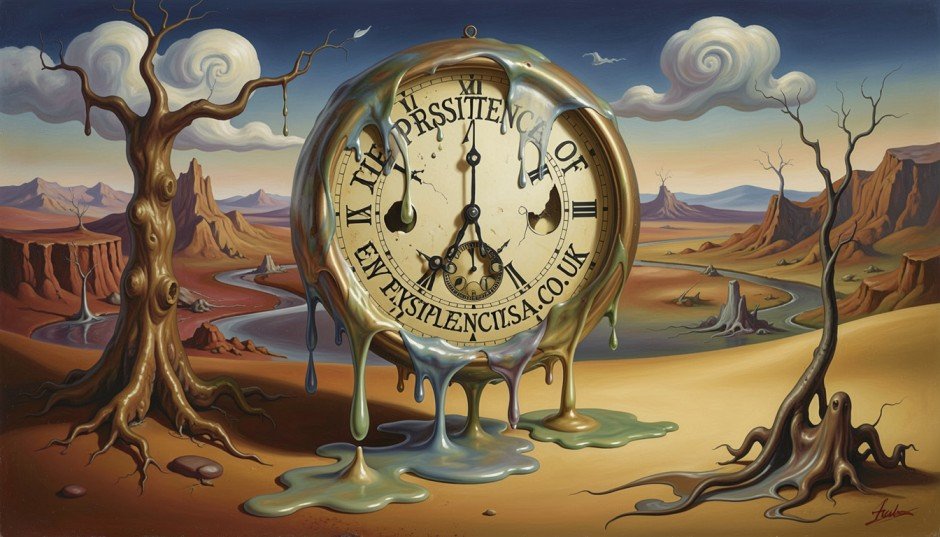
The clocks are the painting’s defining image. There are four of them, and each one droops or sags in a way that real metal and glass simply cannot.
Dali was responding to Albert Einstein’s theory of relativity, which had shaken the scientific world in the early 20th century. Einstein proposed that time is not fixed. It bends, stretches, and behaves differently depending on the observer’s position and speed. Dali translated that idea into a visual language everyone could feel.
The melting clocks tell you that time is not the rigid, mechanical thing a clock face suggests. It is fluid. It collapses under its own weight. In dreams, an hour can feel like a second. In grief, a single afternoon can stretch for what feels like years. Dali paints that truth.
The closed pocket watch covered in ants is particularly striking. More on ants below.
The Ants
Ants appear on the closed watch in the lower left. For Dali, ants were a recurring symbol of decay, death, and anxiety. He had a documented fear of insects from childhood, and ants in particular represented the inevitable breakdown of organic matter.
The ants on the watch suggest that time itself is rotting. Even the device we use to measure and control time is subject to decomposition.
The Strange Fleshy Figure
In the center of the painting lies a soft, melting form with a draped clock on its back. Many art historians read this as a self-portrait of Dali, distorted and unconscious, a stand-in for the dreaming mind.
It has no rigid features. It has no bones or fixed shape. It is pure soft consciousness, lying still while the world of time dissolves around it. This figure represents the dreamer himself, or perhaps the human body stripped of identity by sleep.
The Dead Olive Tree
A bare, leafless olive tree grows from a rectangular brown platform on the left. It holds one of the melting clocks draped over its branch. Olive trees are symbols of life, wisdom, and the Mediterranean world. A dead one reverses all of those associations.
It suggests that time, or the rigid measurement of time, kills what is living and natural. Life bends under the weight of clocks.
The Fly on the Other Watch
One open watch rests face-up on the ground. A single fly sits on it. In classical European painting, flies were symbols of corruption, sin, and the fleeting nature of life. A fly landing on a timepiece fuses two symbols of mortality into one small, almost unnoticeable detail.
Dali filled his paintings with these kinds of nested meanings. The more carefully you look, the more you find.
The Surrealist Connection
Surrealism was not simply an art movement. It was a philosophical program. Its members believed that modern civilization had suppressed the unconscious mind, and that this suppression was making people violent, miserable, and empty. By accessing dreams and irrational thought, Surrealism aimed to liberate the human psyche.
Dali’s contribution was unique. Where other Surrealists often painted loose, abstract forms, Dali painted with the precision of a Renaissance master. His technique was meticulous, photographic in its detail. This made his impossible scenes feel more disturbing, not less. A loosely sketched melting clock would be easy to dismiss. A photorealistic melting clock made of gold, rendered with every scratch and reflection, forces your brain to try to believe it.
The Persistence of Memory is the clearest example of what made Dali different from his peers.
What Does the Title Mean?
The title adds another layer of meaning. “Persistence” can mean stubbornness or endurance. “Memory” is obviously the mind’s record of the past.
Put together, the title raises a question: does memory persist despite time, or does time wear memory away? The painting seems to suggest both. The clocks melt, suggesting time is not stable. But the landscape, the cliffs, the light, all of that stays fixed. Memory endures in the geography even as the measurement of time collapses.
Some scholars also read the title as a comment on the painting itself. A painted image persists. It outlasts the moment it was made. In a sense, all art is a form of memory that refuses to melt.
The Painting’s Reception and Legacy
When The Persistence of Memory was first exhibited in 1931, it caused a sensation. Surrealism was already pushing boundaries, but this painting went further. Its visual logic was so complete, so disturbing, so easy to look at and so hard to shake off.
The Museum of Modern Art in New York acquired it in 1934. It quickly became one of the museum’s most visited works. Today it routinely appears in lists of the most recognized paintings in the world, alongside works like the Mona Lisa and Starry Night.
The image has been reproduced on everything from posters to t-shirts to coffee mugs. It has been referenced in films, songs, television shows, and advertising campaigns. That kind of cultural saturation usually dilutes a work. With The Persistence of Memory, familiarity has not dulled the strangeness. People who encounter it for the first time still feel that initial jolt.
Why This Painting Still Matters
You might wonder why a small canvas painted by a Spanish artist in 1931 still commands so much attention. Here is the honest answer: it captures something that most art avoids.
Most of us feel, at some level, that time is slipping away from us. We forget things we promised to remember. We wake up from vivid dreams and find that the images dissolve within minutes. We feel that the past and present blend in ways that a clock cannot measure.
The Persistence of Memory makes those feelings visible. It gives form to a kind of anxiety that is deeply human and almost impossible to articulate. That is what great art does. It says the thing you could not find words for.
Dali was not simply painting a clever visual puzzle. He was mapping the inner life of a person caught between waking and dreaming, between the certainty of clocks and the shapelessness of memory.
Key Facts at a Glance
Here is a quick summary for skimmers or students:
- Artist: Salvador Dali
- Year: 1931
- Medium: Oil on canvas
- Size: 24 cm x 33 cm (9.5 x 13 inches)
- Location: Museum of Modern Art, New York
- Movement: Surrealism
- Primary Symbols: Melting clocks, ants, flies, dead olive tree, dreamlike landscape
Conclusion
The Persistence of Memory by Salvador Dali is much more than a famous image on a poster. It is a fully realized philosophical statement, painted with the skill of an old master and the imagination of a dreamer.
It asks you to reconsider what time really is, what memory actually does, and what happens to both when the rational mind lets go. That question was urgent in 1931. It feels just as urgent today.
If you have only ever seen this painting on a screen, I genuinely encourage you to see it in person at MoMA. Standing in front of something this small, this precise, and this strange is an experience that a digital image cannot replicate.
What part of this painting speaks most to you? The melting clocks? The fleshy sleeper? The ants? Share your thoughts with someone who loves art. Some conversations are worth starting.
Frequently Asked Questions
1. What is The Persistence of Memory about? It is about the fluid, unstable nature of time and memory. Dali uses melting clocks to suggest that time, as we measure it, is not fixed or reliable. The painting draws on Surrealist ideas and Einstein’s theory of relativity.
2. Where can I see The Persistence of Memory today? The original painting is housed at the Museum of Modern Art (MoMA) in New York City. It has been part of the MoMA collection since 1934.
3. Why are the clocks melting in the painting? The melting clocks represent the collapse of rigid, mechanical time. They suggest that time bends, stretches, and behaves differently in the dream state and in human perception. It is a visual metaphor for Einstein’s relativity and the subjective nature of time.
4. How big is The Persistence of Memory? The painting is surprisingly small. It measures just 24 cm by 33 cm, approximately the size of a standard sheet of paper.
5. What do the ants represent in the painting? For Dali, ants symbolized decay, death, and anxiety. Their presence on the closed pocket watch suggests that even time itself is subject to rot and decomposition.
6. Did Dali really get the idea from melting cheese? Dali himself claimed the image came to him while looking at a piece of melting camembert cheese. Whether this is literally true or part of his flair for self-mythology, it is a story he told on multiple occasions.
7. Is The Persistence of Memory a Surrealist painting? Yes. It is one of the most iconic works of Surrealism. Dali painted it using his “paranoiac-critical method,” a technique that simulated the irrational imagery of dreams while maintaining photorealistic precision.
8. Who is the figure lying in the center of the painting? Many art historians interpret the soft, melting figure as a self-portrait of Dali. It represents the dreaming or unconscious self, stripped of rigid identity and boundaries.
9. Why did Dali use a Catalonian landscape in the painting? Dali frequently placed dream imagery inside the real landscapes of his childhood. The Cap de Creus cliffs in the background ground the irrational elements in a recognizable, real space, making the impossible feel more unsettling.
10. What is the meaning of the title? The title suggests that memory endures even as time collapses or becomes unstable. It also reflects on the nature of painting itself: an image persists through time as a kind of fixed memory, even when everything around it changes.
About the Author
Elena Marsh is a writer and art historian with over a decade of experience covering modern and contemporary art. She studied fine arts and cultural theory in London and has contributed to several art publications and museum blogs. She believes the best writing about art makes great work accessible to everyone, not just specialists. When she is not writing, she visits galleries, reads biography, and argues about Surrealism over long dinners.
Also read encyclopediausa.co.uk
Email: johanharwen314@gmail.com
Author Name: Johan Harwen