

Verizon Stock Dividend History: What Every Investor Should Know Before Buying VZ
Introduction
If you are looking at Verizon Stock Dividend History right now, chances are you already know one thing about it. It pays you well just for holding it. Verizon Communications, traded as VZ on the New York Stock Exchange, has built a reputation as one of the most reliable dividend payers in the entire market. But reputation only takes you so far. You want numbers, dates, and a clear picture of what has actually happened over the years.
That is exactly what you get here. Let us walk through Verizon’s dividend history, where the yield stands today, and what you should watch going forward.
A Quick Snapshot Of Verizon’s Dividend Today
Before diving into history, here is where things stand right now.
Verizon currently pays an annual dividend of about $2.83 per share. That works out to a dividend yield of roughly 6 percent, which is significantly higher than the average yield you would find across the S&P 500. The quarterly payout sits at $0.7075 per share, and the company has kept that rate steady for the past few quarters after a small increase earlier in the year.
You receive this dividend four times a year, and Verizon has stuck to a predictable schedule for decades. Payments typically land in February, May, August, and November.
Why Verizon’s Dividend History Matters So Much
Here is something you will not find with most companies. Verizon has raised its dividend every single year for two decades in a row. That is not a typo. Twenty consecutive years of increases, even through recessions, a global pandemic, and shifting technology cycles.
This kind of consistency tells you something important about how the company operates. Verizon runs a business built on recurring revenue. People pay their phone and internet bills every month no matter what is happening in the economy. That steady cash flow lets the company commit to rewarding shareholders year after year, and it rarely wavers from that promise.
If you have ever heard the term Dividend Aristocrat, you already understand why Verizon gets mentioned in those conversations. A Dividend Aristocrat is a company that has increased its dividend for at least 25 consecutive years. Verizon is closing in on that milestone, and if the trend continues, you could see it join that exclusive club within the next few years.
How The Dividend Has Grown Over Time
Let us break down the growth pattern so you can see it clearly.
Verizon’s dividend increases have not been dramatic. You will not see the payout double overnight. Instead, the company has followed a slow and steady approach, usually raising the quarterly payment by a penny or two each year. This might sound small, but it adds up in a meaningful way when you hold the stock for the long term.
Think about it this way. If you bought shares a decade ago, your dividend income today is noticeably higher than what you originally signed up for, even though your initial investment never changed. That is the real power of a growing dividend. Your income rises while your cost basis stays the same.
Compare this to companies that pay a flashy dividend one year and cut it the next. Verizon has avoided that trap entirely. Even during periods when the stock price struggled or the company faced heavy competition from AT&T and T-Mobile, the dividend kept climbing.
What Drives Verizon’s Ability To Keep Paying
You might wonder how a company juggling billions in debt from network expansion and spectrum purchases still manages to pay shareholders so reliably. The answer comes down to cash flow.
Verizon generates enormous amounts of free cash flow from its wireless and broadband subscriber base. Millions of customers pay their bills automatically every month, and that predictable income stream gives management the confidence to commit to dividend payments well in advance.
The company also made close to $11.5 billion in cash dividend payments last year alone. That is not pocket change, and it shows just how central the dividend is to Verizon’s overall strategy. Management has stated publicly, more than once, that the dividend commitment is treated as a top priority, not an afterthought.
Current Yield Compared To Historical Levels
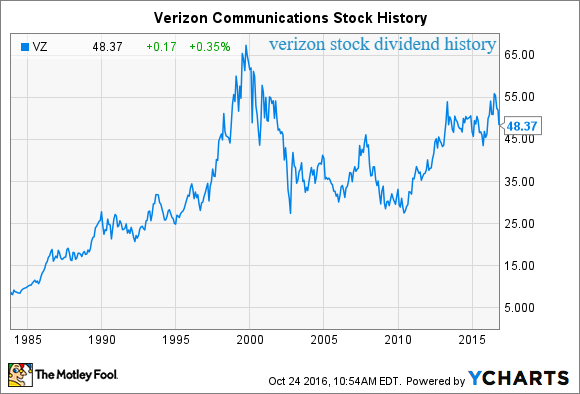
Right now, Verizon’s dividend yield hovers around 6 percent, which is actually on the higher end of its historical range. Over the past year, the yield has swung between roughly 6.2 percent and just over 10 percent, depending on where the stock price moved.
Here is something worth understanding. Dividend yield moves in the opposite direction of stock price when the payout stays flat. So when Verizon’s stock price dips, the yield goes up, and when the stock rallies, the yield comes down. A yield sitting near 6 percent tells you the stock has been trading at a relatively depressed price compared to its dividend payments, which some investors see as an attractive entry point.
Of course, a high yield alone does not automatically mean a stock is a bargain. You always want to check whether the payout is sustainable, and Verizon’s history gives you a strong reason to believe it is.
Is Verizon’s Dividend Safe Going Forward
This is probably the question on your mind, and it deserves an honest answer.
Verizon’s payout ratio, meaning the percentage of earnings paid out as dividends, runs higher than many other sectors because telecom is a capital intensive business. That said, the company continues generating strong free cash flow year after year, and leadership has repeatedly emphasized dividend stability as a core part of their capital allocation strategy.
You should still keep an eye on a few things if you plan to hold VZ for the dividend income. Watch the company’s debt levels, subscriber growth trends, and competitive pressure from rivals rolling out aggressive pricing. None of these factors currently threaten the dividend, but smart investors always stay informed rather than assuming the past guarantees the future.
How To Track Verizon’s Dividend Dates
If you already own shares or plan to buy some, here is how the payment cycle typically works.
Verizon announces its dividend a few weeks before the ex-dividend date. You need to own the stock before that ex-dividend date to qualify for the upcoming payment. After the ex-dividend date passes, there is usually a gap of a few weeks before the actual payment lands in your brokerage account.
Most investors find it easiest to set up dividend reinvestment through their broker, often called a DRIP. This automatically uses your dividend payout to buy more shares instead of sitting as cash, which can accelerate your returns over time thanks to compounding.
Should You Buy Verizon For The Dividend
Only you can decide what fits your portfolio, but here is a fair way to think about it.
If you want steady, predictable income and you are comfortable holding a stock through slower growth periods, Verizon’s dividend history makes a compelling case. Few companies in any sector can point to two decades of uninterrupted increases. That kind of discipline is rare, and it reflects a business model built for consistency rather than speculation.
On the other hand, if you are chasing rapid stock price appreciation, Verizon might feel slow compared to growth focused tech names. This stock tends to reward patient, income focused investors more than short term traders.
Final Thoughts
Verizon’s dividend history stands as one of the strongest arguments for owning the stock. Twenty straight years of increases, a yield near 6 percent, and a business model built on predictable recurring revenue all point toward a company that takes shareholder returns seriously.
Before you invest, always look beyond the headline yield. Check the company’s most recent earnings, debt levels, and subscriber trends to confirm the story still holds up. But based on the track record alone, Verizon has earned its place as one of the go to names for dividend focused investors.