

DTE Power Outage Map Estimate Time: Helpful 2026 Guide
Introduction
When your lights suddenly go out, the first question is usually simple. How long will my power be out? The DTE power outage map estimate time can help you find the latest restoration information for your home or business.
DTE Energy provides an outage map, outage status updates, text alerts, email alerts, and a mobile app to help customers follow restoration progress. However, the estimated restoration time is not always available immediately, especially after a major storm. DTE says crews may need several hours to assess damage before the company can develop a reliable restoration estimate.
In this guide, you will learn how DTE creates restoration estimates, what the outage map tells you, why an estimated time can change, and what you should do if your power remains off after DTE says service has been restored.
What does the DTE power outage map estimate time mean?
The DTE power outage map estimate time is an expected timeframe for restoring electricity at an affected location.
During severe weather events, DTE may provide a day level restoration estimate instead of an exact hour. DTE explains that a day level estimate means the company expects to restore service by 11:59 p.m. on the stated date.
This distinction is important. An estimate is not a guaranteed appointment time.
Several conditions can affect restoration work, including the amount of damage, available crews, fallen trees, damaged poles, downed lines, and the number of customers without electricity.
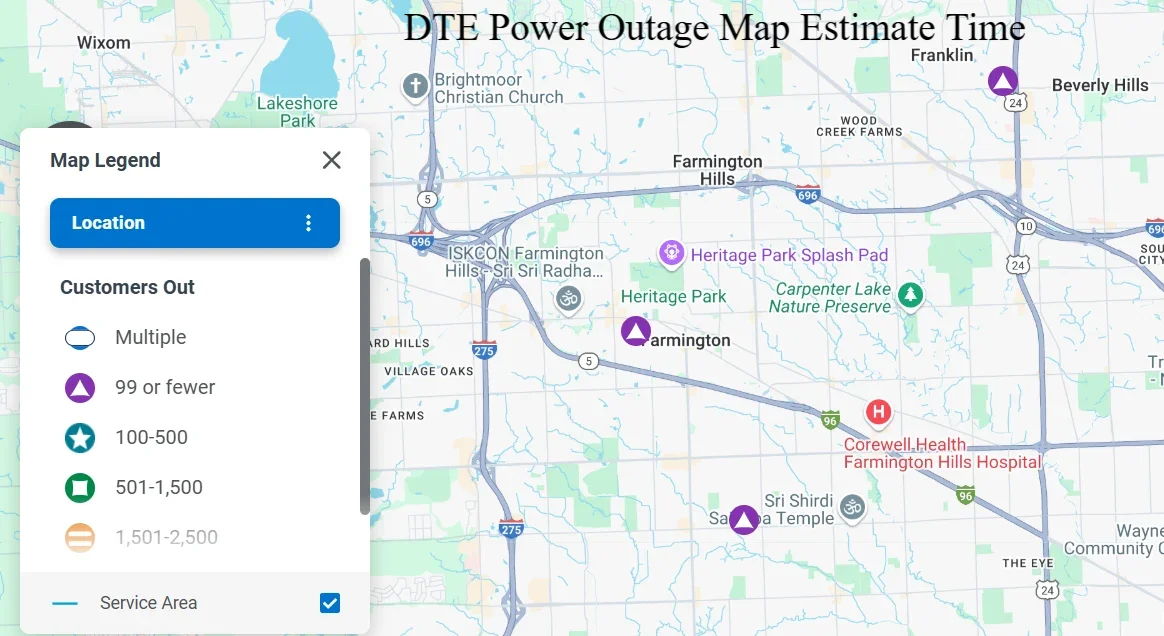
What you may see on the outage map
Depending on the outage, you may see information such as:
| Information | What it tells you |
|---|---|
| Outage location | Where an outage has been reported |
| Customers affected | Approximate number of customers without power |
| Restoration estimate | Expected restoration date or time |
| Outage status | Current progress of the repair |
| Cause information | Known or suspected reason for the outage |
| Crew information | Updates about restoration activity |
The information can change as DTE receives new reports and crews investigate conditions in the field.
How do you check your DTE power restoration estimate?
You have several ways to check your current outage information.
1. Check the DTE Outage Map
The outage map lets you search for your address and review outage information in your area. You can also use filters for ZIP codes or counties.
2. Check your outage status
DTE provides an outage status feature that can show information connected to your reported outage.
This can be especially useful when the outage map shows a broad affected area but you need information about your specific property.
3. Use text or email alerts
DTE allows customers to receive outage and restoration updates through text messages or email.
This option can save you from repeatedly checking the map during a long outage.
4. Use the DTE mobile app
The DTE Energy Mobile App lets customers report outages and view restoration updates. It also provides access to outage information from a smartphone.
sourecs: outage.dteenergy.com
Why does DTE sometimes have no estimated restoration time?
This is one of the most common questions during a major storm.
The simple answer is that DTE needs enough information to make a useful estimate.
After severe weather, crews first need to understand the scale of the damage. A storm can affect power lines, poles, substations, transformers, trees, and other equipment across a large service area.
DTE says it can take several hours after a severe weather event to assess damage and develop a restoration plan. Only after that assessment can the company provide a more specific estimate.
So, if your outage initially shows no restoration time, that does not necessarily mean that crews are ignoring your area.
It can mean that the damage assessment is still underway.
What factors affect your DTE restoration estimate?
DTE considers several factors when developing a restoration estimate.
Damage to electrical infrastructure
Crews need to determine what equipment needs repair or replacement.
Examples include:
- Downed power lines
- Broken utility poles
- Damaged transformers
- Fallen trees
- Damaged substations
- Problems with distribution equipment
More complicated damage generally requires more time to repair.
Number of customers affected
DTE also considers how many customers are affected.
During widespread storms, crews generally work to restore the largest number of customers as quickly and safely as possible.
This means the repair order may not always follow the order in which individual customers lost power.
Available crews
Crew availability also affects restoration times.
DTE may use crews from outside Michigan when major events create widespread damage. The company says crew resources are part of the information considered when developing restoration estimates.
Safety conditions
Safety comes first.
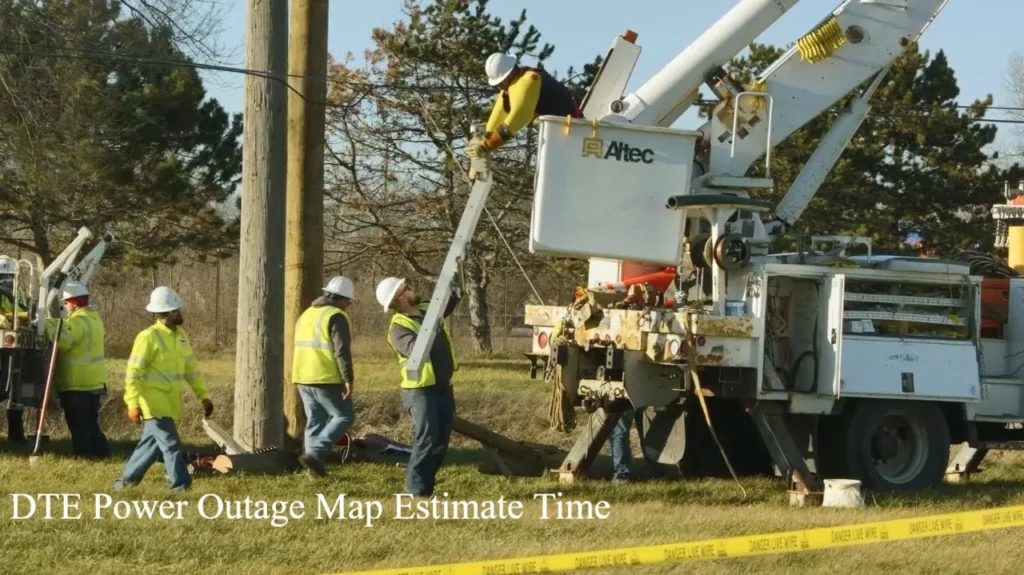
Crews cannot safely repair certain equipment until dangerous conditions are controlled. Downed power lines, damaged poles, fires, flooding, and blocked roads can all affect the restoration process.
Why did my DTE estimated restoration time change?
Your estimate can change when crews discover new information.
For example, an initial inspection might suggest that a damaged line needs a relatively simple repair. Once crews reach the location, they may discover a broken pole, additional damaged equipment, or another problem.
DTE says it may update a restoration estimate when field crews discover that repairs are more complicated or will take longer than originally expected.
Although a changed estimate can be frustrating, an updated estimate can provide a more realistic picture of the work remaining.
Common reasons an estimate changes
- The damage is greater than initially reported.
- Crews find additional equipment damage.
- Severe weather creates new problems.
- More customers become affected.
- Additional repair work becomes necessary.
- Crew resources need to be reassigned.
- Safety conditions delay repair work.
How does DTE restore power after a major storm?
DTE follows a restoration priority system designed to address dangerous conditions first and restore the largest number of customers efficiently.
The general sequence includes several stages.
Stage 1: Dangerous situations
Crews address downed power lines and other immediate hazards first.
DTE advises customers to stay at least 25 feet away from a downed power line and assume that it is energized and dangerous.
Stage 2: Critical facilities
Crews then focus on facilities that provide essential services.
These can include hospitals, police stations, fire stations, nursing facilities, communication facilities, and sanitary pumping stations.
Stage 3: Communities
Substations and equipment serving larger areas can receive attention because repairing them may restore electricity to many customers.
Stage 4: Neighborhoods and businesses
Crews then work on distribution lines serving subdivisions, neighborhoods, and businesses.
Stage 5: Individual homes
Finally, crews address equipment serving individual homes and smaller groups of customers.
This explains why one neighborhood can regain electricity while another nearby area remains without power.
How reliable is the DTE outage estimate?
You should treat the estimate as the best available projection rather than an exact promise.
DTE says it aims to provide accurate estimates, but changing conditions can require updates.
There is also encouraging reliability data.
DTE reported that 2025 was its most reliable year for customers in nearly two decades. The company said customers spent 60 percent less time without power in 2025 compared with 2024.
DTE also reported that smart grid technology prevented more than 49,000 outages during the first half of 2026.
These numbers show why grid modernization can matter. Smart equipment can detect problems, reroute electricity, and help crews identify trouble locations more quickly.
What should you do during a long power outage?
A long outage can become uncomfortable quickly, especially during extreme temperatures.
You can prepare by taking a few simple steps.
Your outage checklist
- Check the DTE outage map.
- Confirm that your outage has been reported.
- Sign up for text or email updates.
- Keep your phone charged.
- Avoid opening your refrigerator unnecessarily.
- Use flashlights instead of candles when possible.
- Keep generators outside and away from doors and windows.
- Stay away from downed power lines.
- Follow local emergency instructions.
- Check on vulnerable family members and neighbors when safe.
If you see a downed power line, do not approach it. DTE recommends staying at least 25 feet away and treating every downed line as dangerous.
What if DTE says my power is restored but I am still without electricity?
This situation can happen.
DTE explains that after crews complete repairs and a restoration message is sent, some customers may still have a secondary issue requiring additional work.
If your electricity remains off, report the outage again using the option provided by DTE.
You should also check your home’s electrical panel if it is safe to do so. If the problem appears to be inside your property, the issue may involve your home’s electrical system rather than the utility network.
DTE outage map versus reliability map
It is easy to confuse these two resources.
The outage map shows current power outages and restoration information. The Power Improvements Map focuses on grid improvement projects and historical reliability information.
| Map | Main purpose |
|---|---|
| DTE Outage Map | Current outages and restoration information |
| Power Improvements Map | Grid projects and reliability improvements |
| Reliability data | Historical average outage information |
DTE says reliability information is updated annually and can show average outage information for a ZIP code across multiple years. Individual customers may experience more or less outage time than the reported average.
What is DTE doing to reduce future outages?
DTE says it is investing heavily in grid modernization.
The company reported that it invested more than $900 million in the first half of 2026 to improve electric reliability and support infrastructure. It also reported more than $2.6 billion in total utility investment during the same period.
DTE has also reported investments in tree trimming, rebuilt power lines, replacement poles, automation, and smart grid technology.
The company has stated a goal of reducing outages by 30 percent and cutting outage time in half by the end of 2029.
These projects will not prevent every outage. However, stronger infrastructure and automated equipment can help limit the number and duration of interruptions.
Frequently Asked Questions
How do I find my DTE restoration estimate?
Check your outage status or search your address on the DTE outage map. You can also receive updates through text or email if you have enabled notifications.
Why does my DTE outage have no estimated restoration time?
DTE may still be assessing the damage. After major storms, damage assessment can take several hours before a reliable estimate becomes available.
Does the DTE estimated restoration time guarantee when power will return?
No. It is an estimate based on the information available at the time. Field conditions can cause the estimate to change.
What does a day level restoration estimate mean?
It means DTE expects to restore your service by 11:59 p.m. on the stated date.
Can the DTE restoration estimate change?
Yes. The estimate can change if crews discover additional damage or determine that repairs require more time.
How can I receive DTE outage updates?
You can choose text or email notifications through your DTE account. The DTE mobile app also provides outage and restoration information.
What should I do if I see a downed power line?
Stay at least 25 feet away and assume the line is live. Call 911 if there is an emergency and report the dangerous line to DTE.
What if DTE says my power is restored but my home is still dark?
Report the outage again. DTE says a secondary problem can sometimes remain after the main repair has been completed.
Is DTE improving power reliability in 2026?
DTE reports continued investment in grid infrastructure and smart technology. The company said smart grid technology prevented more than 49,000 outages during the first half of 2026.
Conclusion
The DTE power outage map estimate time gives you an important planning tool when your electricity goes out. However, you should view the estimate as a changing projection rather than a guaranteed restoration time.
DTE develops estimates by considering infrastructure damage, crew availability, customer impact, weather conditions, and safety requirements. During major storms, the company may need several hours to assess damage before providing a specific estimate.
The best approach is simple. Report your outage, check the DTE outage map, enable notifications, and monitor your outage status for updates. If the estimated restoration time changes, it usually means crews have learned more about the repair work.
With DTE continuing to invest in smart grid technology and infrastructure, customers may see faster and more reliable restoration over time. When your next outage happens, will you know where to check your restoration estimate first?
Author Bio:
The author is a research focused energy and utilities writer who explains power outages, electricity services, infrastructure updates, and consumer safety topics. The author combines official utility information with public data to create clear and practical guides for everyday readers.