


Pete Buttigieg Israel Stance: Gaza, Arms and Palestine in 2026
introduction
Pete Buttigieg Israel position on Israel has become a closely watched issue in Democratic politics, particularly as he considers whether to seek the presidency again in 2028.
The former U.S. transportation secretary attracted significant attention in August 2025 after giving cautious answers about U.S. support for Israel during a conversation with Jon Favreau on the liberal podcast Pod Save America. He subsequently clarified his position and said he would have supported Senator Bernie Sanders’ proposed effort to halt U.S. arms sales to Israel. He also said he would recognize a Palestinian state as part of a negotiated two state solution.
That shift matters because Buttigieg had previously described Israel as a friend and argued for maintaining a strong security relationship while applying what he characterized as a form of “tough love” when disagreements arose.
As of September 2026, Buttigieg has not formally announced a 2028 presidential campaign. However, he is actively weighing another White House run and has returned to important early primary state South Carolina.
Why Did Pete Buttigieg Face Backlash Over Israel Comments?
The backlash came largely because Buttigieg’s initial answers appeared less forceful than some Democrats wanted on the Gaza war, U.S. military support for Israel and Palestinian statehood.
During his Pod Save America conversation with Jon Favreau, Buttigieg returned to an older description of Israel as a U.S. friend that should receive support during a difficult period. He also avoided giving a definitive immediate answer on Palestinian state recognition.
That response quickly became politically difficult.
California Rep. Ro Khanna criticized Buttigieg publicly, arguing that Democrats needed greater clarity on the issue. Former Obama national security adviser Ben Rhodes also questioned what Buttigieg actually believed based on the interview.
The controversy was therefore not simply about whether Buttigieg supported Israel. It was about how much U.S. support should continue when Israeli government policies and military actions in Gaza conflict with Democratic voters’ increasingly critical views.
sourecs: politico.com
What Did Pete Buttigieg Say About Israel?
Buttigieg subsequently gave a much clearer answer.
In a follow up interview, he said he understood the criticism and acknowledged that the issue required greater clarity. He said he would have supported Bernie Sanders’ proposed arms embargo and backed recognition of a Palestinian state as part of a two state solution.
His clarified position can be summarized around several principles:
- Support for Israel’s security remains important.
- U.S. military assistance should not be unconditional.
- Palestinian statehood should be part of a credible two state solution.
- The United States should use its influence when Israeli policies conflict with American interests or values.
- Ending the violence, returning hostages and delivering humanitarian aid are essential priorities.
This makes his position more nuanced than simply describing him as either “pro Israel” or “anti Israel.”
How Jon Favreau’s Podcast Conversation Sparked the Controversy
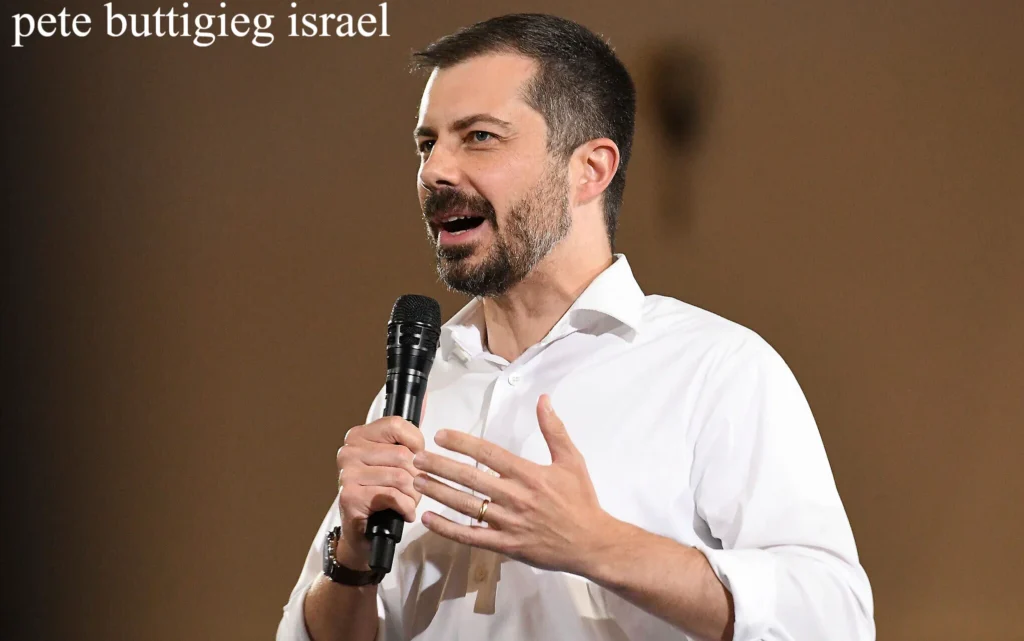
The Jon Favreau interview became the immediate trigger for the controversy.
Favreau, a former Obama speechwriter and co host of Pod Save America, asked Buttigieg about the future of the U.S. relationship with Israel. Buttigieg initially used language consistent with his earlier approach, emphasizing the importance of treating Israel as a friend while discussing disagreements privately and constructively.
The problem was political timing.
By August 2025, Israel and Gaza had become a major source of disagreement inside the Democratic Party. Buttigieg was also being viewed as a possible 2028 presidential contender, meaning voters and activists were examining his foreign policy more closely.
His subsequent clarification demonstrated how quickly the issue had changed from a traditional foreign policy question into a major Democratic political test.
Buttigieg’s Changing Position on Israel and Gaza
Buttigieg’s Israel policy has evolved rather than simply reversed overnight.
During his 2019 presidential campaign, he supported the U.S. Israel relationship while opposing policies such as settlement expansion and potential annexation. His approach generally combined support for Israel’s security with criticism of specific Israeli government actions.
By 2025, however, the Gaza conflict had created a much different political environment.
His later comments showed greater willingness to condition U.S. support and recognize Palestinian statehood. In a later interview with Kara Swisher, Buttigieg explained that recognizing Palestine should ultimately occur through a negotiated, credible and enforceable two state agreement with security guarantees for Israelis.
That qualification is important. His position does not amount to unconditional support for immediate recognition regardless of circumstances.
What Is Pete Buttigieg’s Position on Palestinian Statehood?
Buttigieg supports Palestinian statehood as part of a viable two state solution.
He has argued that if someone genuinely believes in a two state solution, recognition of a Palestinian state logically belongs within that framework. However, he has also stressed that recognition should be connected to negotiations, enforceable commitments and security guarantees.
This places his position between two competing approaches.
One approach favors immediate recognition as a way to pressure Israel and advance Palestinian self determination. Another argues that recognition should come only after a negotiated settlement.
Buttigieg has emphasized the latter framework while moving toward a more critical stance on Israeli policy.
Why Israel Has Become a Major Democratic Party Issue
Israel has become increasingly difficult for Democratic candidates to avoid.
The debate now touches several groups within the party, including progressive activists, Jewish Democrats, younger voters, Arab American voters, traditional pro Israel Democrats and national security voters.
The 2025 debate around Buttigieg illustrated this transformation. POLITICO described Israel as an emerging litmus test for Democrats preparing for the 2028 presidential contest.
The issue also involves practical questions about U.S. policy:
- Should American weapons shipments to Israel continue without conditions?
- Should Washington recognize a Palestinian state?
- How should the United States respond to Israeli settlement expansion?
- What security commitments should America maintain?
- How should Washington balance Israeli security with Palestinian rights?
- What role should humanitarian aid play in U.S. policy?
These questions make Israel policy much more consequential for Democratic presidential candidates than it was for many previous election cycles.
How Democrats Are Divided Over Israel Policy

There is no single Democratic position on Israel.
Some Democrats continue to emphasize Israel’s security and the long standing U.S. Israel alliance. Others argue that military assistance should be restricted or conditioned because of the humanitarian consequences of the Gaza war.
The disagreement was visible in Congress during 2025, when Democratic lawmakers took increasingly different positions on proposed restrictions involving U.S. military support for Israel.
The divide also extends beyond Congress.
Progressive Democrats generally tend to demand stronger pressure on Israel, while more moderate Democrats often emphasize Israel’s security needs and the importance of maintaining the bilateral relationship.
Buttigieg’s challenge is that his political coalition potentially includes voters from both camps.
Pete Buttigieg and the 2028 Democratic Presidential Race
Buttigieg is again being discussed as a possible Democratic presidential candidate.
As of September 2026, he has not formally launched a 2028 presidential campaign. However, the Associated Press reported in August that he was weighing another White House run and had returned to South Carolina, a crucial early primary state where he had previously struggled to build enough support among Black voters.
That makes his Israel position strategically important.
A presidential campaign would require Buttigieg to explain not only what he believes about Israel but also how his position fits into a broader foreign policy agenda.
Israel could therefore become one of several issues used by Democratic voters to distinguish Buttigieg from other potential candidates.
Could Israel Policy Become a 2028 Democratic Litmus Test?
Yes, Israel policy could remain an important test for Democratic presidential candidates.
The 2025 reaction to Buttigieg showed that Democratic voters and activists increasingly expect specific answers rather than broad statements about friendship with Israel.
At the same time, the issue remains politically complicated. A candidate who moves too far toward one side risks alienating another part of the Democratic coalition.
For Buttigieg, the challenge is particularly significant because his political identity has traditionally emphasized pragmatism, communication and coalition building.
His Israel policy may therefore be judged not only by what position he takes, but by whether voters consider that position consistent and credible.
How Buttigieg’s Comments Could Affect His Political Future
The controversy could ultimately become part of a larger test of Buttigieg’s political evolution.
His initial response created criticism because it appeared cautious at a moment when many Democratic activists wanted stronger opposition to Israeli military policy. His later clarification showed that he was willing to move considerably further toward restricting U.S. support and recognizing Palestinian statehood.
That does not automatically guarantee political benefits.
A potential presidential candidate must appeal to a national Democratic electorate that contains sharply different views on Israel, Gaza and U.S. foreign policy.
Buttigieg’s ability to explain the difference between supporting Israel’s security and supporting every action of an Israeli government may therefore remain central to his political message.
What Are Other Democrats Saying About Israel?
Democratic views range from continued strong support for Israel to calls for significant restrictions on U.S. military assistance.
Bernie Sanders has been one of the most prominent Democratic critics of continued unconditional military support. Buttigieg’s statement that he would have supported Sanders’ proposed arms embargo was therefore politically significant.
Ro Khanna has also pushed for greater pressure on Israel and Palestinian state recognition, while other Democrats have maintained stronger support for the U.S. Israel alliance.
This diversity shows why Israel has become such a difficult issue for potential 2028 candidates.
Bernie Sanders and the Debate Over U.S. Arms to Israel
Sanders has argued for restricting U.S. arms transfers to Israel, making the issue one of the clearest dividing lines inside the Democratic Party.
Buttigieg’s willingness to say he would have supported Sanders’ proposal represented a notable change from the more cautious tone of his initial podcast appearance.
The broader debate is about whether American military assistance should be unconditional or tied to specific standards involving civilian protection, international law and U.S. foreign policy objectives.
That question is likely to remain relevant regardless of who eventually runs for president in 2028.
What About Pete Buttigieg and AIPAC Funding?
Claims about Buttigieg and AIPAC funding require careful distinction between direct organizational contributions and donations from individuals connected to pro Israel organizations.
Public FEC records provide campaign finance information for Buttigieg’s 2020 presidential campaign, but they do not by themselves establish that AIPAC directly funded his campaign.
Third party campaign finance analyses have similarly reported no direct AIPAC contribution to Buttigieg’s federal campaigns, while noting donations from individuals associated with pro Israel organizations. Because campaign finance databases and political trackers use different methodologies, claims about “AIPAC money” should not be treated as proof of an organizational contribution without supporting records.
That distinction is especially important when evaluating claims circulating online.
What Does Pete Buttigieg’s Israel Position Mean for Democratic Voters?
For voters, the most important takeaway is that Buttigieg’s position is more nuanced than a simple pro Israel or anti Israel label.
His current public statements support:
- Maintaining Israel’s basic security relationship with the United States.
- Recognizing Palestinian statehood within a credible two state framework.
- Greater scrutiny of U.S. military assistance.
- Increased pressure when Israeli government actions conflict with American interests or humanitarian principles.
- Continued attention to hostages and humanitarian aid in Gaza.
His position has therefore moved noticeably from the cautious language that triggered the 2025 backlash.
Pete Buttigieg Israel Views: What to Watch Next
The most important question now is how Buttigieg would translate these views into an actual presidential platform if he enters the 2028 race.
His South Carolina appearances in 2026 indicate that he is seriously considering another presidential campaign, but a final decision has not been announced.
The Israel issue will likely be only one part of that decision.
Still, it offers a useful window into the broader Democratic debate over American foreign policy. Buttigieg’s evolution demonstrates how dramatically the political conversation around Israel, Gaza and Palestinian statehood has changed within the party.
For anyone tracking Pete Buttigieg’s potential 2028 campaign, his Israel policy is likely to remain an important part of the conversation.
Frequently Asked Questions About Pete Buttigieg and Israel
What is the Pete Buttigieg AIPAC Tracker showing?
Public campaign finance records should be distinguished from third party “AIPAC tracker” estimates. The FEC provides official campaign finance records, while outside trackers may aggregate donations from individuals or organizations they consider connected to pro Israel political activity. The available evidence does not establish a direct AIPAC organizational contribution to Buttigieg’s federal campaign.
What are Pete Buttigieg’s Israel views?
Buttigieg supports Israel’s security relationship with the United States but has increasingly argued for stronger U.S. pressure over Israeli policies. He has supported Palestinian statehood as part of a negotiated two state solution and said he would have supported Bernie Sanders’ proposed arms embargo.
Did Pete Buttigieg receive Israel related funding?
Buttigieg’s campaign received donations from individuals, including people connected to pro Israel organizations, but that should not automatically be described as direct AIPAC funding. Official FEC records are the appropriate starting point for verifying campaign contributions.
What do people say about Pete Buttigieg and Israel on Reddit?
Reddit discussions can show how individual users react to Buttigieg’s Israel policy, but Reddit comments are not reliable evidence of his actual positions or campaign funding. For factual questions, Buttigieg’s own interviews and official campaign finance records are stronger sources.
Does Pete Buttigieg support ICE?
Buttigieg has historically supported immigration reforms that reduce reliance on aggressive enforcement and has criticized how ICE raids and deportation policies are carried out. His immigration position is separate from his Israel policy and should not be used as evidence of his views on Israel.
Conclusion
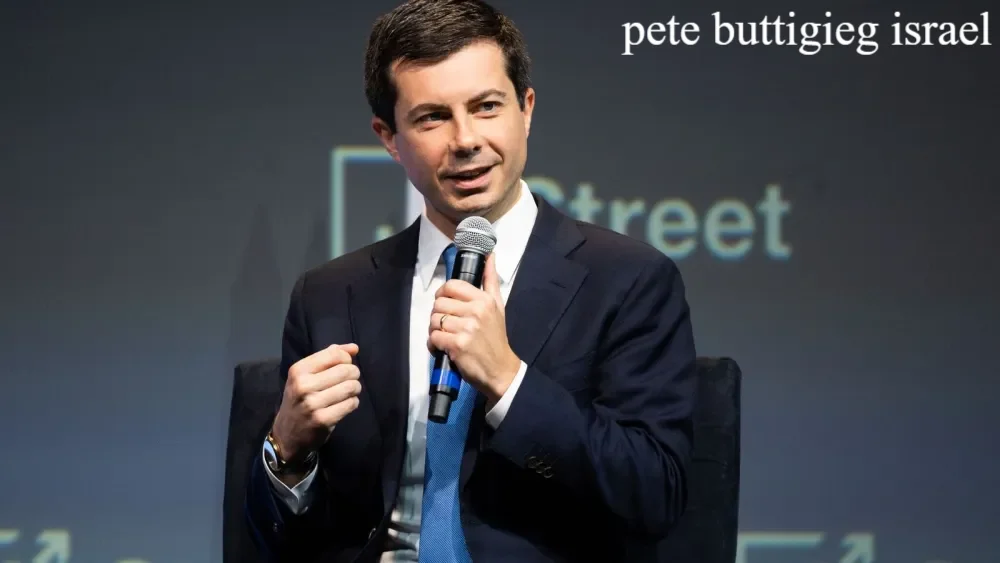
Pete Buttigieg’s Israel position has changed significantly in tone since the 2025 controversy surrounding his Pod Save America appearance.
He moved from cautious language about supporting Israel as a U.S. friend to a clearer willingness to restrict arms transfers and recognize Palestinian statehood within a two state framework.
That evolution reflects a broader debate inside the Democratic Party. As Buttigieg considers another presidential campaign in 2028, his approach to Israel, Gaza and Palestinian statehood could become an important measure of where he fits within the party.
For now, the clearest description is not that Buttigieg has abandoned support for Israel. Rather, he has moved toward a position that places greater emphasis on U.S. leverage, Palestinian statehood, humanitarian concerns and conditions on aspects of American support.