

Marcy Borders: The 9/11 Dust Lady’s Story and Legacy in 2026
inroduction
On September 11, 2001, Marcy Borders became part of one of the most recognizable photographs of the 9/11 attacks.
Borders was only 28 and had been working for Bank of America at the World Trade Center for about a month when the first plane struck the North Tower. She escaped the building and reached the street as the surrounding area filled with dust and debris. Photographer Stan Honda captured a single image of her covered from head to toe in gray dust.
The photograph traveled around the world, and Borders eventually became known as “The Dust Lady.” But behind the famous image was a woman whose life was profoundly changed by what she experienced that morning.
The physical escape was only the beginning. In the years that followed, Borders struggled with severe trauma, depression, anxiety, alcohol and drug addiction. She eventually entered rehabilitation and worked toward recovery.
In 2014, she was diagnosed with stomach cancer. Borders believed her illness could be connected to the toxic dust she inhaled during the attacks, although a definitive individual causal link between her cancer and 9/11 exposure was not established. She died on August 24, 2015, at age 42.
As the 25th anniversary of September 11 arrives in 2026, her story remains a reminder that the effects of the World Trade Center attacks did not end when the towers fell.
Who Was Marcy Borders, the 9/11 Dust Lady?
Marcy Borders was a New Jersey mother and Bank of America employee who survived the September 11 attacks and became internationally known after being photographed covered in dust outside the World Trade Center.
Borders was from Bayonne, New Jersey, and was the mother of two children. In 2001, she had recently started working at Bank of America in the World Trade Center.
She was 28 when the attacks occurred.
Her photograph became one of the defining images of the immediate aftermath of 9/11, but Borders’ personal story extended far beyond that single moment. She later spoke openly about the emotional consequences of surviving the attacks and the difficulties she faced in rebuilding her life.
Her daughter, Noelle Borders, has continued to speak about her mother’s life and legacy.
What Happened to Marcy Borders on September 11, 2001?
Marcy Borders was working inside the North Tower when the attacks began.
She was on the 81st floor and had been at her job for approximately one month. After the plane struck the building, Borders decided to leave rather than remain at her desk.
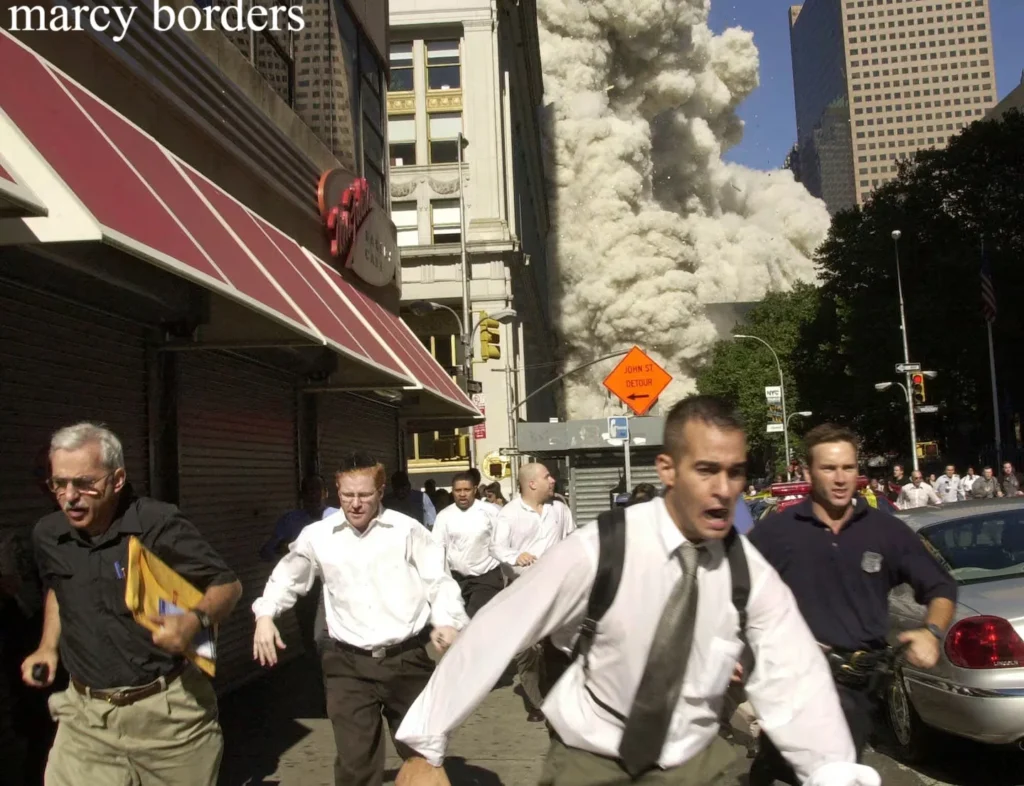
She made her way down from the tower and eventually reached the street. Around the same time, the South Tower collapsed, sending a huge cloud of dust and debris through the surrounding streets.
Borders later described struggling to breathe as the dust filled the area. She was eventually helped into a nearby building, where she was photographed by Stan Honda.
Her survival was remarkable, but the experience left an emotional impact that lasted for years.
sourecs: firstpost.com
Why Did Marcy Borders Become Known as the “Dust Lady”?
Marcy Borders became known as “The Dust Lady” because Stan Honda photographed her covered in gray dust and debris shortly after she escaped the World Trade Center.
Honda was working as a photographer in lower Manhattan that morning. He saw Borders enter a nearby lobby, covered in dust, and captured the now-famous photograph.
The image was initially distributed without Borders’ name attached to it. Her identity became known later after a relative contacted the Agence France-Presse office.
Honda subsequently visited Borders in Bayonne, where he learned more about the woman behind the photograph.
The photograph became one of the most enduring visual representations of the immediate aftermath of the September 11 attacks
4
How Did the Iconic Photo Affect Her Life?
The photograph made Borders recognizable around the world, but that attention was not necessarily comforting.
According to accounts from Borders and her family, seeing the image repeatedly became part of her trauma. She feared that being publicly identified could make her a target.
Her daughter Noelle later described how deeply her mother’s fear affected everyday life. Aircraft, tall buildings and reminders of the attacks could trigger intense anxiety and panic.
The photograph that became an important historical record of 9/11 was therefore also connected to a deeply personal experience for Borders.
That distinction is important. The world saw an iconic image, while Borders lived with the memory behind it.
How Did 9/11 Affect Marcy Borders’ Mental Health?

The attacks had a profound and long-lasting effect on Borders’ mental health.
After surviving 9/11, she struggled with fear, depression and anxiety. She reportedly became frightened by airplanes and tall buildings and found it difficult to return to normal life.
In later interviews, Borders described how her life spiraled after the attacks. She said she was unable to work normally for years and experienced intense fear whenever she encountered reminders of what had happened.
Her family also recalled how difficult it was for her to feel safe again.
The 9/11 Memorial & Museum notes that hundreds of thousands of people were exposed to dust, debris and traumatic circumstances during and after the attacks, and that survivors and responders have experienced both physical and emotional health consequences.
Marcy Borders’ Struggle With Depression and Addiction
One of the most painful parts of the Marcy Borders story was her struggle with addiction.
Borders later revealed that she turned to alcohol and drugs while trying to cope with the trauma. Her substance abuse became severe, and she eventually described using crack cocaine because she no longer wanted to live.
The consequences affected her family and personal life. Reports also described her losing custody of her children during her darkest period.
Her story, however, did not end there.
Borders eventually sought professional help and entered rehabilitation. Her recovery became an important part of the later chapter of her life.
Did Marcy Borders Go to Rehab?
Yes. Marcy Borders entered rehabilitation as she worked to overcome her drug addiction and regain control of her life.
Her recovery was gradual rather than simple. She had spent years dealing with the psychological consequences of 9/11, and addiction had become part of that struggle.
In 2011, Borders described reaching a major turning point. The killing of Osama bin Laden gave her a sense that one of the fears associated with the attacks had finally been removed.
She subsequently worked toward sobriety and rebuilding her relationship with her children.
This period is an important part of her story because it shows that the “Dust Lady” was not simply a symbol of tragedy. She was also a survivor who fought to rebuild her life.
How Did Marcy Borders Rebuild Her Life After 9/11?
Borders’ recovery involved confronting the trauma that had shaped much of her adult life.
By the early 2010s, she had made significant progress with sobriety and was focused on her family. Her story became one of recovery after years of depression and addiction.
Her daughter Noelle later described her mother as someone who ultimately fought to move forward and protect her children.
That recovery makes the story more complicated than the famous photograph suggests. Borders was not defined only by the moment captured by Honda. She was also a mother, daughter, sister and survivor who continued trying to rebuild her life.
What Happened to Marcy Borders After 9/11?
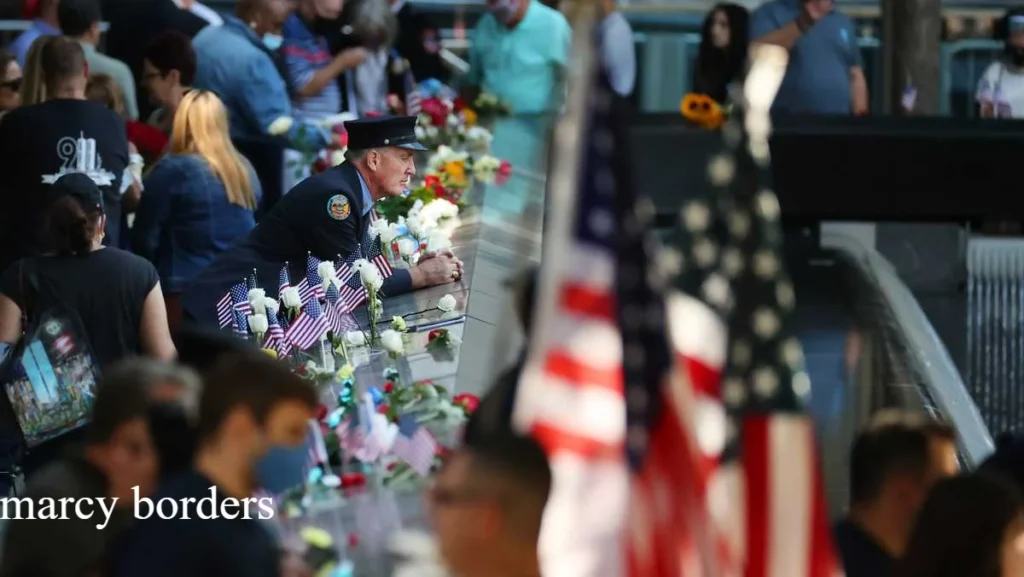
After the attacks, Borders largely remained in New Jersey and found returning to Manhattan difficult.
Her emotional connection to the World Trade Center site remained painful. According to accounts published after her death, even years later she struggled with being physically close to Manhattan because of her memories of the attacks.
At the same time, she became increasingly open about her experiences.
Her story eventually became part of the wider conversation about how 9/11 affected survivors who escaped physically but continued to experience psychological and health consequences long afterward.
The broader survivor experience is now supported by federal health programs that provide monitoring and treatment for certified World Trade Center related conditions.
What Type of Cancer Did Marcy Borders Have?
Marcy Borders was diagnosed with stomach cancer in 2014.
Reports published at the time of her death said she had been fighting the disease for approximately a year before she died.
Her diagnosis was especially devastating because she had already survived the World Trade Center attacks and overcome a serious period of addiction and depression.
Borders believed the cancer was connected to the dust and toxic materials she inhaled during 9/11. Her family also expressed that belief.
However, it is important to distinguish her belief about the cause of her illness from medically established individual causation.
Was Marcy Borders’ Cancer Linked to 9/11?
Borders believed her stomach cancer was caused by her exposure to dust and toxic substances during the 9/11 attacks, but there was no definitive public evidence establishing that her individual cancer was caused by 9/11 exposure.
This distinction matters.
The World Trade Center site contained a complex mixture of dust, debris and chemical substances. The 9/11 Memorial & Museum says hundreds of thousands of people were exposed to dust, debris and traumatic conditions following the attacks. The WTC Health Program now provides medical monitoring and treatment for certified health conditions associated with qualifying exposure.
The Memorial also reports that tens of thousands of first responders and survivors have had WTC Health Program certified cancers.
That broader evidence demonstrates that 9/11 exposure has had serious long-term health consequences. It does not, however, prove that Borders’ individual stomach cancer was caused by the dust she inhaled.
When Did Marcy Borders Die?
Marcy Borders died on August 24, 2015, at the age of 42.
She had been battling stomach cancer for about a year.
Her death came nearly 14 years after the September 11 attacks and generated renewed attention to the long-term health problems experienced by people who were exposed to the World Trade Center environment.
Her daughter Noelle later remembered her mother as much more than the woman in the famous photograph. She described her as a loving mother and someone whose perseverance should be remembered.
Marcy Borders’ Daughter and Family
Marcy Borders was a mother of two children, including her daughter Noelle Borders.
Noelle was eight years old when the 9/11 attacks happened. She later became one of the people who helped preserve her mother’s story.
In interviews years after Borders’ death, Noelle spoke about watching her mother deal with trauma and how the famous Dust Lady photograph continued to affect their family.
She also emphasized her mother’s determination to protect her children and rebuild her life.
That family perspective adds an important dimension to the Marcy Borders biography. Her story was not only about surviving a terrorist attack. It was also about the effect that trauma can have on families long after the immediate danger has passed.
What Is Marcy Borders’ Legacy?
Marcy Borders’ legacy is bigger than the Dust Lady photograph.
Her image remains one of the most recognizable photographs from September 11, but her life illustrates several different dimensions of the attacks:
- The immediate physical danger faced by World Trade Center workers
- The psychological trauma experienced by survivors
- The long-term effects of 9/11 exposure
- The devastating consequences of addiction and depression
- The possibility of recovery after severe trauma
- The importance of remembering survivors as individuals rather than symbols
Today, the 9/11 Memorial & Museum continues to document survivor experiences and the long-term health consequences associated with the attacks. Its current health resources describe ongoing medical monitoring and treatment for eligible members of the World Trade Center community.
As the United States marks the 25th anniversary of September 11 in 2026, Borders’ story remains particularly relevant.
The famous photograph shows only one moment.
Her life tells the much longer story.
Marcy Borders: Key Facts
| Fact | Details |
|---|---|
| Name | Marcy Borders |
| Nickname | The Dust Lady |
| 9/11 age | 28 |
| Age at death | 42 |
| Location on 9/11 | World Trade Center, North Tower |
| Floor | 81st floor |
| Employer | Bank of America |
| Hometown | Bayonne, New Jersey |
| Photographer | Stan Honda |
| Known for | Iconic dust-covered 9/11 photograph |
| Cancer | Stomach cancer |
| Cancer diagnosis | 2014 |
| Death | August 24, 2015 |
| Children | Two, including daughter Noelle |
Custom FAQ: Marcy Borders
Who was Marcy Borders?
Marcy Borders was a Bank of America employee who survived the September 11, 2001 attacks on the World Trade Center. She became internationally known after photographer Stan Honda captured her covered in dust and debris outside the towers.
Why was Marcy Borders called the Dust Lady?
She became known as the “Dust Lady” because of the iconic photograph showing her covered in gray dust after escaping the World Trade Center during the 9/11 attacks.
How old was Marcy Borders on 9/11?
Marcy Borders was 28 years old when the September 11 attacks occurred in 2001.
How old was Marcy Borders when she died?
Marcy Borders was 42 when she died in August 2015.
What happened to Marcy Borders after 9/11?
Borders struggled with severe trauma, depression, anxiety and substance addiction after surviving the attacks. She eventually entered rehabilitation and worked toward recovery.
Did Marcy Borders go to rehab?
Yes. Borders entered rehabilitation as part of her effort to overcome addiction and rebuild her life.
What type of cancer did Marcy Borders have?
Marcy Borders was diagnosed with stomach cancer in 2014 and died from the disease in 2015.
Did 9/11 cause Marcy Borders’ cancer?
Borders believed that her exposure to toxic dust during 9/11 caused her cancer. However, there was no definitive public evidence establishing that her individual stomach cancer was caused by her 9/11 exposure.
Who was Marcy Borders’ daughter?
Her daughter was Noelle Borders, who was eight years old when the September 11 attacks occurred. Noelle later spoke publicly about her mother’s life, trauma and legacy.
What is Marcy Borders remembered for?
Marcy Borders is remembered both for the iconic Dust Lady photograph and for her personal journey through 9/11 trauma, addiction, recovery, cancer and motherhood.
Verizon Stock Dividend History