

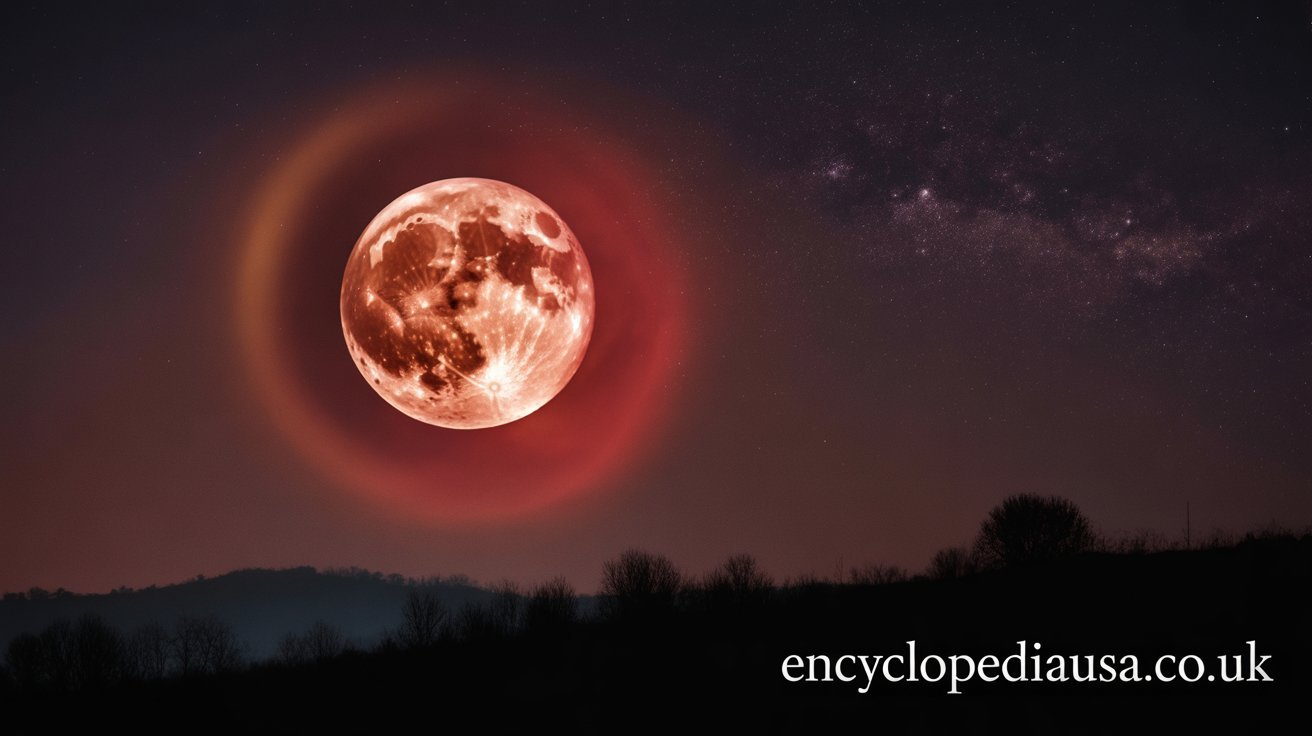
Stunning Blood Moon Total Lunar Eclipse Tonight: Everything You Need to Know
Introduction
Have you been hearing buzz about a blood moon total lunar eclipse tonight?
If you’ve glanced at social media or checked the news, you’ve probably seen people getting excited about this astronomical event. And honestly, they have good reason to be.
A blood moon total lunar eclipse is one of nature’s most dramatic sky shows. It transforms our familiar moon into a glowing reddish orb that captivates anyone lucky enough to see it.
Tonight could be your chance to witness this spectacular phenomenon. You don’t need expensive equipment or special training. You just need to know when to look up and where to point your eyes.
In this article, you’ll discover everything you need to know about the blood moon total lunar eclipse tonight. We’ll cover the best viewing times, explain why the moon turns red, share tips for photography, and answer your most pressing questions. Whether you’re a seasoned stargazer or someone who rarely looks at the night sky, this guide will help you make the most of tonight’s celestial show.
What Exactly Is a Blood Moon Total Lunar Eclipse?
Let’s start with the basics because understanding what you’re watching makes the experience so much better.
A lunar eclipse happens when Earth passes directly between the sun and the moon. This alignment blocks sunlight from reaching the moon’s surface. During a total lunar eclipse, Earth’s shadow completely covers the moon.
But here’s where it gets interesting. The moon doesn’t just disappear or go dark.
Instead, it takes on a reddish or copper color. This is why we call it a blood moon. The red color comes from sunlight passing through Earth’s atmosphere. Our atmosphere filters out blue light and bends red light toward the moon’s surface.
Think of it like this. If you were standing on the moon during the eclipse, you’d see Earth blocking the sun. But you’d also see a ring of red light around Earth’s edges. That’s every sunrise and sunset on Earth happening at once. That red light is what gives the moon its dramatic color tonight.
When to See the Blood Moon Total Lunar Eclipse Tonight
Timing is everything when it comes to celestial events.
The blood moon total lunar eclipse tonight follows a specific schedule. The exact times depend on your location, but the eclipse unfolds in several stages.
The partial eclipse begins when Earth’s shadow starts touching the moon. This happens gradually. You’ll notice a dark bite appearing on one edge of the moon.
Then comes totality. This is when the moon is completely inside Earth’s shadow and turns that distinctive red color. Totality can last anywhere from several minutes to over an hour.
Finally, the moon emerges from the shadow in reverse order. The whole process from start to finish typically takes several hours.
Here’s what you need to know for tonight:
- The eclipse begins during evening hours for many viewers
- Peak totality occurs when the moon appears deepest red
- The entire event is visible with the naked eye
- No special safety equipment is required unlike solar eclipses
I recommend stepping outside about 30 minutes before totality begins. This gives your eyes time to adjust to the darkness and lets you watch the transformation unfold gradually.
Why Does the Moon Turn Red During a Total Eclipse?
The science behind the blood moon is actually pretty fascinating.
When you look at the red moon tonight, you’re seeing something called Rayleigh scattering. This is the same phenomenon that makes sunsets red and the sky blue.
Earth’s atmosphere acts like a filter. When sunlight hits our atmosphere, the air molecules scatter different colors of light in different ways. Blue light scatters easily and gets dispersed in all directions. Red light has a longer wavelength and passes through more directly.
During a total lunar eclipse, sunlight must travel through Earth’s atmosphere to reach the moon. The atmosphere filters out most of the blue light. What remains is predominantly red and orange light that bends around Earth and illuminates the moon’s surface.
The exact shade of red can vary from eclipse to eclipse. Several factors influence the color:
- The amount of dust in Earth’s atmosphere
- Recent volcanic activity that adds particles to the air
- The eclipse’s path through Earth’s shadow
- Weather patterns and cloud cover in Earth’s atmosphere
Some blood moons appear deep crimson. Others look more orange or copper colored. A few rare eclipses produce an almost brown moon. Tonight’s color will depend on current atmospheric conditions around our entire planet.
Best Places and Positions for Viewing Tonight
Location matters when you’re planning to watch the blood moon total lunar eclipse tonight.
You want to find a spot with a clear view of the sky. The moon will be visible to anyone on the nighttime side of Earth during the eclipse. But some viewing locations are definitely better than others.
Here’s what makes a great viewing spot:
Dark locations work best. City lights create light pollution that washes out fainter celestial objects. While the eclipsed moon is still visible from urban areas, you’ll see more detail from darker locations. Parks, beaches, or countryside areas away from bright lights offer superior views.
Open horizons help tremendously. You need an unobstructed view of the sky. Tall buildings, trees, or mountains can block your sightline. Look for open fields, hilltops, or waterfront areas where the sky stretches wide.
Comfort makes a difference. You’ll be outside for a while. Bring a blanket or lawn chair. Dress warmly because nighttime temperatures drop. Consider bringing snacks and hot drinks to make the experience more enjoyable.
Your backyard might work perfectly fine if you have a clear view. You don’t need to travel to remote locations unless you want the absolute best possible view.
What Equipment Do You Need to Watch?
Here’s some good news about the blood moon total lunar eclipse tonight.
You don’t need any special equipment at all. Your eyes are perfectly sufficient. Unlike solar eclipses, lunar eclipses are completely safe to watch with naked eyes.
That said, certain tools can enhance your viewing experience:
Binoculars bring the moon closer. Even basic binoculars reveal amazing details during an eclipse. You’ll see the moon’s craters, the gradual shadow progression, and subtle color variations. Any binoculars work. You don’t need astronomy-specific models.
Telescopes offer the most detailed views. If you own a telescope or can borrow one, tonight is a great time to use it. Even a small telescope shows incredible detail on the lunar surface. You’ll watch Earth’s shadow creep across individual craters and mountain ranges.
Cameras capture the memory. Smartphones can photograph the blood moon with varying success. DSLR cameras with telephoto lenses produce stunning results. We’ll cover photography tips in the next section.
Star charts add context. Apps like SkySafari or Stellarium show you exactly where the moon is and what other objects surround it. They’re free and work on most smartphones.
The most important equipment is actually your patience and attention. The eclipse unfolds slowly. Take time to really observe the changes. Notice how the color shifts. Watch how the moon’s brightness decreases then increases. These details make the experience memorable.
Photography Tips for Capturing the Blood Moon
Want to photograph the blood moon total lunar eclipse tonight?
Lunar eclipse photography is surprisingly accessible. You don’t need professional equipment to get decent shots. But a few tips will dramatically improve your results.
Use a tripod or stable surface. Camera shake ruins moon photos faster than anything else. Even slight movement creates blur. A tripod keeps your camera perfectly still. If you don’t have a tripod, brace your camera against a wall, car roof, or fence post.
Zoom in as much as possible. The moon looks bigger than it actually appears in photos. Use the longest lens you have. Telephoto lenses in the 200mm to 400mm range work beautifully. Even your smartphone’s digital zoom helps, though optical zoom is better.
Adjust your exposure settings. The blood moon is much darker than the normal full moon. Your camera’s automatic settings might struggle. Try these manual settings as a starting point:
- ISO: 800 to 1600
- Aperture: f/5.6 to f/8
- Shutter speed: 1 to 4 seconds during totality
Experiment with different combinations. Take multiple shots at various settings. Digital storage is cheap so shoot liberally.
Consider composition beyond just the moon. Including foreground elements makes photos more interesting. Try framing the blood moon with a tree, building, or landscape feature. These compositional choices transform a simple moon shot into something special.
Take photos throughout the eclipse. Don’t just shoot during totality. Capture the partial phases too. Later, you can create a composite image showing the eclipse progression. This makes a stunning final result.
I’ve photographed several lunar eclipses and my best advice is this: Take some photos early, then put the camera down and just watch. Don’t spend the entire eclipse staring at a screen. Experience the moment with your own eyes.
How Often Do Blood Moon Total Lunar Eclipses Occur?
You might be wondering if you’ll get another chance to see this.
Total lunar eclipses happen relatively frequently compared to total solar eclipses. Earth typically experiences two to four lunar eclipses each year. However, not all of them are total eclipses. Some are partial or penumbral eclipses where only part of the moon enters Earth’s shadow.
Total lunar eclipses specifically occur about once every 1.5 years on average. But here’s the catch. Each eclipse is visible from only half of Earth. The nighttime half gets the show while the daylight half misses out.
This means you personally might see a total lunar eclipse every two to three years if you’re lucky. Sometimes they come in clusters. Other times you’ll wait several years between visible eclipses from your location.
Blood moon eclipses happen when the moon is totally eclipsed and turns red. This occurs during every total lunar eclipse. The name blood moon is more of a descriptive term than a separate astronomical category.
Some years feature multiple total lunar eclipses visible from the same location. Other years offer none at all. Eclipse cycles follow complex patterns based on Earth, moon, and sun alignments.
The bottom line is simple. If you can see the blood moon total lunar eclipse tonight, take advantage of it. The next one might not be visible from your area for quite a while.
Cultural and Historical Significance of Blood Moons
Blood moons have fascinated humanity for thousands of years.
Ancient cultures created elaborate myths to explain lunar eclipses. Many societies viewed them with fear or superstition. Without understanding the science, people interpreted the moon’s transformation as a bad omen.
Some cultures believed a celestial creature was devouring the moon. Others thought the red color signified upcoming disasters or divine anger. People performed rituals and ceremonies to protect themselves during eclipses.
Ancient astronomers in Babylon, China, and Greece studied eclipses carefully. They eventually learned to predict when eclipses would occur. This knowledge was considered powerful and sometimes kept secret.
Today we understand the science completely. But blood moons still hold cultural significance for many people. Various traditions assign spiritual or prophetic meaning to these events.
Some religious texts mention blood moons in symbolic contexts. Certain groups interpret eclipse patterns as having prophetic significance. Whether you view tonight’s blood moon through a scientific, spiritual, or simply aesthetic lens, it remains a profound experience.
Throughout history, eclipses have served as time markers for major events. Historical records reference specific eclipses, helping modern historians date ancient events accurately. The blood moon total lunar eclipse tonight becomes part of that continuous thread connecting us to everyone who ever looked up in wonder.
Weather Considerations for Tonight’s Viewing
Weather can make or break your eclipse viewing experience.
Clear skies are essential for seeing the blood moon total lunar eclipse tonight. Clouds block your view completely. Unfortunately, you can’t control the weather. But you can check forecasts and plan accordingly.
Here’s what to do:
Check weather forecasts throughout the day. Conditions can change. A cloudy afternoon might clear by evening. Stay updated on the latest predictions for your area.
Look at satellite images. Weather apps show cloud cover in real time. These help you gauge whether conditions are improving or worsening.
Have backup locations in mind. If clouds loom over your immediate area, sometimes driving 30 or 60 minutes puts you under clearer skies. Monitor regional weather to find clear patches.
Consider elevation changes. Higher elevations sometimes rise above low cloud layers. If you live near hills or mountains, heading upward might get you above the clouds.
Even thin clouds can partially obscure the eclipse. High wispy clouds might let you see the moon but reduce the dramatic red color. Thick storm clouds block everything completely.
If weather doesn’t cooperate tonight, don’t despair. Many organizations and astronomy groups livestream eclipses online. You can watch high-quality feeds from locations with perfect weather. It’s not the same as seeing it in person, but it’s better than missing it entirely.
What Else Will Be Visible in the Sky Tonight?
The blood moon total lunar eclipse tonight isn’t the only thing worth seeing.
During totality, when the moon glows red and appears much dimmer than usual, something magical happens with the rest of the sky. Stars that normally get washed out by the bright full moon become visible.
You’ll see significantly more stars during the eclipse. The darkened moon allows fainter celestial objects to shine through. This creates a rare opportunity to observe both the eclipsed moon and deep sky objects simultaneously.
Look for these features tonight:
Major constellations appear clearer. Identify familiar star patterns around the moon’s location. Star charts help you recognize what you’re seeing.
Planets might be visible. Depending on current planetary positions, you might spot bright planets like Venus, Mars, Jupiter, or Saturn. They look like steady bright stars that don’t twinkle.
The Milky Way could emerge. From dark locations, the dimmed moon might allow the Milky Way’s faint band to become visible. This is rare during a full moon phase.
Meteor activity continues. If any meteor showers coincide with tonight’s date, you might catch shooting stars alongside the blood moon. Check astronomy calendars for current meteor shower activity.
The contrast between the red moon and the darkened star field creates a surreal atmosphere. It’s like experiencing nighttime in a completely different way. This enhanced stargazing opportunity is a bonus benefit many people don’t anticipate.
Common Myths and Misconceptions About Blood Moons
Let’s clear up some confusion about the blood moon total lunar eclipse tonight.
Several myths and misconceptions circulate about lunar eclipses. Understanding what’s true helps you appreciate the real event without unnecessary worry or false expectations.
Myth: Lunar eclipses are dangerous to watch. This is completely false. Lunar eclipses are perfectly safe to observe with naked eyes. Unlike solar eclipses, no special protection is needed. You can stare at the blood moon all you want without harming your vision.
Myth: The moon actually turns to blood. Despite the name, the moon doesn’t physically change. It’s still made of rock. The red color is purely an optical effect caused by Earth’s atmosphere filtering sunlight. The moon itself remains unchanged.
Myth: Blood moons cause disasters or bad luck. No scientific evidence supports any connection between lunar eclipses and earthly events. Earthquakes, storms, and other disasters occur randomly throughout the year. They don’t correlate with eclipses.
Myth: You need special timing to see anything. While totality is the main event, the entire eclipse is worth watching. The partial phases show fascinating details as Earth’s shadow gradually covers the moon. Don’t feel like you missed everything if you don’t catch totality.
Myth: Blood moons affect human behavior. Studies find no connection between lunar eclipses and human behavior, health, or psychological states. The full moon behavior myth already lacks scientific support. The blood moon carries no additional effects.
Myth: Animals go crazy during blood moons. Wildlife might respond to the temporary darkness, but they don’t exhibit unusual or dangerous behavior. Nocturnal animals continue their normal activities. Domestic pets remain unaffected.
Understanding these facts helps you enjoy the blood moon total lunar eclipse tonight without unfounded concerns or unrealistic expectations.
The Science Behind Eclipse Predictions
Ever wonder how astronomers know when eclipses will happen?
Eclipse predictions are based on precise mathematical calculations. Scientists can predict eclipses centuries in advance with incredible accuracy. This precision comes from understanding orbital mechanics.
Earth orbits the sun while the moon orbits Earth. These orbits follow predictable patterns. The moon’s orbit is tilted about five degrees relative to Earth’s orbit around the sun. Because of this tilt, the sun, Earth, and moon don’t align perfectly every month.
Lunar eclipses only occur during full moons when Earth can potentially cast its shadow on the moon. But the alignment must be nearly perfect. This happens periodically following eclipse cycles.
The most famous eclipse cycle is called the Saros cycle. It repeats every 18 years, 11 days, and 8 hours. Eclipses separated by one Saros cycle share very similar characteristics. Ancient astronomers discovered this pattern thousands of years ago.
Modern astronomers use sophisticated computer models. They account for gravitational influences from all solar system bodies. They factor in the moon’s gradually increasing distance from Earth. They calculate the precise shape and size of Earth’s shadow.
These calculations tell us exactly when the blood moon total lunar eclipse tonight begins and ends. They specify which parts of Earth will see it. They predict the eclipse’s magnitude and duration down to the second.
This predictive power shows how thoroughly we understand celestial mechanics. The same equations that predicted tonight’s eclipse will accurately forecast eclipses occurring in the year 3026.
Sharing the Experience with Others
The blood moon total lunar eclipse tonight is better when shared.
Celestial events create natural opportunities for community and connection. Consider making tonight’s eclipse a social experience rather than a solitary one.
Here are some ideas:
Host a viewing party. Invite friends, family, or neighbors to watch together. Provide snacks, drinks, and warm blankets. Share binoculars and telescopes. Explain what’s happening to those less familiar with astronomy.
Connect with local astronomy clubs. Many clubs organize public viewing events for major celestial occurrences. These gatherings offer access to quality telescopes and knowledgeable amateur astronomers who love sharing their passion.
Share on social media. Post photos and observations online. Use hashtags related to the eclipse. Join the global conversation as millions of people worldwide watch the same event.
Teach younger observers. If you have children or work with young people, tonight offers an incredible educational opportunity. Kids who see a blood moon often develop lasting interest in science and astronomy.
Document your experience. Keep a journal entry about tonight. Note what you see, think, and feel. These personal records become meaningful over time.
I remember my first total lunar eclipse vividly. We gathered on someone’s rooftop with blankets and thermoses of hot chocolate. The group included experienced stargazers and complete beginners. Everyone shared their observations and questions. That shared experience made the eclipse far more memorable than if I’d watched alone.
Tonight’s blood moon total lunar eclipse creates these connection opportunities. Don’t let it pass by isolated and unshared.
What Happens to the Moon’s Surface During an Eclipse?
You might be curious about what an astronaut on the moon would experience.
During the blood moon total lunar eclipse tonight, the moon’s surface undergoes dramatic changes. These aren’t visible from Earth, but they’re fascinating to understand.
The most obvious change is lighting. The moon’s surface goes from brilliant sunlight to darkness illuminated only by that red glow from Earth. The temperature drops dramatically. Sunlit lunar surfaces reach about 260 degrees Fahrenheit. During totality, temperatures plummet to around minus 280 degrees Fahrenheit.
This temperature swing happens quickly because the moon has no atmosphere to moderate temperature changes. The 500-degree shift occurs over just a couple of hours. This thermal stress causes expansion and contraction of surface rocks.
From the moon’s surface, Earth would appear enormous in the sky. During totality, Earth would have a brilliant red ring around it. That ring is all the sunrises and sunsets on Earth happening simultaneously. The effect would be absolutely stunning.
The moon’s appearance changes subtly during an eclipse. Crater shadows shift as the lighting angle transforms. Features that are prominent in direct sunlight might become harder to see in the dimmer red light.
No humans currently live on the moon, so no one experiences this directly. But lunar rovers and equipment on the surface do undergo these temperature swings during eclipses. Engineers designing lunar missions must account for eclipse conditions.
Understanding these surface effects adds another dimension to appreciating the blood moon total lunar eclipse tonight. You’re not just watching a color change. You’re witnessing a dramatic environmental transformation of an entire world.
Preparing Children to Watch the Eclipse
The blood moon total lunar eclipse tonight offers wonderful family viewing.
Children often find eclipses fascinating. The visible transformation of a familiar object captures their imagination. With some preparation, tonight can become an educational and memorable experience for young observers.
Here’s how to prepare children for eclipse watching:
Explain what will happen in simple terms. Avoid overly technical language. Say something like: “Earth’s shadow will cover the moon and make it look red. It’s like a giant shadow puppet show in space.”
Set realistic expectations. Eclipses unfold slowly. Tell children the changes happen gradually over hours. This prevents impatience and disappointment.
Make it comfortable. Children won’t enjoy standing outside for hours. Bring chairs, blankets, and pillows. Create a cozy outdoor setup. Serve special snacks reserved for the occasion.
Incorporate activities. Between significant eclipse phases, play moon-themed games. Tell stories about space exploration. Draw pictures of what you’re seeing. This keeps children engaged during slower moments.
Answer questions honestly. Kids ask wonderful questions during astronomical events. If you don’t know an answer, admit it. Look it up together later. This models curiosity and learning.
Keep a flexible schedule. Young children might get cold, tired, or bored. Have a plan to go inside if needed. Don’t force them to stay out if they’re not enjoying it.
I’ve watched eclipses with children ranging from toddlers to teenagers. The experience often sparks lasting interest in science. One child I know still talks about the lunar eclipse she saw five years ago. It became a formative memory that influenced her educational interests.
Tonight’s blood moon total lunar eclipse can create similar powerful memories for the young people in your life.
After the Eclipse: What Comes Next?
Once the blood moon total lunar eclipse tonight concludes, you might feel inspired to explore astronomy further.
Celestial events like this often awaken interest in the night sky. Many amateur astronomers trace their passion back to a single memorable observation. Perhaps tonight will be that moment for you.
Here are some ways to continue your astronomical journey:
Learn the constellations. Start identifying star patterns visible from your location. Learn the stories behind their names. Track how they shift with the seasons.
Follow the moon’s phases. The moon provides constant entertainment. Watch it wax and wane each month. Notice how moonrise and moonset times change. Observe different features during various phases.
Track visible planets. Several planets are visible with naked eyes. Learn which ones are currently observable. Follow their movements against background stars over weeks and months.
Join astronomy communities. Local clubs welcome beginners. Online forums and social media groups share observations and advice. These communities enhance your learning and enjoyment.
Invest in basic equipment gradually. Start simple. Good binoculars are sufficient for years of sky watching. Add a telescope later if interest persists.
Attend star parties. Public observing events let you try different telescopes and meet experienced observers. These gatherings are welcoming and educational.
Keep an observation journal. Record what you see, when you see it, and under what conditions. These notes become valuable references and cherished records.
The blood moon total lunar eclipse tonight is just one of countless fascinating phenomena visible in our sky. The universe offers endless wonders for those who take time to look up.
Conclusion
The blood moon total lunar eclipse tonight presents a remarkable opportunity to witness one of nature’s most stunning displays.
You now know when to look, where to position yourself, and what to expect. You understand the science behind the red color and the cultural significance these events hold. You have practical tips for viewing, photographing, and sharing the experience.
Most importantly, you’re prepared to simply enjoy it.
Step outside tonight and look up. Watch Earth’s shadow transform our familiar moon into something extraordinary. Notice the subtle color changes, the gradual progression, the unusual darkness that reveals more stars. Share the moment with others or savor it in quiet contemplation.
These celestial events remind us that we live in a dynamic, interconnected solar system. Earth, moon, and sun perform an elegant cosmic dance. Tonight, we get to watch one particularly beautiful movement in that ancient choreography.
The blood moon total lunar eclipse tonight won’t last forever. In a few hours, the moon will return to its usual brilliant white. But the memory of watching it transform will stay with you far longer.
Will you be watching the blood moon total lunar eclipse tonight? What are you most excited to see?
Frequently Asked Questions
Is it safe to look at the blood moon total lunar eclipse tonight?
Yes, it’s completely safe to watch a lunar eclipse with your naked eyes. Unlike solar eclipses, you don’t need any special protective equipment. You can look directly at the blood moon throughout the entire eclipse without any risk to your vision. Binoculars and telescopes are also safe to use.
What time does the blood moon total lunar eclipse start tonight?
The exact timing depends on your geographic location and time zone. The eclipse typically unfolds over several hours with distinct phases. The partial eclipse begins first, followed by totality when the moon appears red. Check local astronomy websites or apps for precise times in your area. Plan to go outside at least 30 minutes before totality begins.
Why is the moon red during a total lunar eclipse?
The moon turns red because of sunlight passing through Earth’s atmosphere. Earth’s atmosphere acts like a filter, scattering blue light and allowing red light to pass through and bend toward the moon. This red light illuminates the moon’s surface during totality, creating the blood moon effect. It’s the same process that makes sunsets appear red.
How long will the blood moon total lunar eclipse last tonight?
The entire eclipse from beginning to end typically lasts several hours. The totality phase, when the moon appears red, usually lasts between 30 minutes to over an hour depending on the specific eclipse geometry. The partial phases before and after totality each last about an hour. The exact duration for tonight’s eclipse depends on the moon’s path through Earth’s shadow.
Can I take pictures of the blood moon with my smartphone?
Yes, you can photograph the blood moon with a smartphone, though results vary by phone model and conditions. Use your phone’s manual mode if available, increase ISO, and use the longest zoom setting. A tripod or stable surface helps significantly. Smartphone photos won’t match DSLR quality, but you can capture memorable images. Consider using a telephoto lens attachment designed for smartphones.
Will the blood moon total lunar eclipse be visible from my location?
The eclipse is visible from anywhere on Earth’s nighttime side during the event. If the moon is above your horizon during the eclipse hours, you can see it. Check astronomy websites or apps that show eclipse visibility maps for your specific location. Weather permitting, roughly half of Earth can view each lunar eclipse.
What’s the difference between a blood moon and a regular full moon?
A blood moon is a total lunar eclipse occurring during a full moon. During a regular full moon, sunlight directly illuminates the moon’s surface making it bright white. During a blood moon, Earth blocks direct sunlight and only red light filtered through Earth’s atmosphere reaches the moon. This creates the distinctive red or copper color. The moon itself doesn’t change, only how it’s illuminated.
Do I need a telescope to see the blood moon total lunar eclipse tonight?
No, you don’t need any special equipment. The blood moon is easily visible with naked eyes from anywhere you can see the moon. Binoculars enhance the view by showing more detail and craters. Telescopes provide even closer views. But the overall eclipse, including the dramatic red color, is perfectly observable without any optical aids.
Will tonight’s blood moon affect tides?
Lunar eclipses occur during full moons, which already create strong spring tides. The eclipse itself doesn’t change tidal forces. The moon’s gravitational pull remains constant whether it’s in Earth’s shadow or not. Normal full moon tides will occur, but the eclipse doesn’t amplify them. Coastal areas will experience typical full moon tidal patterns.
When is the next blood moon total lunar eclipse after tonight?
Total lunar eclipses occur approximately every 1.5 years on average, though visibility varies by location. The next total lunar eclipse might not be visible from your specific location for two to three years. Eclipse prediction websites maintain schedules of upcoming lunar eclipses with visibility information. After enjoying tonight’s blood moon, you can check when your area will see the next one.
Also Read Encyclopediausa.co.uk
Category: Astronomy & Space