

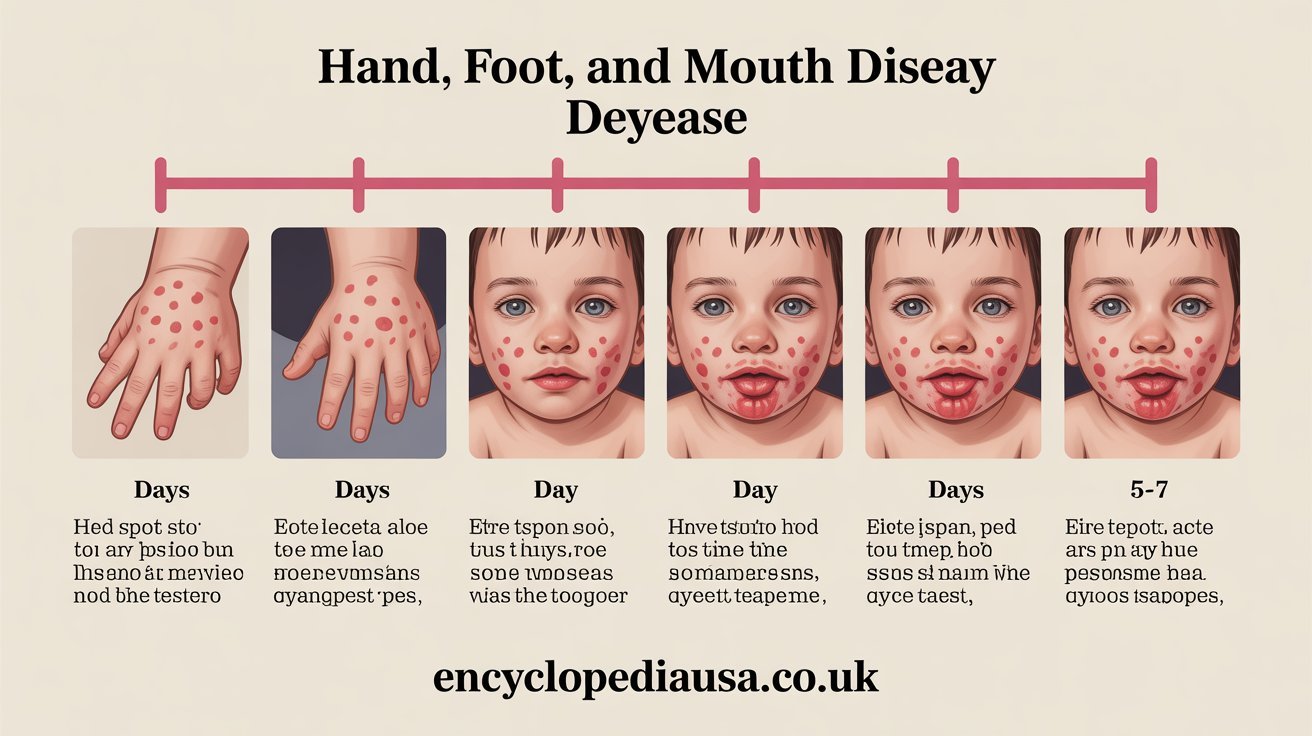
Early Signs Hand Foot and Mouth Day by Day Shocking Timeline
Introduction
Your toddler woke up grumpy, refused breakfast, and now you notice tiny red spots near their mouth. Your stomach drops. Is it hand, foot and mouth disease?
You are not alone. Early Signs Hand Foot and Mouth Day by Day disease (HFMD) affects millions of young children every year, and it spreads fast, especially in daycares and preschools. The tricky part? The early signs of hand foot and mouth disease look a lot like a regular cold at first. By the time the telltale blisters appear, your child has already been contagious for days.
This article walks you through exactly what happens day by day, from the very first symptom to full recovery. You will learn what to watch for at each stage, when to call the doctor, and what you can do to keep your child comfortable throughout. Whether you are a first-time parent or you have been through this before, this guide gives you a clear, honest picture of how HFMD unfolds.
What Is Hand, Foot and Mouth Disease?
Hand, foot and mouth disease is a common viral illness caused mainly by the coxsackievirus A16 and enterovirus 71. It primarily affects children under five years old, though older kids and adults can get it too.
The disease gets its name from the rash and blisters that appear on three specific areas: the hands, feet, and mouth. But before those blisters show up, the virus moves through your child’s body in a predictable pattern.
Understanding that pattern helps you act early.
Quick facts you should know:
- HFMD is not the same as foot and mouth disease in animals. They are completely different illnesses caused by different viruses.
- The incubation period is three to six days. Your child can look perfectly healthy and still spread the virus.
- It is most contagious during the first week of illness.
- Most children recover fully within seven to ten days.
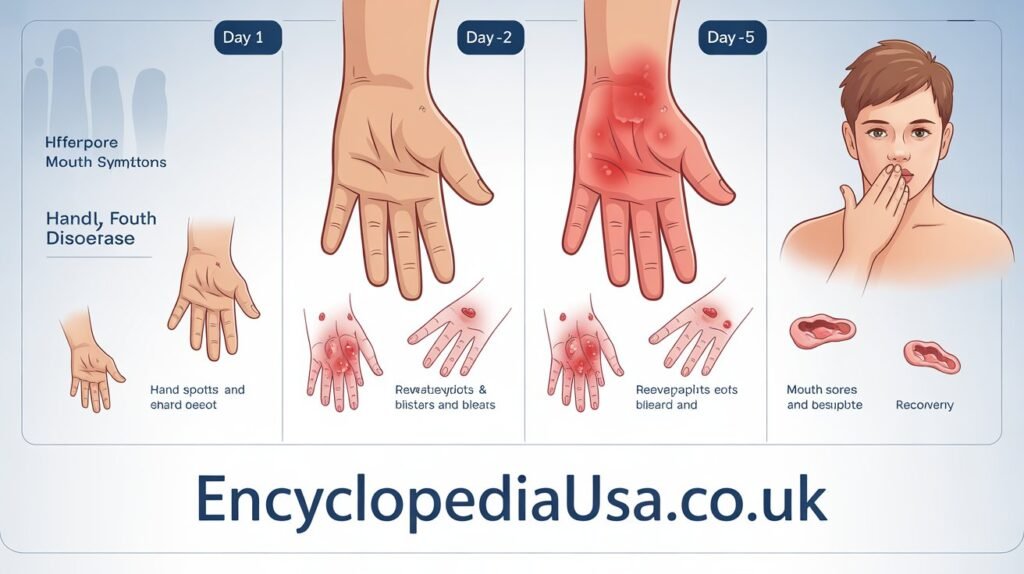
Early Signs Hand Foot and Mouth: A Day by Day Breakdown
This is the part most parents search for and struggle to find clearly explained. Here is what typically happens at each stage. Keep in mind that every child is different, so the exact timing can vary by a day or two.
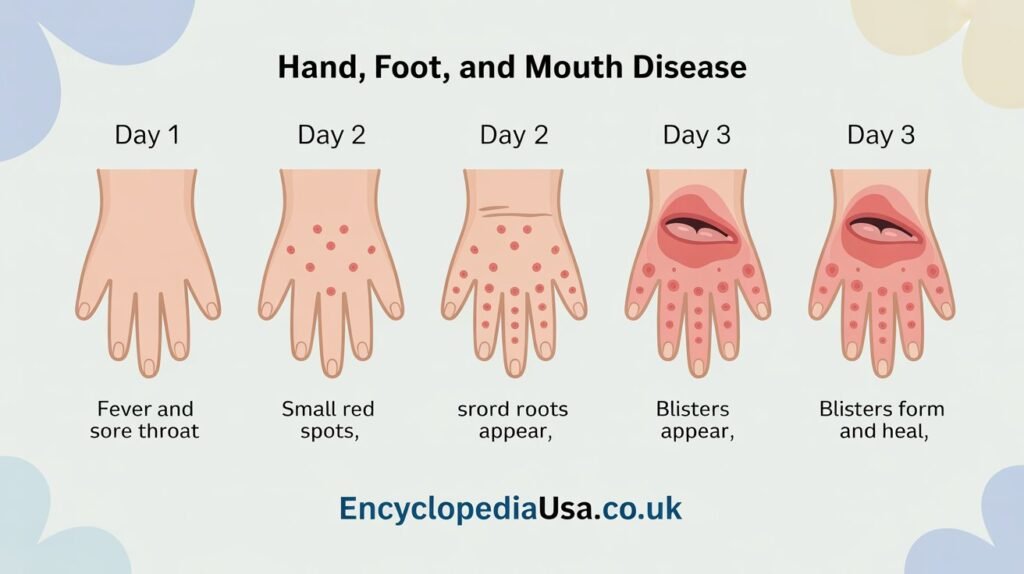
Day 1 to Day 2: The Prodromal Phase (It Looks Like a Cold)
The earliest signs of hand foot and mouth disease feel completely ordinary. That is what makes this phase so deceptive.
On day one or two, your child may experience:
- A low-grade fever between 38°C and 39°C (100.4°F to 102.2°F)
- Sore throat or throat pain when swallowing
- Runny nose or mild congestion
- Loss of appetite, especially for solid foods
- General fussiness, fatigue, or unusual clinginess
- Drooling more than usual, especially in babies
At this stage, nothing looks like HFMD. Most parents assume it is a regular cold or teething. But what is happening inside the body is significant. The virus is already replicating and your child is already contagious.
What you can do right now:
- Keep your child home from daycare or school
- Offer plenty of fluids, including water, milk, and diluted juice
- Give age-appropriate fever reducers like acetaminophen or ibuprofen if needed
- Watch closely for new symptoms over the next 24 to 48 hours
One thing I always tell parents: if your child has a fever and suddenly stops eating or drinking, that is your first real warning sign that something more than a cold is happening.
Day 2 to Day 3: Mouth Sores Appear
This is usually the moment parents realize something is wrong.
Around day two to three, small red spots begin appearing inside the mouth. These spots quickly turn into painful ulcers or blisters. You might notice them on:
- The tongue
- The inside of the cheeks
- The gums
- The back of the throat
These sores hurt. They hurt a lot. Your child may suddenly refuse to eat or drink anything, especially anything warm, salty, or acidic. Crying during mealtimes is extremely common at this stage.
In infants, you might notice increased drooling paired with fussiness during feeding. That combination, especially alongside a recent fever, is a strong signal to look more closely at the mouth.
How to spot mouth sores in young children:
- Gently tilt their head back in good light
- Look for small grey or white spots surrounded by red edges
- Check the tongue, the roof of the mouth, and the insides of the cheeks
Managing mouth pain:
- Offer cold foods like yogurt, ice cream, or cold water
- Avoid citrus, salty snacks, and anything spicy
- Ask your doctor about oral pain relief gels safe for children
- Use a syringe or cup instead of a bottle if swallowing is painful
Dehydration becomes a real risk at this point. Keep pushing fluids gently and consistently.
Day 3 to Day 4: The Skin Rash and Blisters Emerge
By day three or four, the signature blisters begin to appear on the skin. This is the moment hand foot and mouth disease becomes visually unmistakable.
The rash typically shows up on:
- Palms of the hands and between the fingers
- Soles of the feet and sometimes on the toes
- Buttocks and the genital area in some children
- Occasionally on the legs, arms, or trunk in more widespread cases
The blisters are usually small, flat or slightly raised, and surrounded by a red ring. They may look like tiny oval or elongated spots. In some children, the blisters fill with fluid and become more pronounced. In others, the rash stays flat and barely noticeable.
Here is something important to know: the blisters on the skin usually do not itch or hurt the way chickenpox blisters do. Most children tolerate the skin rash much better than the mouth sores.
What the rash looks like:
- Small red spots or flat lesions, roughly 3 to 7 mm
- Located on palms and soles most consistently
- May appear as a faint pink rash in babies or children with lighter skin
- May be harder to spot in children with darker skin tones, appearing as small bumps
What to avoid:
- Do not pop or scratch the blisters
- Keep the skin clean and dry
- Dress your child in loose, breathable clothing
- Avoid hot baths during this stage
Day 4 to Day 5: Peak Illness
Days four and five are usually the hardest. This is when everything is happening at once: mouth sores are at their most painful, the rash is fully visible, and your child feels miserable.
Fever may return or continue during this phase. Energy levels will be low. Your child will likely want to be held, sleep more than usual, and eat very little.
Red flags that require immediate medical attention:
- Signs of dehydration: no tears when crying, dry mouth, no wet diapers for eight or more hours, sunken eyes
- Fever above 39.5°C (103°F) that does not respond to medication
- Extreme drowsiness or difficulty waking
- Neck stiffness or sensitivity to light
- Breathing difficulties or rapid breathing
- Seizures
These symptoms can indicate rare but serious complications like viral meningitis or encephalitis, which are associated with enterovirus 71. They require emergency care without delay.
Keeping your child comfortable at peak illness:
- Prioritize fluid intake above everything else
- Offer cold, soft, bland foods when they will take them
- Use a cool damp cloth on the forehead for comfort
- Keep rest and sleep as the main focus of the day
Day 5 to Day 7: Gradual Improvement
Around day five to seven, most children begin to turn a corner. The fever usually breaks by this point. Mouth sores start to heal and become less painful, which means eating and drinking get easier.
The skin blisters begin to dry out and flatten. Some may peel slightly, which is normal. You do not need to apply creams or coverings unless a blister breaks open and the area looks irritated.
Energy slowly returns. Your child may still be tired and clingy but will start showing more interest in food, toys, and interacting with you.
This is also the stage where parents often wonder: is my child still contagious?
The answer is yes, at least partially. The virus can still be shed from the throat for up to one week and from the stools for several weeks after symptoms begin. Good hygiene remains critical during this period.
Day 7 to Day 10: Full Recovery
By the end of the first week or slightly into the second, most children are back to their normal selves. Mouth sores are healed. Blisters have dried up and faded. Appetite returns to normal.
One thing to watch for in the weeks following recovery: nail changes. Some children experience temporary loss or shedding of their fingernails or toenails two to four weeks after HFMD. This sounds alarming, but it is harmless and the nails grow back normally. It is called onychomadesis and it happens because the virus temporarily disrupts nail growth.
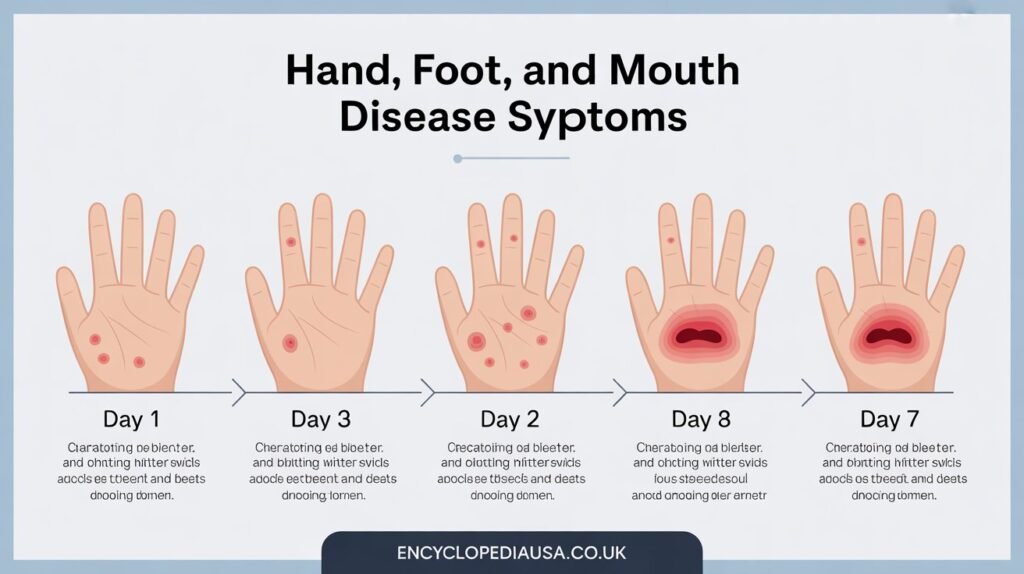
How Hand Foot and Mouth Spreads: What Every Parent Needs to Know
Understanding transmission helps you protect other children in your home and community.
HFMD spreads through:
- Direct contact with saliva, mucus, blister fluid, or stool of an infected person
- Touching contaminated surfaces and then touching the face
- Respiratory droplets when an infected person coughs or sneezes
- Close contact like hugging, kissing, or sharing utensils
Prevention tips that actually work:
- Wash hands thoroughly with soap and water, especially after diaper changes and before meals
- Disinfect toys, doorknobs, and surfaces regularly during an outbreak
- Avoid sharing cups, utensils, towels, or toothbrushes
- Keep infected children home until the fever is gone and blisters have dried
- Teach older children to cover coughs and avoid touching their faces
When Adults Get Hand Foot and Mouth Disease
Yes, adults can get HFMD too. If you are a parent caring for a sick child, your exposure is high.
Adults often experience milder symptoms than children. Some adults have almost no symptoms at all. But you can still spread the virus even without obvious illness.
Pregnant women should be especially cautious. Although most cases in pregnancy are mild, some evidence suggests that infection close to delivery could pose risks to the newborn. Speak to your doctor if you are pregnant and have been exposed.
Common Questions Parents Ask About HFMD
Does hand foot and mouth disease always cause blisters?
Not always. Some children develop only mouth sores without any skin rash. Others may have a rash but very mild or no mouth involvement. The presentation varies widely.
Can my child get HFMD more than once?
Yes. Different strains of the virus cause HFMD, so immunity to one strain does not protect against others. Some children get it two or three times in early childhood.
Should I take my child to the doctor?
You should call your doctor if your child is under one year old, shows signs of dehydration, has a fever lasting more than three days, or seems unusually unwell. Most mild cases can be managed at home.
Is there a vaccine for HFMD?
In some countries, an EV71 vaccine has been developed and approved for use in young children. It is not yet widely available globally. Check with your local health authority for current guidance.
Conclusion
Watching your child go through hand foot and mouth disease is stressful, but knowing what to expect day by day makes a real difference. The early signs start subtle, a fever here, a loss of appetite there, but the progression follows a recognizable pattern. Mouth sores arrive first, then the skin blisters, and most children recover fully within seven to ten days.
Your biggest jobs as a caregiver are keeping your child hydrated, managing their discomfort, and knowing when to call for help. Most of the time, HFMD is uncomfortable but manageable at home with attentive care.
Have you or your child been through hand foot and mouth disease? Share your experience in the comments. Your story might be exactly what another parent needs to hear right now.
Frequently Asked Questions
Q1: What are the very first signs of hand foot and mouth disease? The very first signs are usually a low-grade fever, sore throat, reduced appetite, and general tiredness. These appear one to two days before any visible blisters.
Q2: How long does hand foot and mouth disease last? Most cases last seven to ten days from the first symptoms. Mouth sores usually heal within a week. Skin blisters dry up and fade by the end of the first week or slightly after.
Q3: What does the hand foot and mouth rash look like in the early stages? In the early stages, the rash appears as small red flat or slightly raised spots on the palms, soles, and sometimes the buttocks. The spots may have a red ring around them.
Q4: Can a child have HFMD without a fever? Yes. Some children, particularly older ones or adults, develop HFMD with very mild or no fever at all.
Q5: When is hand foot and mouth disease no longer contagious? The highest contagion period is the first week of illness. However, the virus can still be present in stool for several weeks. Children should stay home until the fever has resolved and blisters have fully dried.
Q6: Is hand foot and mouth disease dangerous? For most children, HFMD is mild and self-limiting. Rarely, certain strains like enterovirus 71 can cause serious complications including viral meningitis or encephalitis. Seek emergency care for any neurological symptoms.
Q7: How can I tell the difference between HFMD and chickenpox? Chickenpox blisters are itchy, appear all over the body, and come in different stages at the same time. HFMD blisters are usually not itchy, are concentrated on the hands, feet, and mouth, and appear more uniformly.
Q8: Can my baby get hand foot and mouth disease? Yes. Babies and toddlers under five are the most commonly affected group. HFMD in infants under one year old should be monitored closely by a doctor.
Q9: What should I feed my child with HFMD? Offer cold, soft, bland foods. Good options include yogurt, ice cream, cold milk, mashed potatoes, and smoothies. Avoid citrus, salty, and spicy foods that irritate mouth sores.
Q10: Can I use antibiotic cream on HFMD blisters? No. HFMD is caused by a virus, so antibiotics do not help. Keep blisters clean and dry. Only apply a topical cream if a blister breaks open and the area becomes infected, and only after consulting your doctor.
Also Read Encyclopediausa.co.uk
About the Author
Sarah Mitchell is a certified health writer and mother of two with over eight years of experience covering pediatric health, parenting, and family wellness. She specializes in translating complex medical information into clear, practical guidance that real parents can actually use. Her work has appeared in multiple parenting and health publications, and she is passionate about helping caregivers feel informed and confident when their children are unwell.