


Amazing Truffle Fries: The Ultimate Guide to Crispy, Luxurious Perfection 2026
Introduction
There’s something magical about the first bite of perfectly cooked truffle fries. The crispy exterior gives way to a fluffy interior, while that distinct earthy aroma of truffle oil hits your senses. You’ve probably ordered them at upscale restaurants or trendy bistros, wondering what makes these elevated French fries so incredibly addictive.
Truffle fries represent the perfect marriage between casual comfort food and gourmet luxury. They’ve transformed from an exclusive restaurant offering into a beloved dish you can recreate at home. Whether you’re a foodie looking to understand what makes them special or someone eager to master the recipe, this guide covers everything you need to know.
We’ll explore the history behind this indulgent creation, break down the essential ingredients, share foolproof cooking techniques, and reveal insider tips that restaurants use to achieve that perfect golden crunch. You’ll also discover common mistakes to avoid and creative variations to try.
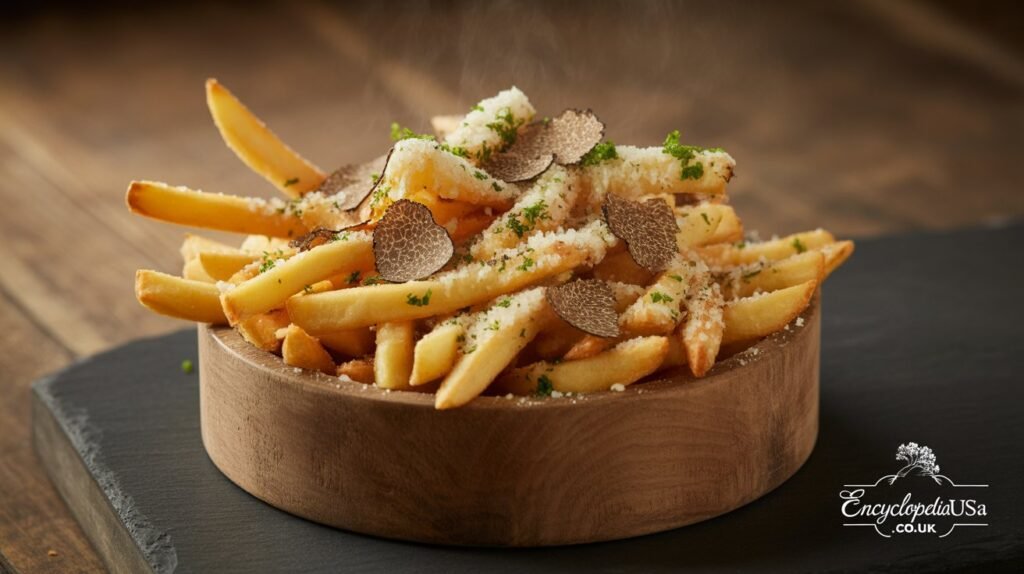
What Are Truffle Fries?
Truffle fries are elevated French fries tossed with truffle oil and typically garnished with Parmesan cheese, fresh herbs, and sea salt. They represent a gourmet twist on the classic side dish that Americans consume over 4.5 billion pounds of annually.
The defining ingredient is truffle oil, which comes in two varieties: white and black. White truffle oil offers a more pungent, garlicky flavor profile. Black truffle oil provides earthier, more subtle notes. Most restaurants use synthetic truffle oil made with chemical compounds that mimic the truffle aroma, though premium establishments may use oil infused with real truffle pieces.
The texture matters just as much as the flavor. Perfect truffle fries should be crispy on the outside and tender inside. The oil coating should feel luxurious without making the fries greasy. When done right, each fry becomes a vehicle for that distinctive umami-rich truffle taste.
The History Behind This Gourmet Creation
Truffle fries emerged during the food revolution of the early 2000s when chefs began elevating casual dining experiences. The concept likely originated in upscale American restaurants looking to add sophisticated touches to familiar comfort foods.
Truffles themselves have been prized since ancient Roman times. These rare fungi grow underground near tree roots and can cost anywhere from hundreds to thousands of dollars per pound. However, truffle oil became commercially available in the 1980s, making the luxurious flavor accessible to more kitchens.
The explosion of gastropubs and elevated casual dining in the 2000s created the perfect environment for truffle fries to flourish. Restaurants discovered that adding truffle oil to fries could justify premium pricing while giving diners an approachable taste of luxury. The dish quickly spread from high-end establishments to mainstream menus.
Social media accelerated their popularity further. The photogenic nature of golden fries dusted with cheese and herbs made them Instagram favorites, driving demand across the country.
Essential Ingredients for Perfect Truffle Fries
Creating exceptional truffle fries starts with selecting quality ingredients. Each component plays a crucial role in the final result.
The Potatoes
Russet potatoes are the gold standard for truffle fries. Their high starch content creates that coveted fluffy interior and crispy exterior. Each potato should feel firm and heavy, without any soft spots or green tinges.
Yukon Gold potatoes offer an alternative with a naturally buttery flavor and creamy texture. They contain slightly less starch than Russets but still crisp up beautifully when fried properly.
The Oil for Frying
Choose oils with high smoke points for frying. Peanut oil works excellently, tolerating temperatures up to 450°F without breaking down. Vegetable oil and canola oil are budget-friendly alternatives that perform well.
Avoid olive oil for deep frying. Its lower smoke point makes it unsuitable for the high temperatures needed for crispy fries.
The Truffle Oil
This ingredient deserves special attention since it defines the entire dish. Quality truffle oil should list real truffle pieces in the ingredients, even if it also contains synthetic flavoring compounds.
Start with small amounts. Truffle oil is incredibly potent, and too much can overwhelm the fries with a chemical taste. A little goes a long way in achieving that signature aroma.
The Finishing Touches
Freshly grated Parmesan cheese adds salty, nutty complexity. Pre-grated versions don’t melt or stick to the fries as effectively. Fresh parsley or chives provide color and a bright herbal note. Flaky sea salt enhances all the flavors without making the fries too salty.
Freshly cracked black pepper adds subtle heat that complements the earthy truffle notes perfectly.
How to Make Restaurant-Quality Truffle Fries at Home
Making truffle fries at home requires attention to technique, but the process is more straightforward than you might think.
Step One: Prepare the Potatoes
Wash and peel your potatoes if desired. Many people prefer leaving the skin on for added texture and nutrients. Cut them into even strips about 1/4 to 1/2 inch thick. Consistent sizing ensures even cooking.
Soak the cut potatoes in cold water for at least 30 minutes. This crucial step removes excess starch, preventing the fries from sticking together and helping them crisp up properly. Some cooks soak them overnight for maximum crispiness.
Step Two: Dry Thoroughly
After soaking, drain the potatoes and pat them completely dry with clean kitchen towels. Water and hot oil don’t mix well. Any moisture will cause dangerous splattering and prevent the fries from crisping properly.
Step Three: The Double-Fry Method
Professional kitchens use a two-stage frying process that home cooks should replicate for the best results.
Heat your oil to 325°F for the first fry. This lower temperature cooks the potatoes through without browning them. Fry the potatoes in small batches for 3-4 minutes until they’re tender but still pale. Remove them and drain on paper towels.
Let the fries rest for at least 10 minutes. You can even refrigerate them at this stage and finish them later.
Heat the oil to 375°F for the second fry. Return the fries to the hot oil in batches and cook for 2-3 minutes until golden brown and crispy. The higher temperature creates that perfect crunchy exterior.
Step Four: Season Immediately
Transfer the hot fries to a large bowl. Drizzle with truffle oil while they’re still steaming hot. The heat helps the oil coat every surface evenly. Toss gently but thoroughly.
Add freshly grated Parmesan cheese, chopped herbs, and sea salt. Toss again to distribute everything evenly. Serve immediately while they’re at peak crispiness.
Baked Truffle Fries: A Healthier Alternative
You don’t need a deep fryer to enjoy truffle fries. Baking offers a lighter option that still delivers satisfying results.
Preheat your oven to 450°F. Cut and soak your potatoes as usual, then dry them thoroughly. Toss the cut potatoes with regular cooking oil, spreading them in a single layer on baking sheets lined with parchment paper.
Bake for 30-35 minutes, flipping halfway through. The fries should turn golden and crispy on the edges. Remove from the oven and immediately toss with truffle oil, cheese, and seasonings.
Baked versions won’t achieve the exact same crispiness as fried fries, but they offer a guilt-free way to enjoy the truffle flavor. The reduced oil content lets the earthy truffle notes shine through even more prominently.
Air Fryer Truffle Fries
Air fryers have revolutionized home cooking, and they work beautifully for truffle fries. This method uses significantly less oil while producing remarkably crispy results.
Prepare your potatoes with the same soaking and drying process. Toss them with just one tablespoon of regular oil per pound of potatoes. Place them in the air fryer basket in a single layer, working in batches if necessary.
Cook at 380°F for 15-20 minutes, shaking the basket every 5 minutes for even cooking. The circulating hot air creates a crispy exterior similar to deep frying.
Once done, transfer to a bowl and toss with truffle oil and toppings. Air fryer truffle fries cook faster than oven-baked versions and use minimal oil, making them perfect for weeknight indulgence.
Common Mistakes to Avoid
Even experienced cooks can stumble when making truffle fries. Recognizing these pitfalls helps you achieve better results.
Overcrowding the Fryer or Pan
Adding too many fries at once drops the oil temperature dramatically. This causes the fries to absorb more oil and turn soggy instead of crispy. Always work in small batches, even if it takes longer.
Using Too Much Truffle Oil
The most common mistake is heavy-handed truffle oil application. Start with just one teaspoon per pound of fries. You can always add more, but you can’t remove it once applied. Excessive truffle oil tastes artificial and overpowering.
Skipping the Soak
Rushing past the soaking step might save time, but it sacrifices quality. The starch on potato surfaces causes sticking and prevents proper crisping. That 30-minute soak makes a tremendous difference in the final texture.
Not Drying Properly
Even a small amount of surface moisture causes oil to splatter and keeps fries from achieving maximum crispiness. Take the extra time to thoroughly pat them dry.
Adding Salt Too Early
Salting potatoes before frying draws out moisture, working against your goal of crispy fries. Always season after cooking, when the fries are hot and ready to serve.
Creative Variations to Try
Once you’ve mastered the basic recipe, these variations add exciting twists to your truffle fries.
Garlic Truffle Fries
Add minced fresh garlic to the truffle oil before tossing with the fries. The combination of garlic and truffle creates an intensely savory flavor profile. Some cooks also sprinkle garlic powder along with the other seasonings.
Truffle Fries with Aioli
Serve your fries with a truffle-infused aioli for dipping. Mix mayonnaise with a small amount of truffle oil, minced garlic, lemon juice, and salt. This creamy accompaniment adds another layer of indulgence.
Loaded Truffle Fries
Top your fries with crispy bacon bits, additional Parmesan, and a drizzle of white truffle oil. Some restaurants add a fried egg on top for an over-the-top presentation.
Sweet Potato Truffle Fries
Swap regular potatoes for sweet potatoes. The natural sweetness contrasts beautifully with the earthy truffle flavor. Sweet potatoes contain more sugar, so watch them carefully to prevent burning.
Truffle Fries with Rosemary
Add fresh rosemary to the finishing herbs. Rosemary’s pine-like aroma complements truffle’s earthiness wonderfully. Use it sparingly since it can be quite strong.

Pairing Truffle Fries with Meals
Truffle fries work as a standalone snack, but they also complement many main dishes beautifully.
They pair exceptionally well with grilled steaks. The rich, earthy flavor profile matches the umami notes in well-marbled beef. A medium-rare ribeye with truffle fries creates a steakhouse experience at home.
Burgers and truffle fries form another classic combination. The fries elevate a simple burger into something special. Try them with gourmet burger variations featuring blue cheese or caramelized onions.
Seafood dishes also benefit from truffle fries as a side. The subtle luxury works particularly well with seared scallops, grilled salmon, or fish and chips with a gourmet twist.
For vegetarian meals, truffle fries alongside a fresh salad create a satisfying contrast between indulgent and light. The combination feels balanced and complete.
Storing and Reheating Truffle Fries
Truffle fries taste best fresh, but sometimes you’ll have leftovers. Proper storage and reheating techniques help maintain quality.
Store leftover fries in an airtight container in the refrigerator for up to three days. Don’t toss them with truffle oil if you plan to save them. The oil can make them soggy during storage.
For reheating, avoid the microwave. It turns fries limp and rubbery. Instead, use your oven or air fryer to restore crispiness.
Spread the fries on a baking sheet and heat at 400°F for 5-7 minutes. The dry heat re-crisps the exterior. Once heated, toss them with fresh truffle oil and seasonings.
Air fryers work even better for reheating. Cook at 350°F for 3-5 minutes, shaking the basket once. The results come remarkably close to fresh-fried quality.
The Nutritional Reality
Truffle fries are an indulgence, not a health food. Understanding their nutritional profile helps you enjoy them mindfully.
A typical serving of restaurant truffle fries contains 300-500 calories, depending on portion size and preparation method. Most of those calories come from the frying oil and added truffle oil.
Deep-fried versions contain 15-25 grams of fat per serving. Baked or air-fried versions reduce this significantly, typically containing 8-12 grams of fat.
The sodium content varies widely. Restaurant versions often pack 400-800mg of sodium per serving, while homemade versions let you control salt levels.
Potatoes themselves provide vitamin C, potassium, and vitamin B6. Leaving the skins on adds fiber and additional nutrients. The Parmesan cheese contributes protein and calcium in small amounts.
Enjoying truffle fries occasionally as part of a balanced diet poses no problem. Their rich flavor means a smaller portion often satisfies your craving.
Why Truffle Fries Cost More at Restaurants
You’ve probably noticed that truffle fries command premium prices on menus. Several factors justify the upcharge.
Quality truffle oil, even synthetic versions, costs more than regular cooking oil. Restaurants using genuine truffle-infused oil pay even higher prices. The ingredient cost alone explains part of the premium.
The preparation process requires more attention than regular fries. Chefs must properly balance the truffle oil quantity and ensure perfect timing with the cheese and herbs. This extra labor adds value.
The perception of luxury drives pricing too. Diners expect to pay more for dishes featuring truffle, even when the actual cost difference isn’t enormous. The ingredient’s reputation for exclusivity supports higher price points.
Some restaurants use truffle fries as a signature dish, investing in premium potatoes, real truffle shavings, or house-made truffle oil. These establishments genuinely deliver superior quality that warrants the cost.
Making Truffle Oil at Home
Adventurous cooks can create their own truffle oil, though results vary significantly from commercial products.
Start with a neutral, high-quality oil like grapeseed or light olive oil. Purchase dried truffle pieces or truffle salt from specialty food stores. Fresh truffles work best but cost significantly more.
Gently warm the oil to about 130°F. Add the truffle pieces and remove from heat. Let the mixture steep for 24-48 hours in a cool, dark place.
Strain out the truffle pieces and store the infused oil in a dark bottle. Homemade truffle oil lacks the potent aroma of commercial versions because natural truffle compounds are delicate and don’t infuse strongly.
Commercial truffle oils achieve their powerful scent through synthetic compounds like 2,4-dithiapentane. These chemicals replicate truffle aroma more effectively than actual truffles infuse into oil. Your homemade version will taste more subtle and authentic but less intensely “truffle-forward.”
Truffle Fries Around the World
While truffle fries originated in American restaurants, the concept has spread globally with regional variations.
European bistros often use actual truffle shavings instead of truffle oil. French establishments might serve frites aux truffes with fresh black Périgord truffles during season. Italian versions frequently feature white truffle and pecorino Romano cheese.
In Asia, truffle fries appear on fusion menus with unique twists. Some Japanese restaurants add furikake seasoning or serve them with wasabi aioli. Korean establishments might incorporate gochugaru for a spicy kick.
Australian cafes have embraced truffle fries enthusiastically, often serving them as a brunch side alongside poached eggs and avocado. The combination of Australian café culture and gourmet ingredients makes them menu staples.
Middle Eastern interpretations sometimes add za’atar or sumac to the seasoning blend. These regional spices complement the truffle flavor while adding local character.
The Future of Truffle Fries
Food trends constantly evolve, but truffle fries show staying power. Their enduring popularity suggests they’ve transcended trend status to become a modern classic.
Restaurants continue innovating with new preparations. Some establishments now offer truffle fries with different potato varieties like purple potatoes or fingerlings. Others experiment with truffle-flavored seasonings instead of oil for a lighter touch.
The plant-based food movement has inspired vegan truffle fries made without Parmesan. Nutritional yeast provides a similar umami quality, while cashew-based Parmesan alternatives offer texture and richness.
Sustainability concerns are influencing how restaurants source their ingredients. Some now highlight locally grown potatoes and sustainably produced oils on their menus. The truffle industry itself faces questions about cultivation practices and environmental impact.
Technology may eventually change truffle fries too. Companies are developing more authentic-tasting synthetic truffle compounds. Future versions might capture the complexity of real truffles more accurately while remaining affordable.
Conclusion
Truffle fries represent the perfect example of how simple ingredients can transform into something extraordinary. You now have all the knowledge needed to create restaurant-quality versions at home, whether you prefer deep-fried, baked, or air-fried preparations.
The key lies in selecting quality ingredients, mastering the double-fry technique, and exercising restraint with the truffle oil. Remember that proper potato preparation and patience during cooking make the difference between good fries and exceptional ones.
These elevated fries work beautifully as a special side dish for celebrations, a gourmet snack for gatherings, or an indulgent treat when you’re craving something luxurious. The versatility of truffle fries ensures they’ll remain popular for years to come.
What’s your favorite way to enjoy truffle fries? Will you try making them at home, or do you prefer ordering them at your favorite restaurant?

FAQs
What makes truffle fries different from regular fries?
Truffle fries are regular French fries tossed with truffle oil, Parmesan cheese, herbs, and sea salt after cooking. The truffle oil provides a distinctive earthy, garlicky aroma that elevates them beyond standard fries. This simple addition transforms an everyday side dish into a gourmet experience.
Can I use real truffles instead of truffle oil?
Yes, you can shave fresh truffles over your fries for an authentic luxury experience. Fresh truffles provide a more complex, nuanced flavor than truffle oil. However, they’re extremely expensive and seasonal, making truffle oil the practical choice for most home cooks and restaurants.
How do I prevent my truffle fries from getting soggy?
The double-fry method is essential for crispy fries. Soak cut potatoes to remove excess starch, dry them thoroughly before frying, and avoid overcrowding the fryer. Season immediately after the second fry while they’re hot, and serve them right away for maximum crispiness.
What’s the best oil for frying truffle fries?
Peanut oil is ideal due to its high smoke point and neutral flavor. Vegetable oil and canola oil also work well. Avoid oils with low smoke points like olive oil, as they break down at frying temperatures and can impart unwanted flavors.
Is truffle oil healthy?
Truffle oil is essentially a flavored cooking oil, so it contains the same calories and fat as regular oil. Most truffle oils contain synthetic flavoring compounds rather than actual truffles. While not unhealthy in small amounts, it should be used sparingly both for health and flavor balance.
Can I make truffle fries without a deep fryer?
Absolutely. You can bake them in the oven at 450°F or use an air fryer for excellent results. While these methods won’t achieve identical crispiness to deep-fried versions, they offer healthier alternatives that still taste delicious when properly prepared.
How much truffle oil should I use?
Start with one teaspoon of truffle oil per pound of fries. Truffle oil is extremely potent, and too much creates an overwhelming artificial taste. You can always add a bit more if needed, but it’s impossible to remove excess oil once applied.
What cheese works best on truffle fries?
Freshly grated Parmesan cheese is the classic choice. Its nutty, salty flavor complements the earthiness of truffle perfectly. Pecorino Romano offers a sharper alternative. Avoid pre-grated cheese, as it doesn’t melt or stick to the fries as effectively as freshly grated varieties.
Can I prepare truffle fries in advance?
You can complete the first fry several hours ahead or even the day before. Store the par-cooked fries in the refrigerator until ready to serve. Complete the second fry just before serving and toss with truffle oil and toppings immediately for the best texture and flavor.
Why do restaurant truffle fries taste better than homemade?
Restaurants typically use commercial fryers that maintain consistent temperatures better than home equipment. They also have experience with timing and seasoning ratios. However, with the right technique and quality ingredients, you can absolutely replicate restaurant-quality truffle fries at home.
Also read encyclopediausa.co.uk