
Rockets vs Warriors Game 7: The Heartbreaking Collapse That Changed Everything
Introduction
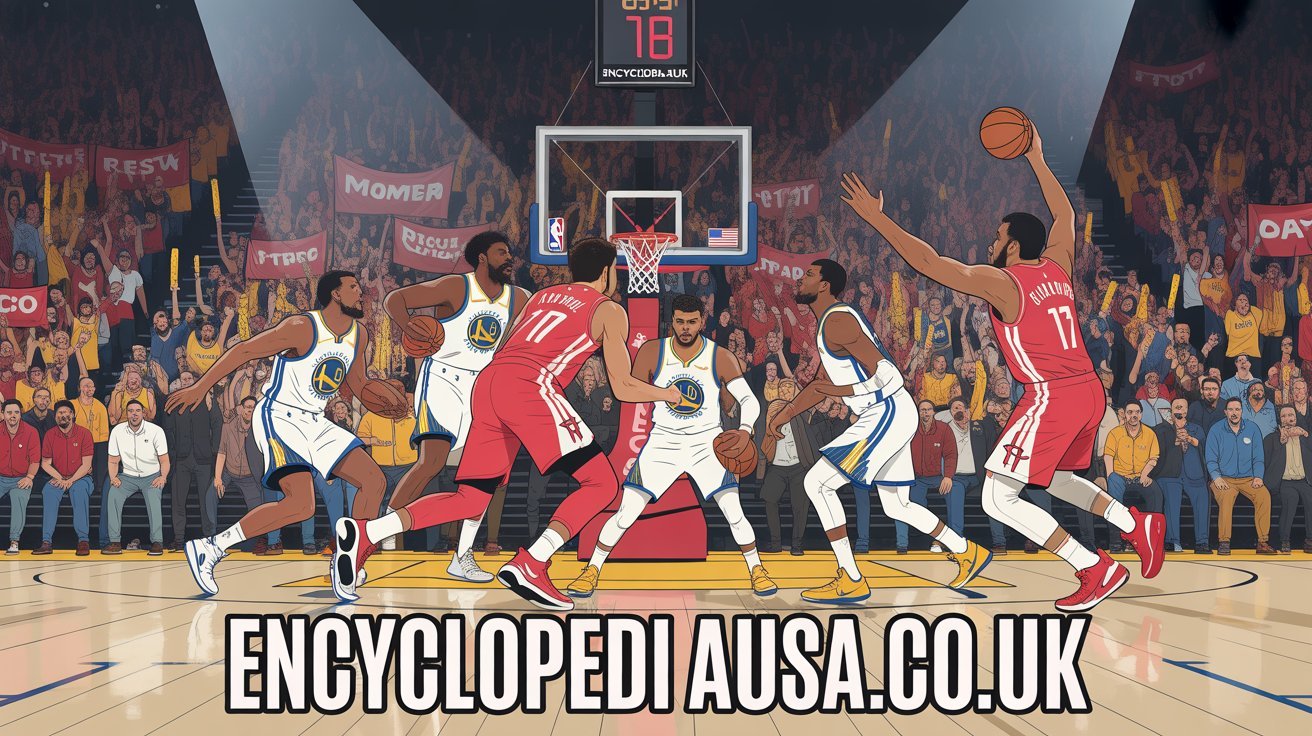
Some games haunt you forever. You replay the moments in your mind, wondering what could have been different. The Rockets vs Warriors Game 7 from the 2018 Western Conference Finals stands as one of the most agonizing playoff defeats in NBA history. Houston had everything they needed to win. They had the talent, the home court, and a 3-2 series lead heading into Game 6.
But basketball doesn’t always follow the script you expect. On May 28, 2018, the Houston Rockets watched their championship dreams evaporate at the Toyota Center. The game became infamous not just for who won, but for how Houston lost. Missing 27 consecutive three pointers will do that. The statistical improbability of that cold streak still defies belief.
This article takes you through every crucial aspect of that unforgettable night. You’ll understand the buildup to Game 7, the key moments that shaped the outcome, the individual performances that mattered most, and why this loss still resonates throughout basketball culture. Whether you watched it live or heard about it later, this deep dive reveals why Rockets vs Warriors Game 7 remains one of the sport’s most talked about games.
The Road to Game 7
Understanding the magnitude of Game 7 requires knowing how both teams arrived at that moment. The 2017-2018 season represented Houston’s best chance to dethrone the Warriors dynasty.
Houston’s Championship Blueprint
The Rockets finished the regular season with 65 wins, the best record in franchise history. General Manager Daryl Morey had built a team specifically designed to beat Golden State. The addition of Chris Paul to pair with James Harden created a devastating backcourt combination. The team embraced an analytics-driven approach that prioritized three pointers and layups while avoiding mid-range shots.
Head coach Mike D’Antoni implemented a system that maximized Houston’s strengths. The Rockets led the league in three point attempts, launching over 40 per game. Their offense hummed with efficiency, posting the second-best offensive rating in NBA history at that point. Everything seemed perfectly aligned for a championship run.
The supporting cast complemented the stars beautifully. Clint Capela provided rim protection and pick-and-roll finishing. Trevor Ariza and PJ Tucker brought tough perimeter defense. Eric Gordon supplied instant offense off the bench. This roster had depth, shooting, and the defensive versatility needed to match up with Golden State’s small ball lineups.
Golden State’s Dynasty Under Threat
The Warriors entered the playoffs as defending champions seeking their third title in four years. Their core of Stephen Curry, Klay Thompson, Draymond Green, and Kevin Durant made them overwhelming favorites despite Houston’s regular season success. Golden State understood their dynasty faced its most serious challenge yet.
The Warriors had steamrolled through previous playoffs with relative ease. However, the Rockets presented unique problems. Houston’s switching defense disrupted Golden State’s usual motion offense. The Rockets’ pace and three point volume meant the Warriors couldn’t rely solely on talent. They needed to execute for 48 minutes.
Steve Kerr’s team showed vulnerability during the regular season, finishing second in the Western Conference. Chemistry questions arose about integrating Durant into a system built before his arrival. Still, playoff experience and championship DNA made Golden State dangerous regardless of regular season struggles.
The Series Battle
The Western Conference Finals delivered on its promise of elite basketball. Game 1 saw Golden State steal home court advantage with a road victory. Houston responded by dominating Game 2, evening the series before it shifted to Oracle Arena. The games alternated between blowouts and competitive battles.
Game 4 became pivotal when Houston won in Oakland, reclaiming home court. The Rockets looked poised to close the series at home in Game 5, building a comfortable lead. Then disaster struck in the third quarter. Chris Paul went down with a hamstring injury that would sideline him for the remainder of the series.
Despite losing Paul, Houston’s leadership, the Rockets nearly won Game 5. They fell just short, and the series headed back to Oakland for Game 6. Without their second-best player, Houston couldn’t hold serve on the road. Golden State forced Game 7, setting up the winner-take-all showdown in Houston.
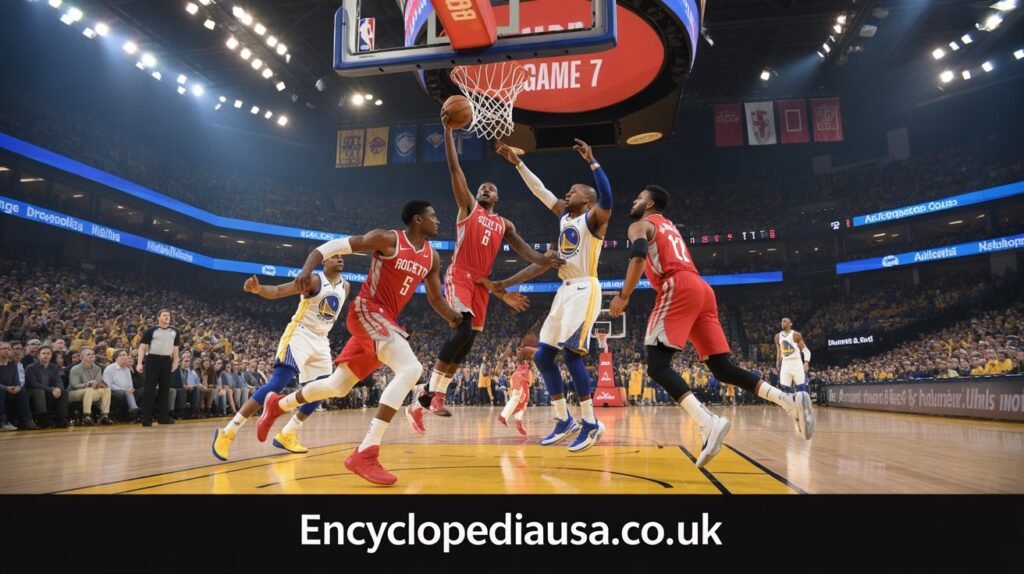
The Missing Piece: Chris Paul’s Absence
You cannot discuss Rockets vs Warriors Game 7 without addressing Chris Paul’s injury. His absence fundamentally altered Houston’s chances and game plan.
Paul’s Impact on the Rockets
Chris Paul brought championship experience and elite point guard play to Houston. His mid-range game provided scoring options when three pointers weren’t falling. His basketball IQ and leadership steadied the team during crucial moments. Paul’s ability to control pace and make the right play gave Houston a dimension Harden alone couldn’t provide.
The pick-and-roll partnership between Paul and Capela created easy baskets. His perimeter defense allowed Houston to switch everything without significant drop-off. Paul’s presence meant defenses couldn’t focus all their attention on Harden. The offense flowed more smoothly with multiple playmakers who could attack from different spots.
Game 7 without Paul forced Harden to shoulder an enormous burden. The offensive creativity and decision-making fell almost entirely on one player. Golden State’s defense could scheme specifically to slow Harden without worrying as much about other creators.
The What If Factor
Basketball fans endlessly debate whether Houston wins with a healthy Chris Paul. The Rockets led the series 3-2 when he got injured. They were beating Golden State at their own game, proving the regular season success wasn’t a fluke. Paul’s 27 points in Game 5 showed he was playing at an elite level.
Statistical analysis suggests Houston had a strong probability of winning the series with Paul available. His isolation scoring would have been crucial when the three point shooting went cold. Even an inefficient Paul would have taken some offensive pressure off Harden and created different defensive problems for Golden State.
The injury also had psychological effects. Houston’s confidence took a hit knowing their second-best player couldn’t help them. The Warriors gained momentum and belief heading into Game 7. Sometimes basketball comes down to these intangible factors that don’t show up in box scores.
Game 7: The First Half
The game itself unfolded in distinct phases, each with its own storylines and momentum shifts. Let me walk you through how it played out.
Opening Quarter Energy
Houston came out aggressive, feeding off the home crowd’s energy. The Rockets understood what this game meant for their franchise. They attacked the basket early and played with intensity on defense. Golden State looked tentative initially, perhaps feeling the pressure of the moment.
James Harden found his rhythm early, scoring and creating for teammates. The Rockets’ defensive switching bothered Golden State’s spacing. Houston’s transition defense prevented the Warriors from getting easy baskets in the open court. The first quarter ended with the Rockets holding a small lead.
The Toyota Center crowd created an electric atmosphere. You could feel the tension and excitement through the television broadcast. Fans sensed this might be Houston’s moment to break through and reach the NBA Finals.
Second Quarter Adjustments
Golden State settled into the game during the second quarter. Their championship experience showed as they weathered Houston’s initial storm. Steve Kerr made subtle adjustments that created better looks for his shooters. The Warriors began finding their offensive rhythm.
Houston continued playing solid basketball without dominating. The three point shots started coming more frequently from both teams. Neither side could build a significant lead as the game remained competitive. The Rockets maintained home court energy while the Warriors showed resilience.
At halftime, the score remained close with Houston clinging to a narrow advantage. Both teams had opportunities to seize control but couldn’t separate. The stage was set for a crucial second half that would determine who advanced to the Finals.
The Infamous Third Quarter
The third quarter of Rockets vs Warriors Game 7 will live in basketball infamy forever. What happened during those 12 minutes defies logical explanation.
When Threes Stopped Falling
Houston’s offense relied heavily on three point shooting by design. Their analytics-based approach prioritized the most efficient shots. When those threes started missing, the Rockets faced a dilemma. Should they adjust their approach or trust the math that guided them all season?
The misses started piling up at an alarming rate. Good looks that normally went in clanked off the rim. Open corner threes missed their mark. Contested shots had no chance. The basketball gods seemed to have abandoned Houston precisely when they needed them most.
What began as a cold stretch turned into a historic drought. The Rockets missed their 8th consecutive three pointer, then their 12th, then their 15th. The drought extended through the third quarter and into the fourth. By the time it ended, Houston had missed an incredible 27 straight attempts from beyond the arc.
The Statistical Improbability
Mathematicians and statisticians later calculated the odds of missing 27 consecutive three pointers. Given Houston’s three point percentage and the quality of looks they were getting, the probability was astronomically low. Some estimates put it at less than one in 10,000. The Rockets were experiencing a once-in-a-lifetime statistical anomaly at the worst possible time.
The drought wasn’t entirely about bad luck, though. Golden State’s defense deserves credit for contesting shots and making Houston uncomfortable. The Warriors rotated well and closed out on shooters. The pressure of Game 7 affected shooting mechanics. Still, 27 straight misses requires some degree of unfortunate variance.
Watching it unfold in real time felt surreal. Each miss seemed to increase the tension for subsequent attempts. Shooters who normally had confidence hesitated. The mental weight of the drought became a physical burden affecting everyone on the court.
Golden State Seizes Control
While Houston couldn’t buy a three pointer, Golden State’s offense found its groove. Kevin Durant took over during the Rockets’ cold spell, scoring from all areas. His mid-range game proved unstoppable against Houston’s switching defense. Klay Thompson heated up from three, providing the secondary scoring the Warriors needed.
The Warriors built their lead methodically during the third quarter. Every Houston miss led to a Golden State basket at the other end. The momentum swung decisively in the Warriors’ favor. What was a close game at halftime became a double-digit deficit by the end of the third quarter.
Houston’s defense kept them within striking distance despite the offensive struggles. They continued fighting and contesting every shot. However, you cannot win a Game 7 against the Warriors while missing every three pointer you attempt.
The Fourth Quarter Fight
Despite the historic drought, Houston refused to surrender. The fourth quarter showed their character and determination even as the championship slipped away.
Harden’s Burden
James Harden carried an enormous offensive load without Chris Paul. He attacked the basket trying to get to the free throw line. He created shots for teammates who couldn’t convert. The frustration visible on his face told the story of a superstar unable to will his team to victory.
Harden finished with 32 points, but the shooting efficiency wasn’t there. He made just 12 of 29 shots overall and 2 of 13 from three. The missed free throws in crucial moments added to the disappointment. Harden played hard but couldn’t produce the superhuman performance Houston needed.
Critics later questioned some of Harden’s decisions down the stretch. The isolation-heavy approach played into Golden State’s defensive strength. Without Paul to share playmaking responsibilities, the offense became predictable. Fair or not, Harden faced intense scrutiny for this performance.
Desperation Time
The Rockets made one final push in the fourth quarter when the three point drought finally ended. They cut the deficit to single digits with a few minutes remaining. Hope flickered briefly as Houston’s defense created turnovers. If they could just get a couple stops and make a few shots, the game was there for the taking.
Golden State responded with championship composure. Durant hit big shots when the Warriors needed them most. The Rockets’ rally fell just short as their missed opportunities earlier proved too much to overcome. The final margin was single digits, but the game never felt quite that close.
As the final seconds ticked away, the reality set in. Houston’s season was over. The championship window they’d built might never open this wide again. The Toyota Center fell silent as Warriors celebrated reaching another NBA Finals.
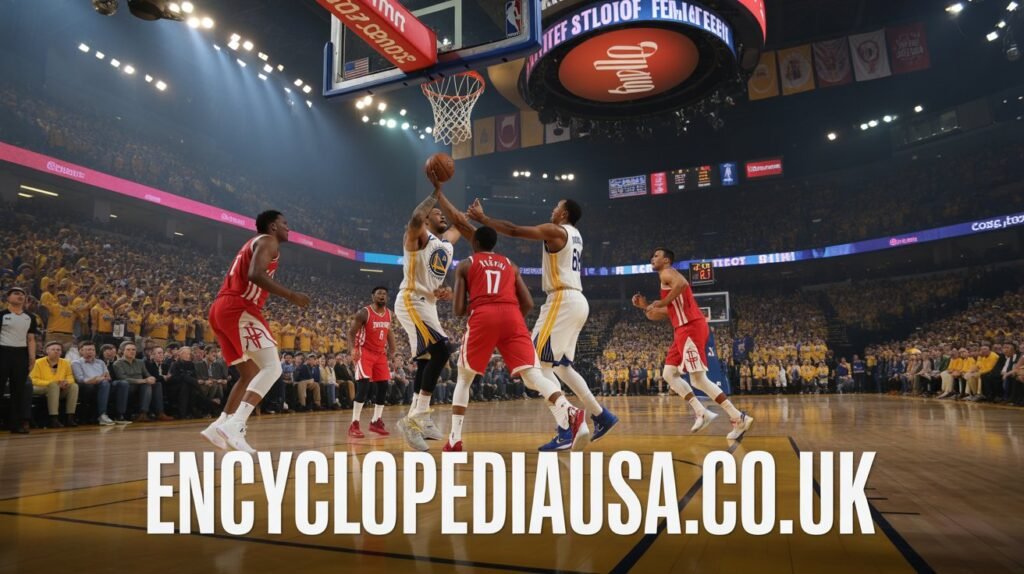
Individual Performances That Defined Game 7
Beyond team narratives, individual performances shaped the outcome of Rockets vs Warriors Game 7. Let’s examine the key contributors.
Kevin Durant’s Takeover
Kevin Durant earned his paycheck in Game 7, delivering when Golden State needed him most. His 34 points led all scorers and came with remarkable efficiency. Durant made 14 of 26 shots, using his length and skill to score over Houston’s defense. His mid-range game neutralized the Rockets’ switching scheme.
Durant’s scoring during Houston’s cold streak proved decisive. While the Rockets missed three after three, Durant calmly knocked down jumpers. His ability to get his shot regardless of defensive coverage showcased why he’s one of the game’s premier scorers. The Warriors signed Durant precisely for games like this.
Beyond scoring, Durant contributed 5 rebounds and 5 assists. His all-around performance demonstrated growth in his leadership role. This wasn’t just talented scoring but winning basketball from a superstar understanding the moment’s magnitude.
Stephen Curry’s Supporting Role
Stephen Curry didn’t dominate statistically, finishing with 27 points on 9 of 17 shooting. However, his gravity created opportunities for teammates throughout the game. Defenders had to account for Curry’s location at all times, opening driving lanes and creating cleaner looks for others.
Curry’s three point shooting provided timely baskets when Golden State needed to answer Houston runs. He made 3 of 7 from beyond the arc, with each make shifting momentum. His late-game experience showed as he made the right plays down the stretch without forcing bad shots.
The two-time MVP accepted his role within the team concept perfectly. He didn’t need to be the leading scorer with Durant playing well. Curry’s basketball intelligence and unselfishness exemplified Golden State’s team-first culture.
PJ Tucker’s Effort
On Houston’s side, PJ Tucker embodied heart and hustle despite the loss. The undersized forward defended multiple positions, guarding Durant at times despite giving up significant height. Tucker dove for loose balls, took charges, and provided the defensive toughness Houston needed.
Tucker’s offensive contributions included crucial corner three point shooting earlier in the series. While he struggled in Game 7 like most Houston players, his effort never wavered. Tucker played 44 exhausting minutes, leaving everything on the court in a losing effort.
Role players like Tucker often determine playoff series outcomes. His performance throughout the series helped Houston push Golden State to seven games. The loss wasn’t from lack of effort from players like Tucker who gave everything they had.
The Aftermath and Legacy
Rockets vs Warriors Game 7 created ripples that extended far beyond that May evening. The game’s legacy continues shaping how we view both franchises.
Houston’s Window Closes
The loss marked the beginning of Houston’s decline as a championship contender. The team never recaptured that 65-win magic. Chris Paul aged and dealt with injuries in subsequent seasons. James Harden eventually requested a trade after the relationship with management deteriorated.
Looking back, Game 7 represented Houston’s best and perhaps only realistic chance to win a championship with that core. The devastating nature of the loss haunted the franchise. Future seasons brought disappointment and roster changes as the Rockets tried and failed to recreate their 2018 formula.
The analytics-driven approach that made Houston special also contributed to their Game 7 downfall. Living and dying by the three pointer works over 82 games but creates vulnerability in single-elimination scenarios. Missing 27 straight threes validated critics who questioned whether Houston’s style could win championships.
Golden State’s Validation
For the Warriors, winning Game 7 on the road without home court advantage showed their championship mettle. They survived their toughest Western Conference challenge and went on to sweep Cleveland in the Finals. The victory proved the Warriors dynasty could overcome adversity and close out elimination games.
Kevin Durant’s performance silenced some critics who questioned his value to Golden State. He delivered when it mattered most, justifying his controversial decision to join the Warriors. The team’s ability to win without dominant Stephen Curry performances showed their depth and versatility.
The Warriors’ dynasty continued for another season before injuries and departures ended their run. Game 7 against Houston represented the last time they truly had to fight and grind for a playoff series victory. In many ways, it was their finest hour despite lacking the dominance of previous playoff runs.
The Debate Continues
Years later, basketball fans still debate the what-ifs surrounding this game. Would Houston have won with Chris Paul? Were the Rockets unlucky or did their style contribute to the cold shooting? Should Mike D’Antoni have adjusted away from three point shooting when nothing was falling?
These questions have no definitive answers but fuel endless discussion. The game serves as a cautionary tale about relying too heavily on one offensive approach. It also demonstrates how variance and luck influence outcomes in small sample sizes like playoff series.
Rockets vs Warriors Game 7 became shorthand for heartbreaking defeats and statistical improbabilities. When teams miss multiple consecutive shots from three, commentators reference Houston’s historic drought. The game entered basketball lore as one of those moments that transcends the final score.
Lessons From Game 7
Beyond the entertainment and drama, this game taught valuable lessons about basketball strategy and competition.
The Importance of Shot Diversity
Houston’s three-point-or-layup philosophy maximized efficiency over 82 games but created vulnerability in Game 7. When threes aren’t falling, having players who can score from mid-range provides crucial bailout options. Chris Paul’s absence removed Houston’s best mid-range scorer.
Championship teams need multiple ways to generate offense. Relying too heavily on one approach, even a statistically sound one, creates predictability. Defenses can game plan specifically to take away your primary option if you lack alternatives.
This doesn’t invalidate analytics or modern spacing-oriented offenses. Rather, it suggests that stylistic purity has limits in playoff basketball. The best teams combine analytical insights with tactical flexibility.
Depth and Injury Luck
Chris Paul’s injury illustrates how health and depth determine championship outcomes. Houston’s depth wasn’t sufficient to overcome losing their second-best player in a Game 7. The Warriors had enough talent and depth to weather Houston’s challenges.
You can build the perfect roster on paper, but injuries happen at unpredictable times. Championship teams need both talent and fortune to stay healthy at crucial moments. Houston had the talent but not the injury luck when it mattered most.
Mental Toughness Under Pressure
Golden State’s championship experience proved invaluable in Game 7. They’d been in elimination games before and knew how to handle the pressure. Houston, despite their talent, lacked that same championship pedigree. The pressure affected their shooting and decision-making.
Building mental toughness requires experiencing and surviving pressure situations. The Warriors had survived many. For Houston’s core, this was new territory. The experience gap manifested in the most important moments.
Where Are They Now
The players and coaches from Rockets vs Warriors Game 7 have scattered across the basketball landscape. Their careers took different paths after that fateful night.
James Harden’s Journey
James Harden eventually forced his way out of Houston, first to Brooklyn and then to Philadelphia. He continues performing at a high level but hasn’t reached the NBA Finals since that 2018 opportunity. The Game 7 loss remains the closest he’s come to a championship as a franchise player.
Harden’s legacy includes MVP awards, scoring titles, and revolutionary offensive performances. However, the lack of a championship and some playoff disappointments cloud his historical standing. Game 7 against the Warriors represents his most painful what-if moment.
Kevin Durant’s Decisions
Kevin Durant won another championship with Golden State in 2019 before suffering an Achilles injury in the Finals. He left the Warriors that summer to join Brooklyn, seeking a new challenge and escape from the narrative that Golden State didn’t need him. His Game 7 performance provided ammunition for defenders arguing his value to the Warriors.
Durant’s career continues at a high level despite the serious injury. He now plays for Phoenix, still chasing championships and cementing his legacy. The 2018 Game 7 remains one of his finest individual performances.
The Coaching Legacies
Mike D’Antoni left Houston after the 2019-2020 season following another disappointing playoff exit. His offensive innovations influenced basketball profoundly, but the lack of a championship as a head coach leaves his legacy incomplete. Game 7’s missed three pointers became ammunition for critics questioning his approach.
Steve Kerr continues coaching Golden State, cementing his status as one of the era’s best coaches. His ability to manage egos, make adjustments, and win close games distinguishes him. Game 7 against Houston showcased his coaching acumen and championship composure.
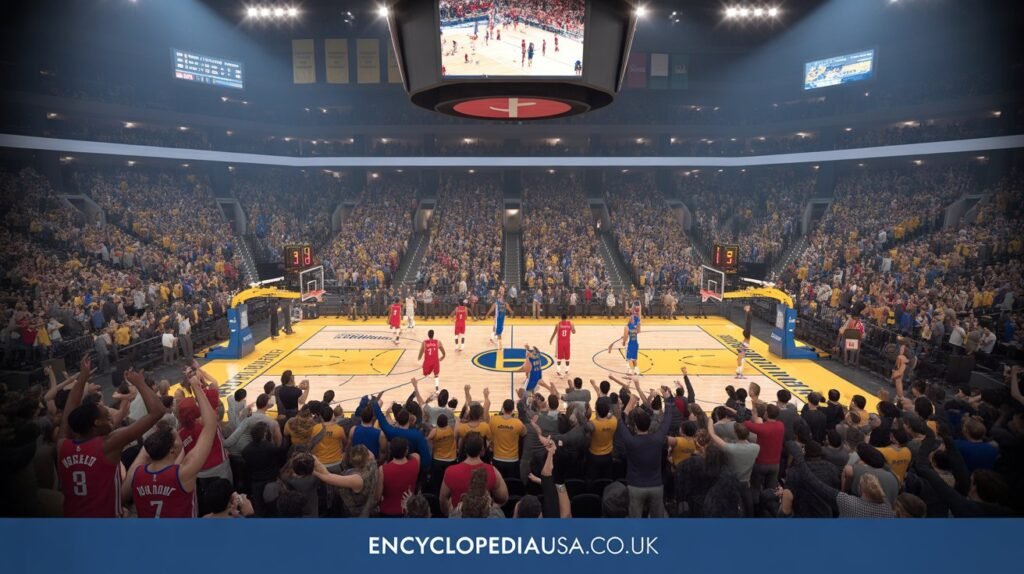
Conclusion
Rockets vs Warriors Game 7 will forever hold a special place in NBA playoff lore. The game had everything: championship stakes, superstar performances, historic statistical anomalies, and heartbreaking defeat. Houston came so close to dethroning a dynasty but fell just short when their shots refused to fall.
The 27 consecutive missed three pointers defied probability and logic. Chris Paul’s absence changed the series trajectory at the worst possible time. James Harden and the Rockets gave everything they had but couldn’t overcome Golden State’s championship experience and Kevin Durant’s brilliance. That May evening in 2018 demonstrated how razor-thin margins separate championship glory from devastating defeat.
Years later, the game still sparks debates and what-if discussions. It serves as a reminder that basketball combines skill, strategy, and luck in ways we can’t always control. Houston built a championship-caliber team that simply ran into a historically great opponent at the wrong time without their second-best player. Sometimes sports break your heart in ways that never quite heal.
If you watched that game live, you witnessed one of basketball’s most memorable moments. If you missed it, the story captures everything that makes playoff basketball compelling. What’s your take on what happened that night? Would the Rockets have won with a healthy Chris Paul, or was Golden State’s dynasty simply too strong to overcome?
Frequently Asked Questions
What was the final score of Rockets vs Warriors Game 7?
The Golden State Warriors defeated the Houston Rockets 101-92 in Game 7 of the 2018 Western Conference Finals. The game took place on May 28, 2018, at the Toyota Center in Houston. Despite the nine-point final margin, the game felt closer throughout most of the fourth quarter before Golden State pulled away late.
How many three pointers did the Rockets miss in a row?
The Houston Rockets missed an NBA record 27 consecutive three-point attempts during Game 7. The historic cold streak spanned from late in the second quarter through most of the fourth quarter. This statistical improbability occurred at the worst possible time, costing Houston their best chance to reach the NBA Finals.
Was Chris Paul injured for Game 7?
Yes, Chris Paul suffered a hamstring injury during Game 5 of the series and missed both Game 6 and Game 7. His absence severely impacted Houston’s offense and playmaking. Many analysts believe the Rockets would have won the series if Paul had remained healthy, as they led 3-2 when he got injured.
Who was the leading scorer in Game 7?
Kevin Durant led all scorers with 34 points in Game 7, making 14 of 26 field goal attempts. James Harden led Houston with 32 points but shot just 12 of 29 from the field and 2 of 13 from three-point range. Durant’s efficient scoring during Houston’s cold streak proved decisive in the Warriors’ victory.
Did the Rockets change their strategy during the cold streak?
The Rockets largely stuck with their three-point heavy approach even during the historic drought. Head coach Mike D’Antoni faced criticism for not adjusting to more mid-range shots or post-ups. However, Houston’s entire offensive system was built around three-pointers and layups, making in-game adjustments difficult without Chris Paul’s mid-range game available.
Where can I watch highlights of this game?
Full game highlights and condensed replays are available on various sports platforms and video sites. The NBA’s official channels often feature historic games like this one. Many basketball fans consider it essential viewing for understanding modern NBA playoff history and the Warriors dynasty era.
What happened to the Rockets after this loss?
The Rockets never recovered from this devastating defeat. They remained competitive for another season but couldn’t recreate their 65-win magic. Chris Paul’s contract and injuries became burdensome. James Harden eventually requested a trade after relationships with management deteriorated. The franchise entered a rebuilding phase after years of championship contention.
Did the Warriors win the championship that year?
Yes, the Golden State Warriors went on to sweep the Cleveland Cavaliers 4-0 in the 2018 NBA Finals. Kevin Durant won his second consecutive Finals MVP award. The Warriors’ championship validated their Game 7 victory over Houston as they completed another dominant playoff run despite the Western Conference Finals challenge.
What was the three-point shooting percentage for Houston in Game 7?
The Houston Rockets finished Game 7 shooting 7 of 44 from three-point range, a dismal 15.9 percent. This was far below their season average of 36.2 percent. The Warriors shot 16 of 39 (41 percent) from three, highlighting the dramatic difference in shooting fortune between the two teams that night.
Is this considered one of the biggest playoff upsets?
While not technically an upset since Golden State was defending champions, many considered Houston favorites given their home court advantage and superior regular season record. The manner of Houston’s defeat, combined with Chris Paul’s absence and the missed three-pointers, makes it one of the most heartbreaking playoff losses rather than a traditional upset.
Read More: Bulls vs knicks Rivalry
Author Bio
A lifelong basketball enthusiast and sports writer with a passion for playoff drama and NBA history. Having covered the league for years, the author specializes in breaking down pivotal moments that define championships and legacies. With deep knowledge of basketball strategy, analytics, and the human stories behind the games, the author brings context and clarity to the sport’s most memorable moments.