
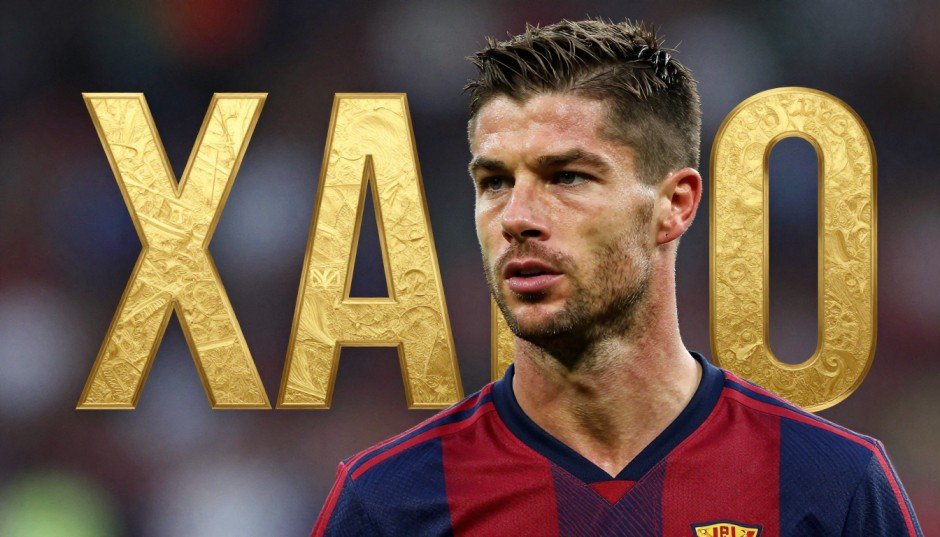
Xabi Alonso: The Brilliant Rise of Football’s Most Exciting Manager 2028
Introduction
If you follow football at all, you already know the name Xabi Alonso. But here is the thing — most people still think of him as a player. A deep-lying midfielder who could split defenses with a single pass, who scored from the halfway line, who won the Champions League, the World Cup, and the Euros.
Now, the story has changed.
Xabi Alonso is no longer just a legendary player. He has become one of the most compelling managers in world football. He took a struggling Bayer Leverkusen side and made them invincible — literally. He coached Real Madrid. And as of today, May 17, 2026, he has officially signed a four-year deal with Chelsea, beginning July 1.
This article covers everything you need to know about Xabi Alonso — his playing career, his journey into management, his tactics, his rise and fall at Real Madrid, and what he could build at Stamford Bridge. Let us get into it.
Who Is Xabi Alonso? A Quick Background
Xabier Alonso Olano was born on November 25, 1981, in Tolosa, in the Basque Country of Spain. Football runs deep in his family. His father, Periko Alonso, won La Liga twice with Real Sociedad and once with Barcelona, and earned 21 caps for Spain.
Growing up with that kind of footballing heritage, Xabi Alonso was always going to be different.
He stood 183 cm tall, played primarily as a defensive midfielder, and was equally comfortable with both feet. But what set him apart was something harder to measure: his football intelligence. He read the game at a different speed to everyone around him. He did not just play the obvious pass — he played the right pass, at the right moment, with the right weight.
He joined Real Sociedad’s academy and worked his way through the ranks. He even had a loan stint at Eibar before becoming a first-team regular and eventually captain of Real Sociedad. In the 2002/03 season, he helped them finish runners-up in La Liga — a remarkable achievement for a club of that size.
That performance put him on the radar of some of the biggest clubs in Europe.
The Liverpool Years: Where the Legend Was Born
In 2004, Liverpool signed Xabi Alonso for £10.5 million. That fee looks laughable today. Within a year, he had already helped produce one of the greatest moments in Champions League history.
You probably know the story. Istanbul, 2005. Liverpool were 3–0 down to AC Milan at half-time. Most fans had already started leaving. Then Liverpool came back. They equalized in the second half, and Alonso scored the crucial third — finishing his own rebound after his penalty was saved. Liverpool won on penalties. It remains one of the most dramatic finals ever played.
That moment told you everything about Alonso. Ice-cold under pressure. Technically gifted. Mentally strong.
He spent five seasons at Liverpool and became a fan favorite. In 2008/09, he helped Liverpool finish second in the Premier League with a club-record points total at the time. He also won the FA Cup in 2006.
But his biggest move was still to come.
Real Madrid: Playing Alongside the Best in the World
In 2009, Real Madrid signed Xabi Alonso. He was one of the key pieces in a team that also included Cristiano Ronaldo, Kaká, and later Mesut Özil and Gareth Bale. The football was spectacular.
Alonso thrived at the Bernabéu. His range of passing was perfectly suited to a team that wanted to control games and break at pace. Under manager Manuel Pellegrini, he started almost every game. Under José Mourinho, he became even more important as a defensive shield who also dictated the tempo of play.
He helped Real Madrid win La Liga in 2011/12 with a record-breaking 100 points. He also won the Copa del Rey. Later, under Carlo Ancelotti, he was part of the squad that finally won La Décima — Real Madrid’s historic 10th European Cup in 2014.
He spent six years in Madrid before joining Bayern Munich in 2014.
Bayern Munich: Ending a Career at the Top
At Bayern Munich, Alonso played under Pep Guardiola, one of the most demanding tactical coaches in history. He thrived in that environment. He won the Bundesliga three consecutive times from 2015 to 2017, the DFB-Pokal twice, and the DFL-Supercup.
He retired in 2017. By that point, he had won almost everything there was to win.
Here is a quick look at the trophies he collected as a player:
- Champions League: 2005 (Liverpool), 2014 (Real Madrid)
- World Cup: 2010 (Spain)
- European Championship: 2008, 2012 (Spain)
- La Liga: 2011/12 (Real Madrid)
- Bundesliga: 2014/15, 2015/16, 2016/17 (Bayern Munich)
- FA Cup: 2006 (Liverpool)
- Copa del Rey: 2014 (Real Madrid)
- DFB-Pokal: 2016, 2019 (Bayern Munich, though retired by then)
That is a trophy cabinet most players can only dream of.
The Transition: From Player to Manager
After retiring, Alonso did not disappear into punditry or business. He went back to Real Madrid and began coaching their U14 team while completing his UEFA Elite coaching license. That decision told you a lot about his character. He was serious about learning the craft properly.
In December 2019, he was appointed manager of Real Sociedad B. It was a tough environment — lower division football, limited resources, heavy expectations given his connection to the club. But he made it work. In his second season, he guided Real Sociedad B to promotion from the Segunda División B. It was the first time the club had achieved that since 1962.
The season after brought relegation, and Alonso left at the end of 2021/22. But the experience had given him exactly what he needed: real managerial knowledge, earned the hard way.
Then came Leverkusen.
Bayer Leverkusen: Making History
In October 2022, Bayer Leverkusen were struggling. They had made their worst start to a Bundesliga season since 1979. They turned to Xabi Alonso.
What happened next was extraordinary.
He stabilized the club immediately in his first half-season, securing a sixth-place finish and European football. Then in 2023/24, everything came together.
Leverkusen went the entire Bundesliga season unbeaten. Not just a run — the entire campaign. They finished with 28 wins and 6 draws. They secured the title with five games remaining, winning 5–0 over Werder Bremen. They also won the DFB-Pokal, completing a domestic double. It was the first Bundesliga title in the club’s entire history.
That unbeaten league run eventually extended to 51 matches across two seasons. To put that in perspective, Bayern Munich’s previous record was 32.
Alonso did it by bringing in smart signings. Granit Xhaka from Arsenal transformed the midfield. Alejandro Grimaldo gave them pace and creativity on the left. Victor Boniface offered a physical, clever striking option. His preferred formation — a 3–4–3 — gave them defensive solidity and attacking width. They pressed aggressively, transitioned quickly, and scored freely.
The only disappointment came in the Europa League final, where Atalanta defeated them 3–0. But that result did little to dent Alonso’s reputation.
He had turned a mid-table side into champions. Every top club in Europe was watching.
Real Madrid: A Difficult Chapter
In June 2025, Xabi Alonso fulfilled what many saw as a destiny move. He was appointed head coach of Real Madrid, the club where he had played some of the best football of his life.
He replaced Carlo Ancelotti and signed a deal running until 2028. The expectations were enormous.
He won La Liga Manager of the Month for August 2025 after a perfect start. Madrid signed several big names that summer, including Dean Huijsen, Álvaro Carreras, Franco Mastantuono, and Trent Alexander-Arnold from Liverpool.
But the season did not go as planned. Results became inconsistent. The pressure at the Bernabéu is unlike anything else in football. There is no margin for error, no time to build slowly. By January 2026, after a 3–2 defeat to Barcelona in the Spanish Super Cup final, Alonso and Real Madrid parted ways by mutual consent.
The club released a respectful statement, calling him a “Real Madrid legend” and saying the club “will always be his home.” Alonso left with his reputation intact, even if the results had not met expectations.
As his former player Kylian Mbappé said, Alonso will become a “great coach” — a sentiment that felt less like consolation and more like confidence in what comes next.
Chelsea: A New Challenge at Stamford Bridge
Today — May 17, 2026 — Chelsea officially confirmed Xabi Alonso as their new manager on a four-year deal. He begins work on July 1.
This is a massive appointment. Chelsea named him their top target throughout the entire process. Alonso, for his part, wanted the job. After talks with Chelsea’s ownership group and sporting leadership, he was convinced they share the same ambition.
In his first statement to supporters, he said Chelsea is “one of the biggest clubs in world football” and that it gives him “immense pride” to take the role. He spoke clearly about culture, hard work, and winning trophies. He also acknowledged the talent already in the squad and the “huge potential” at the club.
Chelsea gave him the title of manager — not simply head coach. That distinction matters. It signals that BlueCo want him involved in the broader football project, not just picking the team on matchday.
The task ahead is significant. Chelsea last won the Premier League in 2017. Their last Champions League title came in 2021. Since then, the club has cycled through managers at an alarming rate. Alonso will be their third manager this season alone.
But a four-year contract tells a different story. It says the ownership wants stability. It says they are willing to give this manager real time.
What Makes Xabi Alonso Special as a Manager?
You might wonder: what exactly makes him so good? Here is a breakdown.
His Tactical Approach
Alonso favors a 3–4–2–1 or 3–4–3 system. The back three gives defensive stability. The wing-backs provide width. The two central midfielders control the tempo. The front three press high and create combinations.
He emphasizes:
- High pressing to win the ball back quickly in dangerous areas
- Positional discipline — every player knows their role and their space
- Quick transitions — turning defense into attack at pace
- Attacking balance — creativity up front combined with tactical structure
His Man-Management
Players who have worked under him consistently speak about how composed and clear he is. He communicates his ideas simply. He gives players confidence. He makes difficult decisions without drama.
At Leverkusen, he took players like Florian Wirtz — already talented but inconsistent — and built a team around maximizing their strengths. That kind of individual attention to development is rare.
His Managerial Record
Here is what the numbers say across his managerial career to date:
- Total matches managed: 272
- Wins: 153
- Draws: 59
- Losses: 60
- Overall win rate: 56%
- Preferred formation: 3–4–2–1
- Average goals scored per match at Leverkusen: 2.1
- Average goals conceded per match at Leverkusen: 1.0
Those Leverkusen numbers in particular are exceptional. Over nearly three seasons, his team scored twice as many as they conceded.
The Playing Career: By the Numbers
It is worth remembering how decorated his playing career was before all of this.
- Club appearances: 494 across Real Sociedad, Liverpool, Real Madrid, and Bayern Munich
- International caps: 114 for Spain
- Champions League wins: 2 (2005, 2014)
- Major international trophies: 3 (World Cup 2010, Euros 2008 and 2012)
- Bundesliga titles: 3 (2015, 2016, 2017)
He was consistently described by teammates and opponents as one of the most difficult midfielders to play against. His passing accuracy, his vision, and his ability to control the tempo of a match were elite. Players like Steven Gerrard, Sergio Ramos, and Toni Kroos have all spoken about the influence Alonso had on them.
What Chelsea Fans Can Expect
If Leverkusen is anything to go by, Chelsea fans should expect:
- A clear tactical identity from the first day of pre-season
- Young players given structure and defined roles
- A pressing, energetic style that makes the team hard to beat
- Smart, targeted recruitment rather than panic buying
- Patience — because building takes time, even with the best coach
The risk is real, of course. The Premier League is more competitive than the Bundesliga. Chelsea’s dressing room is more expensive and more complex. The media pressure at Stamford Bridge is intense. And Real Madrid showed that even Alonso can struggle when circumstances are not right.
But the upside is enormous. If BlueCo back him properly and give him the stability a four-year deal suggests, this could be a genuinely exciting era for Chelsea.
Conclusion
The story of Xabi Alonso is one of football’s most compelling narratives right now. He went from being one of the greatest midfielders of his generation to one of the most exciting managers in the world. He made history at Leverkusen. He faced the impossible pressure of Real Madrid. And now he takes on a new challenge at Chelsea.
The journey has not been perfect. Real Madrid did not work out as hoped. But every great manager has setbacks. What matters is how they respond.
Xabi Alonso is 44 years old, incredibly experienced, tactically sophisticated, and hungry to prove himself at the highest level. Chelsea have given him the platform and the time. Now it is up to him — and them — to make it work.
What do you think? Can Xabi Alonso bring Chelsea back to the top of English football? Share your thoughts below.
FAQs About Xabi Alonso
1. Where is Xabi Alonso managing now? As of May 17, 2026, Xabi Alonso has officially been appointed as Chelsea’s new manager on a four-year deal. He begins work on July 1, 2026.
2. Did Xabi Alonso win the Champions League as a player? Yes. He won the Champions League twice — with Liverpool in 2005 and with Real Madrid in 2014.
3. What trophies did Xabi Alonso win as a manager? He won the Bundesliga (2023/24), the DFB-Pokal (2023/24), and the DFL-Supercup (2024/25) with Bayer Leverkusen.
4. Why did Xabi Alonso leave Real Madrid? He and Real Madrid parted ways by mutual consent in January 2026, following a 3–2 defeat to Barcelona in the Spanish Super Cup final. The season had not gone as expected, and both parties agreed to end the arrangement.
5. What is Xabi Alonso’s managerial win rate? Across all clubs, Alonso has won around 56% of his matches as a manager. His best win rate came at Bayer Leverkusen, where he won 65% of games.
6. What formation does Xabi Alonso prefer? His preferred formation is the 3–4–2–1 or 3–4–3, using a back three, wing-backs for width, and a fluid front line.
7. How long was Xabi Alonso’s unbeaten run at Leverkusen? Bayer Leverkusen went on a remarkable 51-match unbeaten run under Alonso, spanning the 2023/24 and 2024/25 seasons. This surpassed Bayern Munich’s previous record of 32.
8. Did Xabi Alonso play for Chelsea before becoming manager? No. As a player, Alonso represented Real Sociedad, Liverpool, Real Madrid, and Bayern Munich, as well as the Spanish national team.
9. What did Xabi Alonso say about joining Chelsea? He called Chelsea “one of the biggest clubs in world football” and said it gives him “immense pride” to manage the club. He spoke about building the right culture and competing for trophies.
10. Is Xabi Alonso considered a good manager? Yes. Despite the difficult spell at Real Madrid, Alonso is widely regarded as one of the most promising managers in the world. His record at Bayer Leverkusen — including the first unbeaten Bundesliga season in history — is considered one of modern football’s greatest managerial achievements.
Author Bio: Tariq Hussain is a football writer and analyst with over a decade of experience covering European football, tactical trends, and managerial careers. He writes regularly about the Premier League, La Liga, and the Bundesliga, with a particular interest in how playing pedigree shapes coaching philosophy.
Also read encyclopediausa.co.uk
Email: johanharwen314@gmail.com
Author Name: Johan Harwen