

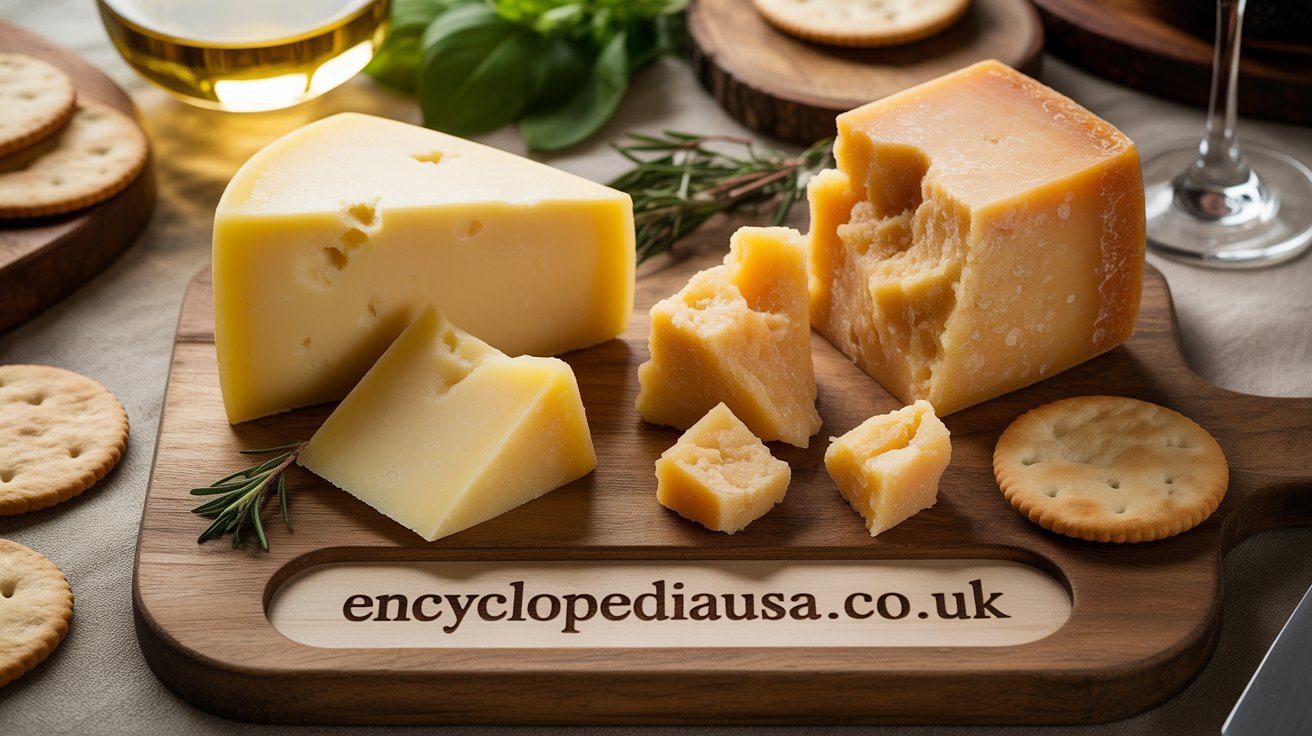
Asiago vs Parmesan: The Surprising Truth Most People Get Wrong
Introduction
You pull open your fridge, and you see two blocks of Italian cheese staring back at you. One is Asiago. The other is Parmesan. You know they both taste great, but you are not totally sure which one to use or how they are different.
You are not alone. Most people treat Asiago and Parmesan like they are the same thing. They are not. The difference between Asiago vs Parmesan goes much deeper than the label on the package. These two cheeses come from different regions, age differently, taste differently, and perform differently in your kitchen.
This article breaks everything down for you. You will learn where each cheese comes from, how they taste and feel, how to use them in cooking, how their nutrition compares, and which one deserves a spot on your plate. By the end, you will know exactly which cheese to reach for and why.
Let’s dig in. Encyclopediausa.co.uk
What Is Asiago Cheese?
Asiago is a traditional Italian cheese that comes from the Asiago plateau in the Veneto and Trentino regions of northeastern Italy. It has been made there for over a thousand years, though the original version was made from sheep’s milk. Today, it is made exclusively from cow’s milk.
The Italian government officially protects Asiago under a designation called DOP, which stands for Denominazione di Origine Protetta. This means only cheese made in that specific region of Italy following traditional methods can legally carry the Asiago name.
Fresh vs Aged Asiago
Here is something that surprises many people. Asiago is not just one cheese. It comes in two very different styles, and they taste almost nothing alike.
Asiago Pressato (Fresh Asiago)
This is the young version. It ages for only 20 to 40 days. It has a smooth, pale interior with a mild, buttery, slightly tangy flavor. The texture is soft and springy, almost like a young Fontina. You can slice it easily, melt it beautifully, and eat it on its own without overwhelming your palate.
Asiago d’Allevo (Aged Asiago)
This version ages for anywhere from 3 months to over 2 years. As it ages, it becomes progressively harder, drier, and more intensely flavored. A young Asiago d’Allevo (3 to 8 months) has a nutty, slightly sharp flavor. A fully aged Asiago (over a year) becomes crumbly, salty, and boldly sharp. It develops small holes throughout the paste, which is a hallmark of the cheese.
The aging process is everything with Asiago. When people compare Asiago Cheese vs Parmesan Nutrition directly, they are almost always talking about aged Asiago, since that is the version most commonly sold in stores outside Italy.
What Is Parmesan Cheese?
Parmesan is arguably the most famous cheese in the world. You have probably sprinkled it on pasta more times than you can count. But the real thing, Parmigiano Reggiano, is something on a completely different level from what most people buy in a green shaker can.
True Parmigiano Reggiano comes from a strictly defined area in the Emilia Romagna and Lombardy regions of Italy, covering the provinces of Parma, Reggio Emilia, Modena, Bologna, and Mantua. Like Asiago, it holds DOP status, meaning the name is legally protected.
It is made from partially skimmed raw cow’s milk. The cows must eat fresh grass, hay, and approved feeds only. No silage is allowed. The cheese is pressed into large wheels that can weigh up to 88 pounds each. Every wheel is inspected at 12 months by the Parmigiano Reggiano Consortium before it earns the right to carry the official brand.
How Long Does Parmesan Age?
Parmesan ages for a minimum of 12 months, but most high quality versions age much longer.
Here is a quick guide to Parmesan aging:
- 12 months: Younger, milder, slightly milky flavor. Good for melting.
- 24 months: The most common. Rich, nutty, slightly fruity, with a granular texture and those signature white crystals (tyrosine amino acid clusters that form during aging).
- 36 months: Very intense. Deep, complex, almost caramel-like sweetness with a serious savory punch.
- 40+ months: Reserved for connoisseurs. Incredibly concentrated flavor, very dry, crumbly, and complex.
The longer it ages, the more complex the flavor gets and the harder the texture becomes.
Asiago vs Parmesan: Taste Comparison
This is where the real conversation starts. Let’s be direct about how these two cheeses actually taste.
Asiago Flavor Profile
Fresh Asiago is mild, creamy, and slightly tangy. It has a gentle flavor that does not overpower anything around it. Aged Asiago is nuttier, sharper, and more assertive. The oldest versions carry a pronounced bite that can remind you of aged Cheddar combined with a mild Pecorino.
Parmesan Flavor Profile
Parmesan is bolder, more complex, and more layered. At 24 months, you get a rich nuttiness, a faint sweetness, a savory depth, and a long finish. The white crystals you see when you break a chunk off are actually a sign of quality. They add a subtle crunch and an almost umami-forward pop. At 36 months, Parmesan takes on an almost brothy, deeply savory quality that is hard to find in any other cheese.
The Verdict on Taste
If you want something milder and more approachable, Asiago wins. If you want depth, complexity, and a more powerful flavor experience, Parmesan is the clear winner.
Asiago vs Parmesan: Texture Comparison
Texture matters just as much as taste, especially in cooking.
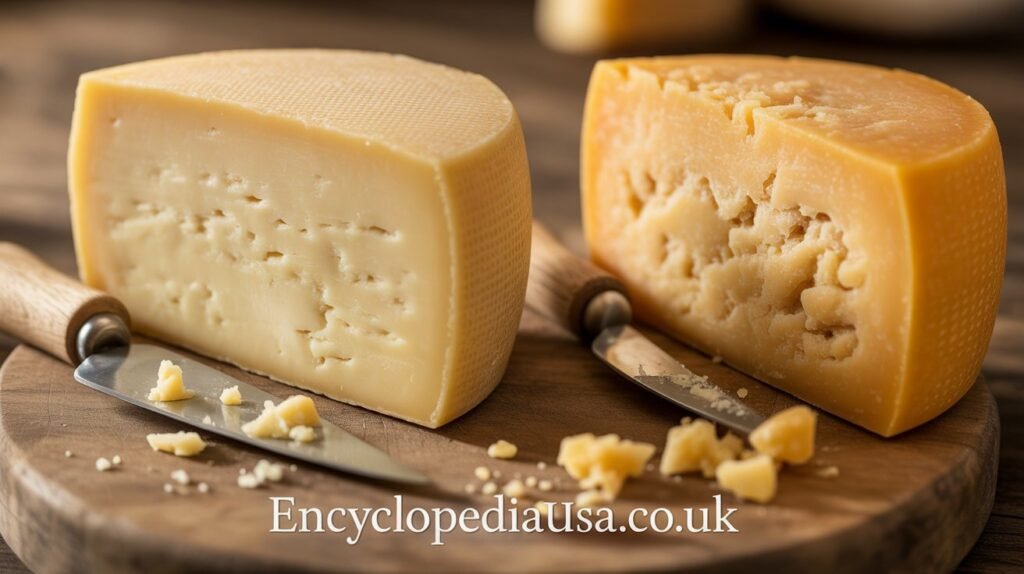
Fresh Asiago is semi soft. It has a smooth, supple texture that slices and melts with ease. Aged Asiago becomes progressively firmer and drier, eventually developing a hard, granular texture similar to Parmesan.
Parmesan is consistently hard and dry. Even at 12 months, it is firm enough to grate. At 24 months and beyond, it becomes dense, crystalline, and grainy. It does not melt as smoothly as younger cheeses because of its low moisture content.
Here is a practical breakdown:
| Cheese | Texture | Meltability | Grateability |
|---|---|---|---|
| Fresh Asiago | Semi soft | Excellent | Poor |
| Aged Asiago | Hard | Moderate | Good |
| Young Parmesan (12mo) | Firm | Moderate | Good |
| Aged Parmesan (24mo+) | Very hard | Low | Excellent |
How to Use Each Cheese in Cooking
Understanding Asiago Cheese vs Parmesan in the kitchen is where this knowledge becomes genuinely useful for you.
When to Use Asiago
Fresh Asiago is your go-to when you want:
- A great melting cheese for sandwiches and paninis
- A mild, creamy addition to eggs, omelets, or frittatas
- A crowd friendly topping for flatbreads and thin crust pizza
- A delicious addition to cheese boards alongside fruits and crackers
- A creamy pasta sauce with a gentle tang
Aged Asiago works beautifully when you want:
- A grated topping for soups and risotto
- A sharper substitute for Parmesan in pasta dishes
- A bold addition to Caesar salads
- A firm cheese for charcuterie boards with cured meats
When to Use Parmesan
Parmesan is the powerhouse. Use it when you want:
- Deeply savory pasta dishes like Cacio e Pepe, Carbonara, or Bolognese
- A finishing grate over roasted vegetables
- A crispy Parmesan crust on chicken or fish
- Rich soups and minestrone where the rind adds incredible depth
- Classic Caesar dressing
- Risotto with a bold, complex finish
- A cheese board centerpiece that commands attention
One personal tip I always share: never throw away your Parmesan rind. Drop it into a pot of tomato sauce, minestrone, or bone broth while it simmers. It adds a deep, savory richness that transforms a good dish into a great one.
Nutritional Comparison: Asiago vs Parmesan
Both cheeses are nutrient dense. Here is how they compare per one ounce (28 grams) serving:
| Nutrient | Asiago | Parmesan |
|---|---|---|
| Calories | 110 | 111 |
| Protein | 7g | 10g |
| Fat | 8g | 7g |
| Calcium | 200mg | 336mg |
| Sodium | 190mg | 335mg |
| Carbohydrates | 1g | 1g |
Key Takeaways from the Numbers:
- Parmesan delivers significantly more protein per ounce, making it a better choice if you are tracking macros or trying to maximize protein intake from cheese.
- Parmesan is also dramatically richer in calcium, providing nearly 34% of your daily recommended intake per ounce.
- Asiago has slightly more fat but less sodium, which may matter if you are watching your salt intake.
- Both cheeses are very low in carbohydrates, making them suitable for low carb or ketogenic diets.
- Parmesan contains less lactose than fresh Asiago because the long aging process breaks down most of the lactose. This makes aged Parmesan a better option for people with mild lactose sensitivity.
Can You Substitute One for the Other?
Yes, in many cases you can. But there are some important things to keep in mind.
Substituting Asiago for Parmesan:
Aged Asiago works as a Parmesan substitute in most recipes. It grates similarly and has a comparable sharpness. The flavor will be slightly different, a little less complex and a touch sharper in a different way, but the dish will still taste great. Use it in pasta, soups, or salads without worry.
Fresh Asiago does not work as a Parmesan substitute. The texture and flavor are too different.
Substituting Parmesan for Asiago:
Parmesan can replace aged Asiago in any recipe. The flavor will be deeper and more complex, which in most cases is a good thing. If you are substituting Parmesan for fresh Asiago in a melting application, it will not melt as smoothly, so keep that in mind.
Other Substitutes to Know:
If you run out of both, these cheeses can step in:
- Pecorino Romano (sharp, salty, works like Parmesan)
- Grana Padano (milder cousin of Parmesan, excellent substitute)
- Aged Manchego (different origin, similar texture and nuttiness)
- Romano cheese (sharper than Parmesan, use less)
Price Difference: Asiago vs Parmesan
Price is a real consideration for most home cooks, and here is the honest truth.
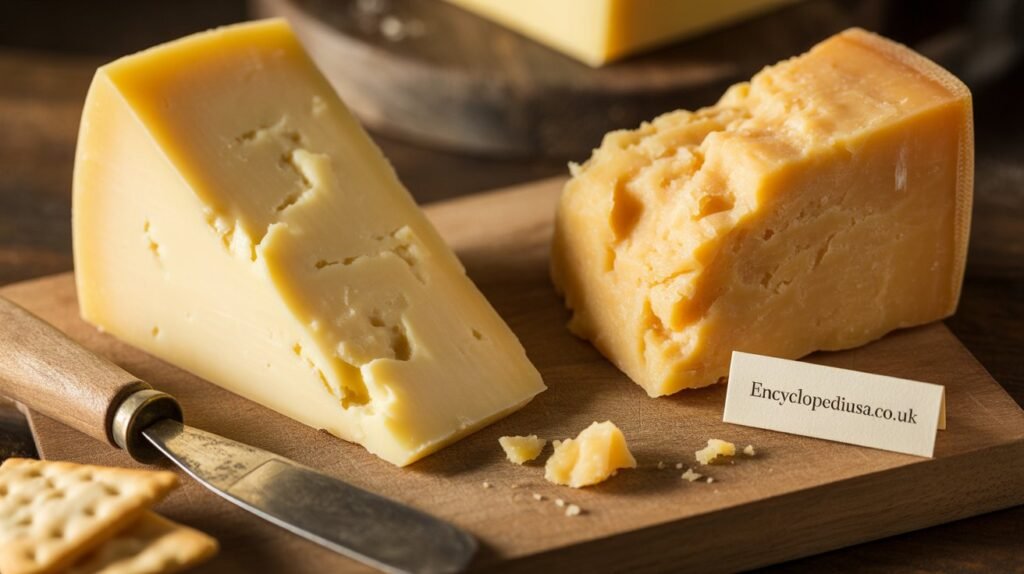
Genuine Parmigiano Reggiano is expensive. You can expect to pay between $15 and $25 per pound for authentic imported Parmigiano Reggiano, depending on aging and source. Domestic Parmesan is significantly cheaper, often $6 to $12 per pound, but the flavor difference is notable.
Asiago tends to be more affordable overall. Fresh Asiago typically runs $8 to $14 per pound. Aged Asiago can be slightly higher, but it rarely reaches the prices of top quality Parmigiano Reggiano.
If budget is a concern, Asiago gives you solid Italian cheese quality at a more accessible price point. If you want the absolute best flavor and are willing to pay for it, Parmesan wins without question.
Which Cheese Should You Choose?
Let me help you decide quickly.
Choose Asiago if:
- You want a milder, more versatile cheese
- You are melting cheese on sandwiches, pizza, or eggs
- You are building a crowd friendly cheese board
- You are cooking for people who find Parmesan too strong
- You are watching your sodium intake
- You want a more budget friendly option
Choose Parmesan if:
- You want maximum flavor impact in cooked dishes
- You are making classic Italian pasta recipes
- You want the highest protein and calcium content
- You have mild lactose sensitivity
- You want a cheese with genuine depth and complexity
- You are willing to invest in quality
The honest answer? Keep both in your fridge. They serve different purposes, and together they cover almost every cheese need you will ever have.
Fun Facts You Did Not Know
- The word “Parmesan” comes from “Parmigiano,” which refers to Parma, Italy. But in the European Union, only cheese made according to strict DOP rules can legally be called Parmigiano Reggiano.
- Asiago cheese wheels are smaller than Parmesan wheels. A typical Asiago wheel weighs around 26 pounds, while a Parmesan wheel averages 88 pounds.
- In Italy, Parmesan wheels have sometimes been used as collateral for bank loans. Banks in the Emilia Romagna region have been storing and financing Parmesan production this way for decades.
- The holes you see in aged Asiago are called “eyes.” They form naturally during fermentation and are considered a desirable quality marker.
- One wheel of Parmigiano Reggiano requires about 145 gallons of milk to produce.
Conclusion
When it comes to Asiago vs Parmesan, there is no loser. These are two genuinely exceptional Italian cheeses, each with its own personality, strengths, and ideal uses.
Asiago brings flexibility, mild charm, and excellent melting qualities. Parmesan brings intensity, nutritional power, and a complex flavor that elevates almost every dish it touches. Understanding the difference between the two makes you a smarter, more confident cook.
The next time you stand in the cheese aisle, you will know exactly what to reach for. And if you have been sleeping on aged Asiago as a Parmesan alternative, now is the time to give it a real try.
Which cheese is your favorite to cook with? Share this with a fellow food lover who could use the knowledge, and let the cheese debate begin.
Frequently Asked Questions
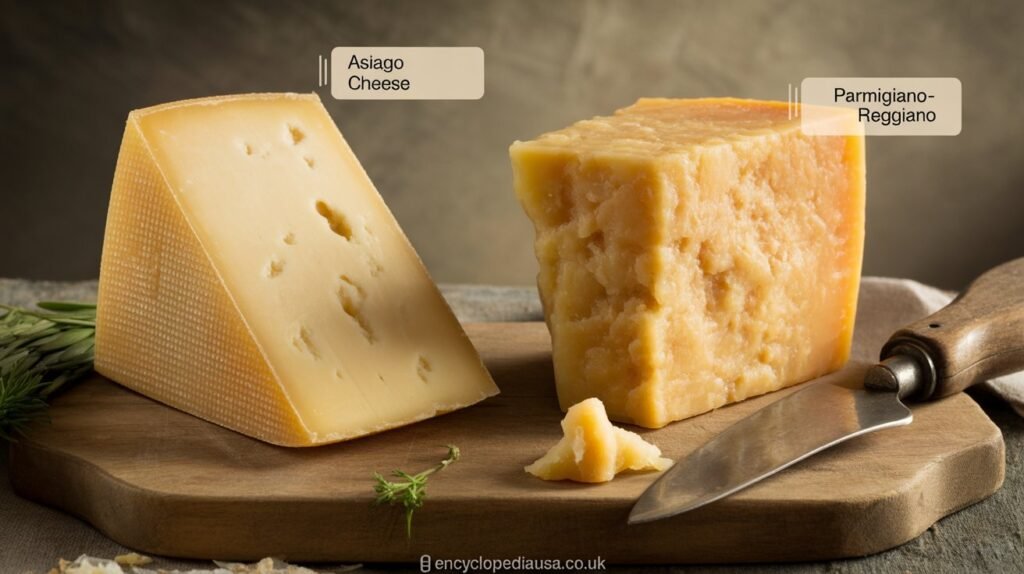
1. Is Asiago similar to Parmesan? Yes and no. Aged Asiago and Parmesan are both hard Italian cheeses with nutty flavors, but Parmesan is generally more complex, more intensely flavored, and aged longer. Fresh Asiago is much softer and milder than Parmesan.
2. Can I use Asiago instead of Parmesan in pasta? Yes. Aged Asiago works well as a Parmesan substitute in pasta dishes. The flavor will be slightly different but still delicious. Use the same amount as you would Parmesan.
3. Which is stronger, Asiago or Parmesan? Parmesan is generally stronger and more complex in flavor. Aged Asiago can be quite sharp, but Parmesan at 24 to 36 months delivers a deeper, more layered intensity.
4. Is Asiago or Parmesan better for melting? Fresh Asiago melts much better than Parmesan. Parmesan has very low moisture content, which makes it excellent for grating but not ideal for melting applications.
5. Which has more protein, Asiago or Parmesan? Parmesan wins here. It delivers around 10 grams of protein per ounce, compared to about 7 grams in Asiago.
6. Is Parmesan healthier than Asiago? Both are nutritious. Parmesan has more protein and calcium per ounce. Asiago has slightly more fat but less sodium. The healthier choice depends on your specific dietary needs.
7. Can people with lactose intolerance eat Asiago and Parmesan? Aged Parmesan is very low in lactose because the long aging process breaks most of it down. Aged Asiago is also lower in lactose than fresh Asiago. Many people with mild lactose sensitivity can enjoy both without issues, but individual tolerance varies.
8. What does Asiago cheese taste like? Fresh Asiago tastes mild, buttery, and slightly tangy. Aged Asiago is nuttier, sharper, and more assertive. The oldest versions are bold and crumbly, somewhat like a milder version of sharp Cheddar combined with a nutty Italian cheese.
9. Is Parmesan from a green can real Parmesan? Not really. The shelf stable Parmesan in green cans contains additives, preservatives, and cellulose to prevent clumping. It tastes very different from genuine Parmigiano Reggiano. For real flavor, buy a wedge of authentic Parmigiano Reggiano and grate it fresh.
10. How long do Asiago and Parmesan last in the fridge? Both cheeses keep well when stored properly. Wrap them tightly in wax paper or parchment paper, then loosely in plastic wrap. Parmesan can last 4 to 6 weeks in the fridge. Aged Asiago keeps for 3 to 4 weeks. Fresh Asiago lasts about 1 to 2 weeks.
Must Read: Encyclopediausa.co.uk
Author Bio
Author: Sofia Marchetti Sofia Marchetti is a food writer and culinary educator with over ten years of experience covering Italian cuisine, artisan ingredients, and home cooking. She has traveled extensively through Italy studying traditional cheesemaking and writes with a passion for making authentic flavors accessible to everyday cooks. Her work focuses on helping readers cook smarter, eat better, and enjoy real food without the guesswork.