

Earthquake Now: Dangerous Signs You Must Never Ignore 2026
Right now, somewhere on Earth, the ground is moving. An earthquake is happening at this very moment. In fact, the United States Geological Survey (USGS) estimates that roughly 12,000 to 14,000 earthquakes occur every single year. Most are too small to feel. But enough of them are not.
The phrase earthquake now has become one of the most searched terms online after any major seismic event. People reach for their phones before the shaking has even stopped. And that urge makes complete sense. You want to know what just happened, whether your family is safe, and what you should do next.
This article gives you everything you need in one place. You will learn how earthquakes work, how to track a live earthquake now, what to do in the first 60 seconds, and how to prepare your home before the next one hits. This is not just a list of generic tips. This is a practical, honest guide built from real seismological research and disaster response data.

⚠ Live Alert
To check for an earthquake right now near your location, visit earthquake.usgs.gov or download the MyShake app. These tools show real-time seismic activity across the globe.
55KEarthquakes detected globally each year
17Major quakes (7.0+) per year on average
500MPeople live in high seismic risk zones
60 secGolden window to protect yourself
How Does an Earthquake Actually Happen?
To understand why an earthquake feels the way it does, you need to picture the Earth’s crust. It is not one solid shell. It is broken into massive sections called tectonic plates. These plates move constantly. When two plates grind against each other, get stuck, and then suddenly slip, they release a burst of energy. That energy travels through the ground as seismic waves. What you feel on the surface is an earthquake.
The point underground where the rupture starts is called the hypocenter or focus. The point directly above it on the surface is the epicenter. The closer you are to the epicenter, the more violent the shaking tends to be.
Types of Seismic Waves
Two main types of waves reach you during a quake. The first is the P-wave (primary wave). It arrives first. It is fast and compresses the ground like a sound wave. You might feel it as a sudden jolt or a thud. The second is the S-wave (secondary wave). It arrives a few seconds later. This one shakes you side to side and up and down. S-waves cause most of the damage. Early warning systems detect P-waves to give you those critical extra seconds before the S-waves arrive.
The Richter Scale vs. Moment Magnitude
Most people still say “Richter scale” when describing earthquake strength. But scientists today actually use the Moment Magnitude Scale (Mw). Both scales work similarly for most practical purposes. Here is a quick breakdown of what each magnitude actually means for you.
| Magnitude | Description | What You Feel |
|---|---|---|
| 1.0 – 2.9 | Micro | Rarely felt. Only detected by instruments. |
| 3.0 – 3.9 | Minor | Felt by some people. No damage. |
| 4.0 – 4.9 | Light | Widely felt. Minimal damage possible. |
| 5.0 – 5.9 | Moderate | Significant shaking. Damage to weak structures. |
| 6.0 – 6.9 | Strong | Destructive in populated areas. |
| 7.0 – 7.9 | Major | Serious damage over large areas. |
| 8.0+ | Great | Catastrophic. Felt across entire regions. |
Where Do Most Earthquakes Strike Right Now?
Certain parts of the world see far more seismic activity than others. The most earthquake-prone region on Earth is a zone called the Ring of Fire. It stretches around the edges of the Pacific Ocean, covering countries like Japan, Indonesia, the Philippines, Chile, Mexico, and the western United States. About 90 percent of all earthquakes happen along this belt.
Other major seismic zones include the Alpide Belt, which runs from the Mediterranean through Turkey, Iran, Pakistan, and into South Asia. The 2005 Kashmir earthquake, which killed over 86,000 people, struck right in this belt. Pakistan, particularly the northern regions, sits in an area of very high seismic risk.
Countries with the Highest Earthquake Risk
- Japan — Experiences around 1,500 earthquakes per year that can be felt.
- Indonesia — Sits on three major tectonic plates, making it extremely active.
- Turkey — The 2023 Kahramanmaras earthquake caused over 50,000 deaths.
- Chile — Home to the strongest earthquake ever recorded, a 9.5 in 1960.
- Pakistan and Afghanistan — Both regularly experience devastating quakes due to the Indian plate collision.
- United States (California, Alaska) — California alone has roughly 10,000 earthquakes per year.
“The earthquake doesn’t kill people. Collapsing buildings do.”
— A core principle of modern earthquake engineering and disaster preparedness
Earthquake Early Warning: The Seconds That Save Lives
You cannot predict an earthquake with certainty. No scientist in the world can tell you exactly where or when the next one will hit. But you can get a warning once one has started. Earthquake early warning (EEW) systems detect the first P-waves from a rupture and send alerts to people seconds before the destructive S-waves arrive.
Those seconds matter more than you might think. Seven seconds gives you time to drop and get under a table. Fifteen seconds lets you move away from a window or stop a car. Thirty seconds can allow a surgeon to stop operating, a train to slow down, or a factory to shut off dangerous machinery.
Countries with Active Early Warning Systems
- Japan — The most advanced system in the world. Alerts go to every phone in the area instantly.
- United States — ShakeAlert covers California, Oregon, and Washington.
- Mexico — One of the oldest systems, running since 1991.
- South Korea and Taiwan — Both operate effective national warning networks.
If you live in a seismically active region, you should have an early warning app installed right now. I always recommend the MyShake app from the Berkeley Seismological Laboratory. It runs on your phone, contributes your device’s accelerometer data to global science, and sends you alerts in real time.
What to Do When an Earthquake Hits Right Now
This is the section most people actually need. When shaking starts, panic is your greatest enemy. Your brain will want to run. Do not run. The correct response is specific, and it takes about five seconds to execute. Here it is.
1
Drop to your hands and knees immediately
This keeps you from being knocked off your feet. It also puts you in the right position to protect yourself and move if needed.
2
Cover your head and neck with your arms
Get under a sturdy table or desk if one is nearby. If not, cover your head with both arms and crouch against an interior wall away from windows.
3
Hold on and stay put until shaking stops
Hold onto your shelter firmly. Move with it if it shifts. Do not try to run outside during the shaking. Most injuries happen when people move.
4
After shaking stops, check for hazards
Look for fire, gas leaks, or structural damage before moving. If you smell gas, leave immediately and do not turn any switches on or off.
5
Prepare for aftershocks
Aftershocks can follow minutes, hours, or even days after the main quake. Stay alert and repeat the Drop, Cover, Hold procedure if shaking returns.
What NOT to Do During an Earthquake
- Do not stand in a doorway. This is an outdated myth. Doorways offer no special protection in modern buildings.
- Do not run outside during shaking. Falling glass and debris cause most outdoor injuries.
- Do not use elevators after a quake. Take the stairs and exit carefully.
- Do not light a match or cigarette if you suspect a gas leak.
- Do not go to the beach after a major coastal earthquake. A tsunami could follow within minutes.
Special Situations: What If You Are Not at Home?
If You Are Driving
Pull over slowly away from overpasses, bridges, buildings, and power lines. Stay inside your vehicle. After the shaking stops, drive carefully and watch for road damage or downed power lines.
If You Are in a High-Rise Building
High-rise buildings are designed to sway during an earthquake. This is intentional. Do not panic and rush for the stairs. Follow the Drop, Cover, Hold procedure, then wait for official instructions to evacuate. Stairwells can be dangerous with panicking crowds.
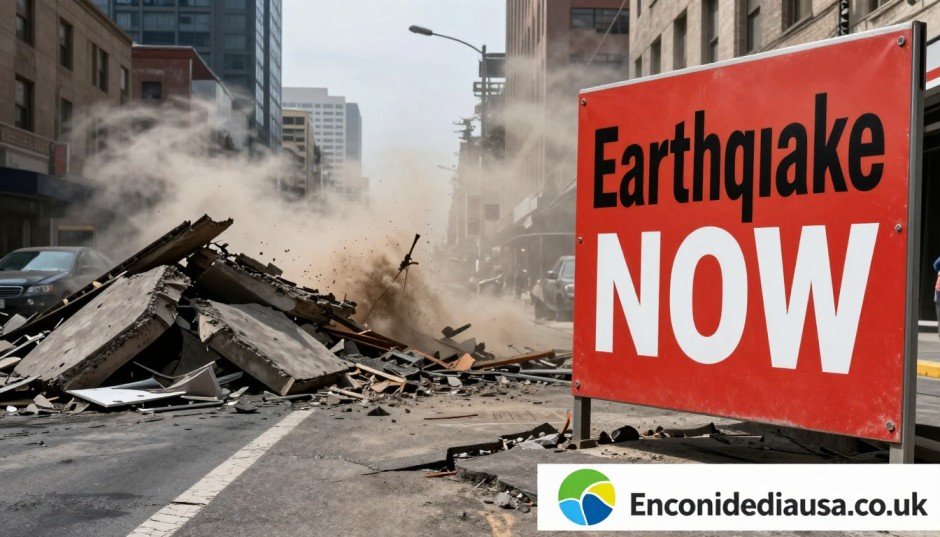
If You Are Near the Coast
This is critical. If you feel strong shaking near the ocean and it lasts for 20 seconds or more, do not wait for an official tsunami warning. Move to higher ground immediately. The 2004 Indian Ocean tsunami killed over 227,000 people, many of whom had time to evacuate but did not know the risk.
How to Prepare for an Earthquake Before It Happens
Preparedness is not about fear. It is about confidence. When you have a plan, a supply kit, and a family communication strategy, you stop feeling powerless. You start feeling ready. Here is what that looks like in practice.
Build a 72-Hour Emergency Kit
Emergency responders often cannot reach earthquake-affected areas for 72 hours or more. Your kit needs to sustain you and your family for at least that long. Include the following items.
- Water — One gallon per person per day for at least three days.
- Food — Non-perishable items like canned goods, energy bars, and dried fruit.
- First aid kit — Include prescription medications and medical supplies.
- Flashlight and extra batteries — Power outages are common after major quakes.
- Whistle — To signal for help if you are trapped under debris.
- Dust masks and plastic sheeting — For air contamination from damaged buildings.
- Important documents — Copies of IDs, insurance papers, and emergency contacts in a waterproof bag.
- Cash in small bills — ATMs and card machines may not work after a disaster.
Secure Your Home Against Earthquake Damage
Much of the damage and injury from earthquakes comes from falling objects, not the ground shaking itself. You can significantly reduce this risk with some basic steps.
- Anchor heavy furniture like bookshelves, dressers, and water heaters to the wall.
- Store heavy items on lower shelves rather than high ones.
- Install latches on cabinet doors so they do not fly open.
- Know where your home’s gas and water shutoff valves are located.
- Check your home’s foundation and ask about seismic retrofitting if you live in a high-risk zone.
💡 Pro Tip
Practice the Drop, Cover, Hold technique with your family at least twice a year. Many communities hold Great ShakeOut drills in October. Participation takes less than two minutes and could save your life.
How to Track an Earthquake Now in Real Time
Technology has transformed how we monitor seismic activity. You do not need to be a scientist to access live earthquake data. These tools are free, accurate, and available to anyone with a phone or internet connection.
Best Tools to Monitor an Earthquake in Real Time
- USGS Earthquake Hazards Program (earthquake.usgs.gov) — The gold standard for real-time data. Shows every detected earthquake globally within minutes of it happening.
- EMSC (European-Mediterranean Seismological Centre) — Excellent for events in Europe, the Middle East, and Central Asia.
- MyShake App — Sends ShakeAlert warnings directly to your phone in covered areas. Also uses your phone as a seismometer.
- Google Search — Simply search “earthquake now” and Google often surfaces real-time USGS data at the top of the results page.
- IRIS Earthquake Browser — More detailed, visualization-focused tool for researchers and curious learners.
Final Thoughts: Are You Ready for the Next Earthquake?
An earthquake now is not a hypothetical. It is a statistical certainty for billions of people around the world. The only real question is whether you will be ready when it happens near you.
The good news is that preparation is not complicated. A 72-hour kit, a practiced family plan, some furniture anchored to the wall, and a warning app on your phone can make the difference between a terrifying experience and a manageable one. The gap between prepared and unprepared is much smaller than most people realize.
Share this guide with someone who lives in an earthquake-prone area. What is one step you plan to take this week to prepare? Drop it in the comments below. Your action might inspire someone else to take theirs.
📷
Featured Image Description
A dramatic aerial photograph of cracked asphalt and displaced road sections after a strong earthquake, with emergency response vehicles visible in the background and dust rising from the affected zone. The image conveys urgency and scale without showing graphic human injury. Ideal for the hero section of the article.
Frequently Asked Questions
How can I check if there is an earthquake happening right now?
Visit earthquake.usgs.gov for real-time global data updated within minutes. You can also search “earthquake now” on Google, which often shows a live USGS feed at the top of results. The MyShake app also delivers real-time alerts directly to your phone.
What is the safest place to be during an earthquake?
The safest place is under a sturdy table or desk. If none is available, get against an interior wall away from windows and cover your head with your arms. Never stand in a doorway or run outside during active shaking.
Can animals predict earthquakes before they happen?
Animals sometimes behave strangely before earthquakes, possibly sensing P-waves or changes in groundwater chemistry. However, scientists have not been able to use animal behavior reliably as a prediction tool. It remains an area of active research with no confirmed, consistent results.
How long do earthquakes usually last?
Most small earthquakes last only a few seconds. Moderate ones can last 10 to 30 seconds. The 2011 Tohoku earthquake in Japan lasted approximately 6 minutes, which is exceptionally long. The duration often depends on the length of the fault rupture.
What is the difference between an earthquake warning and an earthquake alert?
An earthquake warning is issued before strong shaking arrives, based on detection of early P-waves. An earthquake alert or advisory is typically issued after an event to inform the public about what happened, where it occurred, and what to expect from aftershocks.
Is it safe to stay in a building after an earthquake?
If the building shows no visible structural damage such as large cracks, leaning walls, or collapsed sections, it may be safe to stay briefly. However, always follow instructions from emergency services. After major quakes, buildings often need professional inspection before re-entry.
What should I do if I am trapped after an earthquake?
Stay calm and conserve your energy. Signal rescuers by tapping on a pipe or wall. Use a whistle if you have one. Avoid shouting unless you hear rescuers nearby, as it wastes energy and can cause you to inhale dangerous dust. Try to cover your nose and mouth with cloth.
Can we predict earthquakes accurately?
No. Despite decades of research, scientists cannot reliably predict the exact time, location, and magnitude of an earthquake before it happens. Early warning systems can alert you seconds after one begins. Long-term probabilistic forecasts can tell you which regions carry high risk over decades, but not when the next event will strike.
Are earthquakes becoming more frequent globally?
Global earthquake frequency has not significantly increased. However, our ability to detect smaller quakes has improved enormously with modern seismograph networks. This makes it look like more earthquakes are happening when, in fact, we are simply measuring more of them. Major earthquakes (7.0+) remain statistically consistent over time.
How does a tsunami relate to an earthquake?
Tsunamis are most commonly triggered by undersea earthquakes with a magnitude of 7.0 or greater that cause vertical displacement of the ocean floor. Not every undersea earthquake creates a tsunami, but any strong coastal earthquake should prompt immediate movement to higher ground as a precaution.
Dr. Nadia Rashid
Disaster Preparedness Specialist
Dr. Nadia Rashid holds a PhD in Geophysics and has spent over 14 years advising government agencies on earthquake response and community resilience. She has contributed to disaster preparedness curricula across South Asia and the Middle East and writes to make complex seismic science accessible to everyday readers.
Also read encyclopediausa.co.uk
Email: johanharwen314@gmail.com
Author Name: Johan Harwen
