

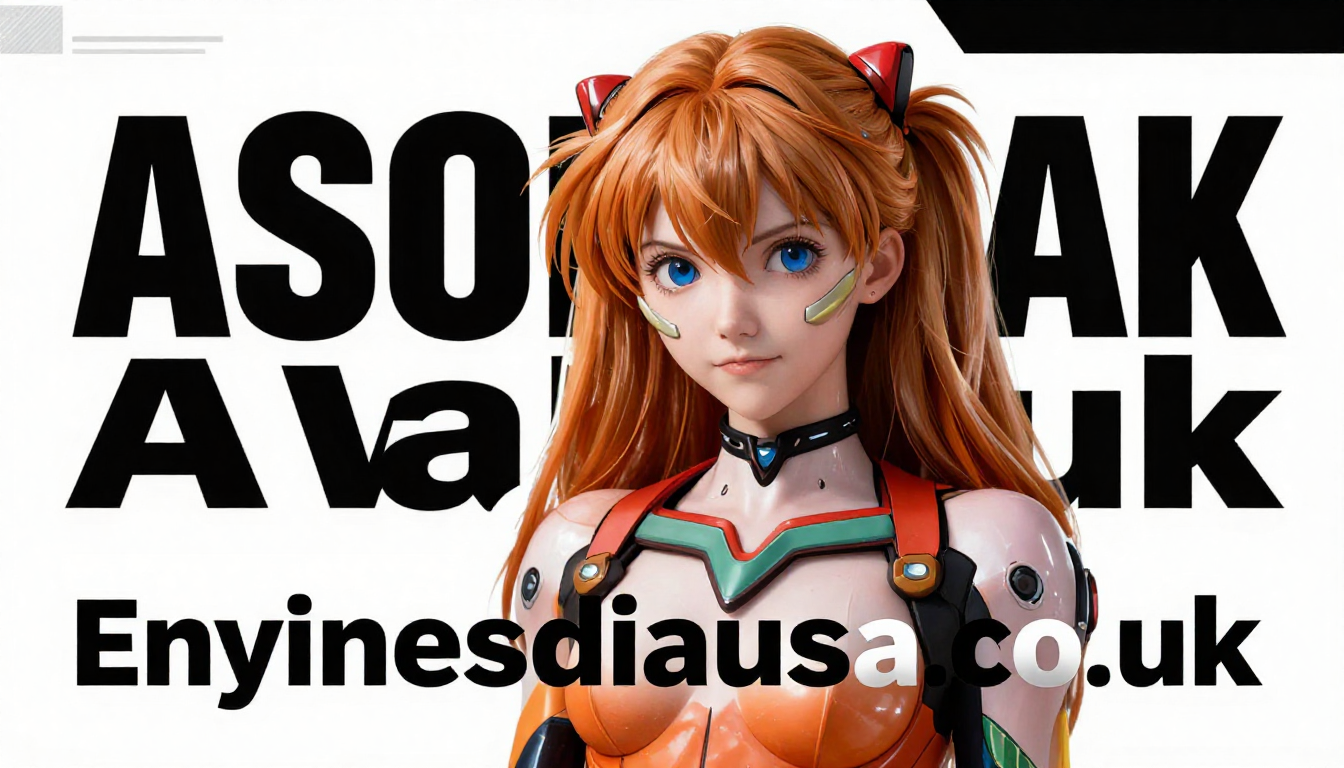
Asuka Evangelion: The Fierce, Flawed, and Unforgettable Pilot You Can’t Ignore 2026
Introduction
If you have ever watched Neon Genesis Evangelion, you already know that Asuka Evangelion is impossible to forget. She storms into the series like a force of nature. She is loud, brilliant, emotionally complex, and deeply human in ways that catch you completely off guard. At first glance, she looks like pure confidence. But the more you watch, the more you realize that beneath that fire is someone fighting battles that go far beyond the cockpit of a giant mecha.
Asuka Langley Soryu is not just a supporting character. She is a pillar of the entire series. Her arc explores trauma, identity, pride, and emotional collapse in ways that anime rarely attempts. This article breaks down everything you need to know: her background, her psychology, her relationship with Shinji, and why she still resonates with fans over 25 years after the show first aired. Whether you are new to Evangelion or revisiting it, this deep dive will give you a richer understanding of one of anime’s greatest characters.
Who Is Asuka Langley Soryu?
Asuka is the Second Child and the pilot of Evangelion Unit 02. She is a 14-year-old prodigy with a college degree, a German-American background, and an attitude that fills every room she enters. She joins Shinji and Rei in Tokyo-3 after her Unit 02 is transported from Germany.
Her full name in the original anime series is Asuka Langley Soryu. In the Rebuild of Evangelion film series, she is renamed Asuka Langley Shikinami. Both versions share core traits, but the Rebuild films develop her arc in distinct ways.
Here is a quick profile of her key details:
- Full Name: Asuka Langley Soryu (series) / Asuka Langley Shikinami (Rebuild)
- Age: 14
- Nationality: German-American
- Eva Unit: Unit 02 (red)
- Designation: Second Child
- Synchronization: Among the highest in the series at peak performance
- Signature trait: Fiery, competitive, emotionally defended
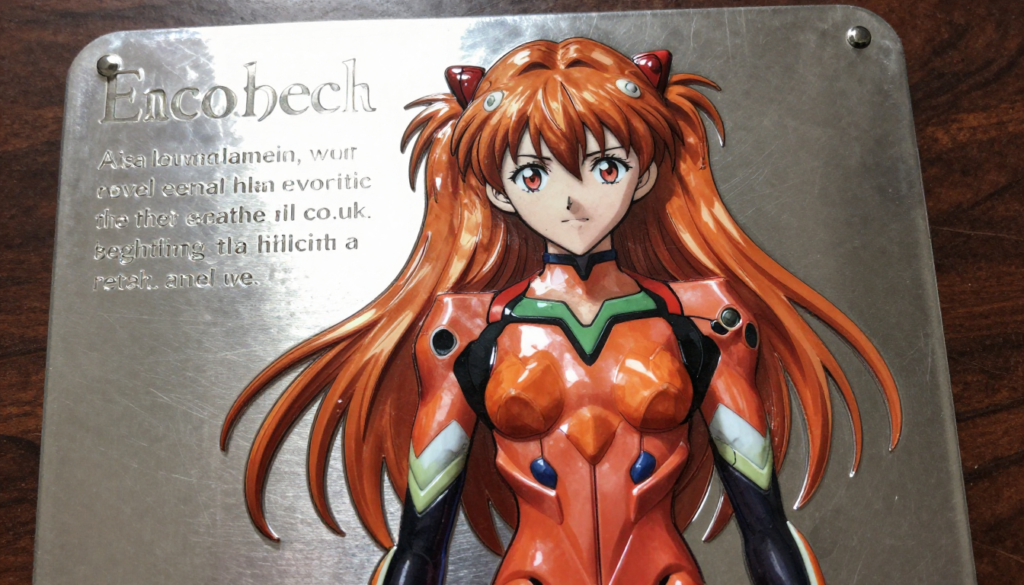
Her red plug suit became one of the most iconic images in anime history. It is a visual extension of her personality: bold, aggressive, and impossible to ignore.
Asuka’s Backstory: Where the Pain Begins
You cannot understand Asuka without understanding what shaped her. Her backstory is one of the most tragic in the entire series, and the show does not hand it to you all at once.
A Mother Who Was Never Really There
Asuka’s mother, Kyoko Zeppelin Soryu, was a scientist involved in early contact experiments with Eva Unit 02. The experiment fractured her mind. She became severely mentally ill and eventually lost the ability to recognize Asuka as her daughter. Instead, Kyoko treated a doll as her child.
This is already devastating. But it gets worse.
On the day Asuka was selected as the Second Child and came to share the news with her mother, she discovered that Kyoko had hanged herself. The doll was hanging beside her. Asuka found them together. She was a young child when this happened.
Building a Wall Around the Pain
After her mother’s death, Asuka made a choice. She would not cry. She would not need anyone. She would be the best, and her excellence would be enough. She threw herself into Eva piloting and academic achievement with obsessive intensity. She earned a college degree by the time she was 14.
This is the armor she wears when she arrives in Tokyo-3. Her arrogance is not vanity. It is a coping mechanism. Every time she calls Shinji pathetic, she is really trying to convince herself that she is the opposite: strong, self-sufficient, and untouchable.
Asuka and Shinji: A Relationship Built on Friction and Need
The dynamic between Asuka and Shinji is one of the most analyzed relationships in anime. On the surface, they fight constantly. She mocks his passivity. He frustrates her with his indecision. They live together at Misato’s apartment, and the tension is almost always simmering.
But look closer.
Why She Pushes Him Away
Asuka is terrified of genuine connection. Every person she has ever needed has either left her or let her down. Her mother disappeared into madness. Her father remarried quickly and moved on. She grew up surrounded by adults who used her as a tool.
When Shinji shows genuine care or vulnerability, it threatens her. Real closeness means real risk of abandonment. So she pushes him away before he gets the chance to leave on his own.
The Kiss Episode
One of the most discussed moments in the series is the kiss between Asuka and Shinji. She initiates it, framing it as something to cure her boredom. But the way the scene plays out tells a different story. She holds her breath the entire time, a detail that suggests deep emotional tension she refuses to acknowledge.
The scene is not romantic in a simple sense. It is two deeply broken teenagers reaching toward each other and immediately retreating back into their defenses.
Rebuild of Evangelion: A Softer Version?
In the Rebuild films, the dynamic shifts somewhat. Asuka and Shinji share moments that hint at a warmer connection beneath the hostility. The films give her more room to breathe without fully stripping away her essential complexity. Fans are divided on which version they prefer, but most agree that both portrayals are powerful in different ways.
The Psychological Breakdown of Asuka Evangelion
The most powerful and painful part of Asuka’s arc is her psychological collapse in the later episodes of the series. It is uncomfortable to watch because it feels real.
The Invasion of Privacy
During the battle with the 15th Angel, the Angel invades Asuka’s mind and forces her to experience all of her repressed trauma at once. Her synchronization rate, which had been in decline, drops to zero. She becomes completely unable to pilot Unit 02.
The show does not treat this as a tactical problem. It treats it as a human one. Asuka is shown catatonic in a hospital bed, unable to function. She has lost the one thing that gave her identity meaning.
The Bathtub Scene
One of the most haunting scenes in the series shows Asuka lying in a bathtub, staring at the ceiling. Shinji comes in, sees her, and in a moment of weakness and confusion, he acts in a way that is morally complicated and deliberately unsettling. The scene is meant to disturb you. It highlights his passivity and selfishness at their worst, and it frames Asuka as utterly vulnerable in a way the show had never shown before.
What Her Breakdown Means Thematically
The show uses Asuka’s collapse to make a larger argument. External achievement, even extraordinary achievement, cannot substitute for emotional health. You cannot outrun your trauma by being the best pilot. You cannot armor yourself against pain forever.
Her breakdown is the inevitable result of never processing her grief.
Asuka in The End of Evangelion
The End of Evangelion film gives Asuka one of the most celebrated sequences in the history of anime. It is also one of the most devastating.
The Battle Against the Mass Production Evas
Near the end of the film, Asuka finally reconnects with her Eva. She achieves a 400% synchronization rate and proceeds to single-handedly destroy all nine of the mass production Evangelions in a stunning fight sequence. The scene is triumphant. After everything she has been through, she is back.
And then the film takes it away.
The mass production Evas regenerate using the Lance of Longinus. They overpower Unit 02 and tear it apart piece by piece. Asuka does not go down without fighting. Her last words in the sequence, muttered from inside a destroyed Eva, are: “I’ll kill you… I’ll kill you… I’ll kill you.”
It is the most Asuka thing she could possibly say, and it is heartbreaking.
Her Final Appearance
In the final moments of the film, Asuka lies beside Shinji on the post-apocalyptic shoreline. When he reaches out and touches her, she reaches up and places her hand against his cheek. Then she says: “How disgusting.”
Viewers and scholars have debated this line for decades. Some read it as disgust toward Shinji. Others read it as self-directed. Some interpret it as Asuka finally acknowledging vulnerability, and hating herself for it. There is no consensus, and that ambiguity is entirely intentional.
Why Asuka Still Matters Today
Asuka Evangelion has been captivating fans since 1995, and her relevance has not faded. There are good reasons for that.
She Is Genuinely Complex
Most fictional characters, even well-written ones, have a trait and a motivation. Asuka has an entire inner world. She is smart, petty, loving, cruel, terrified, brave, and exhausted all at once. You can sympathize with her and be frustrated by her in the same scene.
She Represents a Real Experience
Many viewers, especially those who have used achievement as emotional armor, see themselves in her. The idea that if you are skilled enough and strong enough, you will not need anyone, is a coping strategy that many people genuinely live by. Watching it fail so completely in Asuka is painful and cathartic at the same time.
Her Design Became Iconic
The red plug suit. The two auburn hair clips. The intense blue eyes. Asuka’s visual design is immediately recognizable even to people who have never seen the show. She has appeared in merchandise, cosplay, video games, and fan art for over two decades. According to multiple anime polls and ranking sites, she consistently places among the most popular female anime characters of all time.
She Changed What Anime Heroes Could Look Like
Before Evangelion, anime protagonists and deuteragonists in mecha shows were mostly stoic, noble, or straightforwardly heroic. Asuka was none of those things. She was difficult. She was not always likable. And the show never asked you to excuse her behavior. That was revolutionary.
Asuka Langley Shikinami: The Rebuild Version Compared
The Rebuild of Evangelion films, released between 2007 and 2021, reimagine the story with updated animation and some significant changes. Asuka is one of the most notably altered characters.
Key differences in the Rebuild version:
- Her surname is changed from Soryu to Shikinami
- Her backstory is less detailed in the films
- She has a slightly warmer, more readable dynamic with Shinji in parts of the films
- In Evangelion: 3.0+1.0 Thrice Upon a Time, she receives a more complete arc that includes closure
Many fans consider both versions equally valid. The original series Asuka is more psychologically raw. The Rebuild Asuka has more room to develop across four films. You honestly cannot go wrong watching either.
Common Questions About Asuka Evangelion
These are the questions fans ask most often. Here are clear, honest answers.
Does Asuka like Shinji romantically? Yes, in a complicated and deeply repressed way. She is attracted to him but incapable of expressing it safely. Her feelings get buried under pride and fear of rejection.
What happened to Asuka’s mother? Her mother lost her sanity during an Eva contact experiment. She later hanged herself on the same day Asuka was chosen as a pilot.
Why does Asuka hate being called a child? Her entire identity is built on being exceptional and self-sufficient. Being called a child reminds her of her vulnerability and her real age, which she cannot accept.
Is Asuka in the Rebuild films the same person? She shares the same core personality but is a different character in some respects, with a different surname and a somewhat different backstory.
What does Asuka say at the end of End of Evangelion? She says “How disgusting” (Kimochi warui in Japanese). The line is deliberately ambiguous and has multiple valid interpretations.
FAQs
1. Is Asuka German or American? She is both. Her father is American and her mother was German. She grew up in Germany and speaks German, Japanese, and English.
2. How old is Asuka in Evangelion? She is 14 years old throughout the series.
3. What Eva unit does Asuka pilot? She pilots Evangelion Unit 02, which is red and designed for combat specialization.
4. Why does Asuka have a lower sync rate later in the series? Her emotional collapse and unresolved trauma interfere directly with the synchronization process, which requires psychological openness.
5. Who is more popular: Asuka or Rei? Both characters have massive fan bases. Historically, Rei was more popular in Japan, while Asuka had a strong international following. More recent polls show the gap has narrowed.
6. What is Asuka’s highest synchronization rate? In The End of Evangelion, she achieves a 400% synchronization rate during her final battle.
7. Does Asuka survive End of Evangelion? Her fate is intentionally ambiguous, though she is shown alive at the very end of the film.
8. What languages does Asuka speak? She speaks Japanese, German, and English fluently.
9. Why does Asuka call Shinji Third Children? It is his designation as the Third Child, meaning the third selected pilot. She often uses it in a dismissive or mocking way.
10. What is Asuka’s favorite food? The show suggests she enjoys food that reflects her European upbringing, though no single dish is made iconic for her the way instant ramen is for Shinji.
Conclusion
Asuka Evangelion is one of the most beautifully constructed characters in the history of animation. She is not easy to love, and that is exactly the point. She challenges you to look past the surface, past the arrogance and the aggression, and to recognize the terrified, grieving child who built an entire personality out of necessity.
Her story is a reminder that strength built on unprocessed pain is fragile. That needing people is not weakness. That the bravest thing a person can do is allow themselves to be seen.
If you are watching Evangelion for the first time, pay close attention to Asuka. Not just when she is winning, but especially when she is losing. That is where the real story lives.
Which version of Asuka do you connect with more: the original series or the Rebuild films? Share your thoughts, or pass this article along to someone who needs to finally watch Evangelion.
Author Bio
Jordan Nakamura is an anime writer and cultural critic with over eight years of experience covering Japanese animation. He specializes in character psychology, narrative structure, and the cultural impact of genre storytelling. When he is not rewatching Evangelion for the fifth time, he writes about the intersection of anime and mental health representation.
Also read encyclopediausa.co.uk
Email: johanharwen314@gmail.com
Author Name: Johan Harwen