

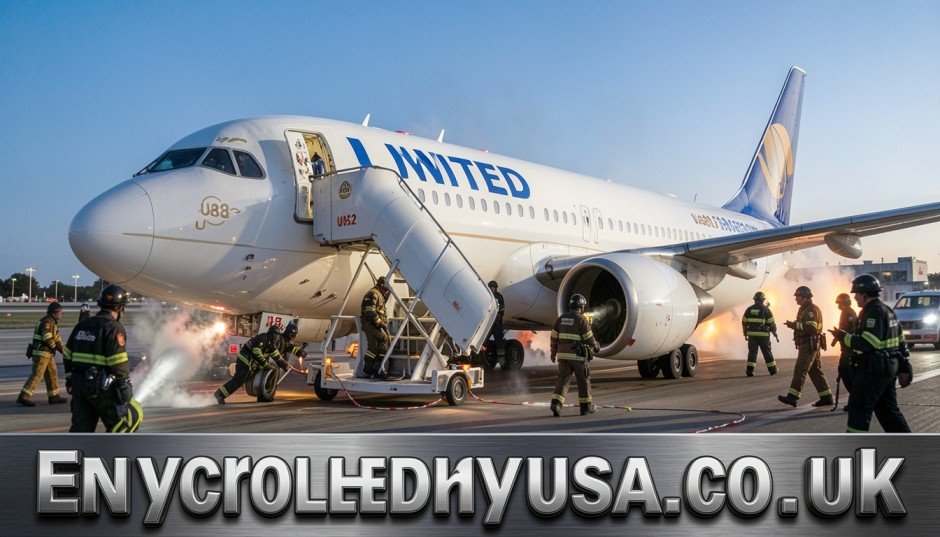
United Airlines Flight UA82 Emergency: Shocking Mid-Air Crisis Explained
Introduction
Imagine settling into your seat for a 14-hour flight to New Delhi, headphones on, meal ordered. Then, barely an hour into the journey, the plane banks hard and turns back toward home. That is exactly what happened on the night of July 6, 2025, when United Airlines flight UA82 emergency procedures were activated over the Gulf of Maine.
The Boeing 787-9 Dreamliner departed Newark Liberty International Airport headed for Indira Gandhi International Airport in New Delhi. But at 33,000 feet, the flight crew detected a critical failure in the aircraft’s avionics cooling system. They made the call quickly. They declared a Squawk 7700 emergency and turned the plane around.
No one was injured. Every passenger landed safely. But the story of UA82 reveals something important about how modern aviation handles a crisis, what happens to passengers after an emergency landing, and why a cooling system failure is considered one of the most serious issues a long-haul aircraft can face.
This article covers what triggered the emergency, how the crew responded, what passengers experienced, and what the incident means for air travelers heading to India on similar routes.
What Is United Airlines Flight UA82?
United Airlines operates flight UA82 as a long-haul international service connecting Newark Liberty International Airport (EWR) in New Jersey with Indira Gandhi International Airport (DEL) in New Delhi, India.
The route covers roughly 7,300 miles and typically takes around 14 to 15 hours. United Airlines operates this route using a Boeing 787-9 Dreamliner, one of the most advanced wide-body aircraft in commercial aviation today.
On July 6, 2025, the aircraft assigned to flight UA82 was a Boeing 787-9 registered as N23983. The plane was approximately 4.8 years old and had been in active service with United Airlines since its delivery from the factory in September 2020.
By most standards, this was not an aging aircraft. It was modern, well-maintained, and perfectly suited for the grueling transatlantic and transoceanic legs that make up a Newark to Delhi journey.
What Triggered the United Airlines Flight UA82 Emergency?
At approximately 02:15 UTC on July 7, 2025, flight crew on board UA82 detected a failure in the aircraft’s electronics cooling system. This discovery came roughly 45 minutes to one hour after departure, while the aircraft was cruising at flight level FL330, which means 33,000 feet above sea level.
The aviation cooling system, technically known as the avionics cooling system, keeps the aircraft’s onboard computers and electronic control units from overheating. On a Boeing 787-9 Dreamliner, these systems manage everything from navigation and communication to flight controls and engine performance.
When this system fails, the consequences can escalate rapidly. Without cooling, avionics can overheat. When avionics overheat, navigation displays can go dark. Flight control inputs can become unreliable. In a worst-case scenario, the aircraft loses situational awareness at cruising altitude over open ocean.
Industry insiders describe an avionics cooling failure as a definitive “no-go” condition for long-haul flights. The crew on UA82 agreed. They did not attempt to continue the flight to Delhi. They declared the emergency and turned around.
How the Crew Handled the Crisis
The response from the flight crew was fast, controlled, and by the book. Here is how events unfolded:
Step 1: Detect the failure. The flight crew noticed the malfunction in the avionics cooling system during cruise at FL330. Warning indicators inside the cockpit alerted them to the issue.
Step 2: Stop the climb. The crew discontinued the aircraft’s climb immediately. The plane leveled off at FL330 rather than continuing to its planned cruise altitude.
Step 3: Declare the emergency. At 02:15 UTC, the crew squawked emergency transponder code 7700. This is the universal aviation signal for a general emergency. Air traffic control immediately prioritized UA82 over all other traffic.
Step 4: Execute the turnaround. The aircraft made a wide U-turn over the Gulf of Maine and headed directly back toward Newark.
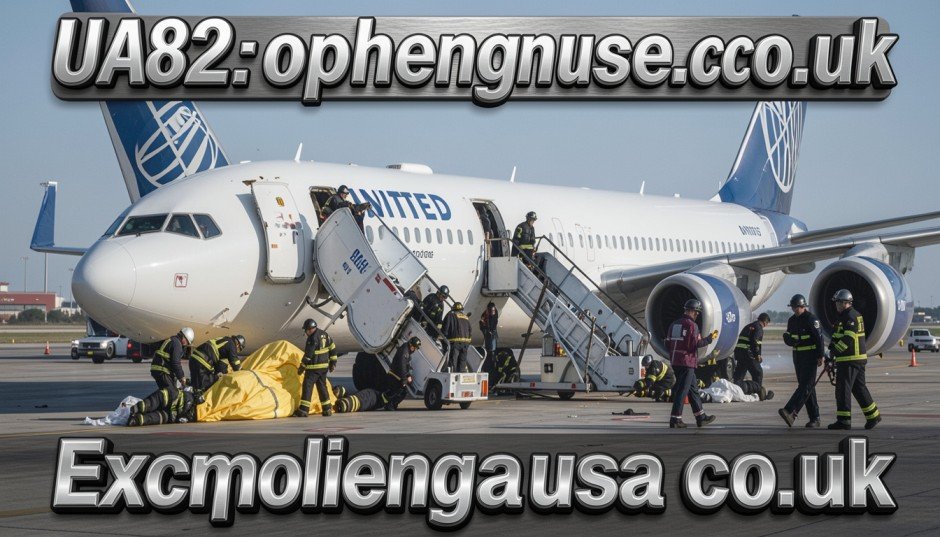
Step 5: Descend and land. The crew descended from FL330, passed through FL180, then through 6,000 feet, and lined up for an approach to runway 22L at Newark Liberty International Airport. The aircraft landed safely on runway 22L. Emergency vehicles were on standby as a precaution.
Step 6: Clear the aircraft. All passengers disembarked safely. No injuries were reported. The aircraft was immediately taken out of service for a thorough inspection by United Airlines maintenance teams.
The entire emergency from declaration to landing took approximately two hours from the original departure time.
What Passengers Experienced on UA82
If you were one of the passengers on that flight, the experience had to be unsettling. Most passengers likely noticed the aircraft banking steeply and reversing course without an immediate explanation.
Reports from the incident describe a cabin that remained calm largely because the crew communicated clearly and professionally. The crew informed passengers that the aircraft was returning to Newark due to a technical issue and that everyone was safe.
Once on the ground, United Airlines worked with Newark airport staff to provide passengers with:
- Meal vouchers to cover the unexpected delay
- Hotel accommodations for those who needed overnight stays
- Rebooking on the next available flights to New Delhi
- Priority customer support for passengers with tight connections or special needs
United Airlines confirmed that all passengers were rebooked and that their priority throughout was passenger safety. The airline offered no further public comment on the exact nature of the malfunction while investigations continued.
Why a Cooling System Failure Is So Serious on a 787 Dreamliner
The Boeing 787-9 Dreamliner is a marvel of modern engineering. It uses a significantly higher proportion of composite materials than older aircraft, which makes it lighter and more fuel efficient. But the 787 also runs on a more complex electrical architecture than previous Boeing models.
Traditional aircraft use bleed air from engines to power many systems. The 787 replaces much of that with electrically powered systems. This means the aircraft relies heavily on its avionics and electrical management systems, and those systems generate heat that must be actively managed.
The avionics cooling system on the 787 keeps those electronics operating within safe temperature ranges. If cooling fails on a short domestic hop, a crew can often manage the situation and land quickly. But on a flight heading over the Atlantic and Indian Ocean, the story is different. The aircraft would be hours away from any diversion airport, flying through airspace where emergency services are limited.
The crew on UA82 made the textbook decision. Turn around while still close to a major airport with full emergency capabilities.
What Happens After an Aviation Emergency Like This?
Once an aircraft lands following a declared emergency, the process is thorough and systematic. Here is what typically happens after an event like the United Airlines flight UA82 emergency:
Immediate inspection. Maintenance engineers examine every component related to the reported fault. For UA82, this meant a full inspection of the avionics cooling system and all associated electronic units.
Aircraft grounding. The aircraft does not return to service until engineers sign off that the fault has been identified, corrected, and tested. N23983 was taken out of service immediately following the emergency landing.
Investigation and reporting. The National Transportation Safety Board (NTSB) and the Federal Aviation Administration (FAA) may open a formal investigation depending on the severity of the incident. Declared emergencies with a Squawk 7700 code are logged and reviewed as a matter of course.
Manufacturer notification. Boeing would receive detailed information about the failure from United Airlines. If a systemic issue exists with the cooling system design or components, the FAA may issue an Airworthiness Directive requiring action across the fleet.
Passenger follow-up. Airlines are required to document the event and provide relevant information to passengers upon request, particularly if travel insurance claims or compensation requests follow.
Is the Boeing 787-9 Safe?
The Boeing 787-9 Dreamliner remains one of the safest and most reliable commercial aircraft in service. As of 2025, it has a strong overall safety record with no fatal crashes attributable to structural or systems failures in commercial service.
Every aircraft type experiences technical faults at some point. The 787 has had documented issues over the years, including earlier problems with lithium-ion batteries in 2013 that led to a temporary fleet grounding. Boeing and the FAA addressed those issues through design changes and enhanced monitoring.
The avionics cooling issue on UA82 does not indicate a widespread fleet problem. It points to a fault on a specific aircraft that was caught early, handled correctly, and resolved through the emergency procedures that pilots train for extensively.
What the incident does illustrate is that aviation safety works exactly as designed. The crew detected the problem. They declared the emergency. They landed safely. The system performed.
Tips for Passengers Flying on Long-Haul International Routes
If you fly frequently on long international routes like Newark to New Delhi, these practical tips help you stay prepared and calm during any unexpected situation:
Know what Squawk 7700 means. If you hear aviation terminology in the cabin or on ground scanners, knowing that 7700 signals a general emergency helps you stay informed rather than alarmed.
Trust the crew. Flight crews train for emergency scenarios regularly. When they declare an emergency, it is because they are following protocols designed to maximize safety, not because the aircraft is about to crash.
Keep your documents accessible. In any diversion or emergency landing, having your passport and travel documents within reach speeds up the rebooking and accommodation process.
Know your passenger rights. If your flight returns to the departure airport due to a technical fault, you are generally entitled to rebooking at no additional cost, and in many cases, meal vouchers and accommodation.
Purchase travel insurance. Emergency diversions and overnight delays can disrupt connecting flights, hotel bookings, and business appointments. Travel insurance covers many of these costs.
Stay calm and follow crew instructions. The biggest risk during any aviation emergency is panic. The crew is trained, the aircraft is built with multiple redundancies, and the aviation system is designed to protect you.
What This Means for the Newark to New Delhi Route
The Newark to New Delhi route is one of United Airlines‘ most important long-haul international services. It connects one of the largest South Asian diaspora communities in the United States with India’s capital and major transit hub.
The route has grown significantly in passenger demand over the past decade as business travel, family visits, and tourism between the US and India have expanded. United Airlines competes on this route with Air India, which operates nonstop flights between the same city pairs.
The UA82 incident does not suggest the route itself is unsafe. Long-haul routes crossing oceans require the highest standards of aircraft reliability because diversion options are limited. Airlines and regulators understand this, which is why preflight checks, mid-flight monitoring, and crew training for ocean crossings are so rigorous.
The fact that the crew caught the fault, declared the emergency, and returned to Newark safely is a credit to those standards.
Conclusion
The United Airlines flight UA82 emergency on July 7, 2025, was alarming for everyone on board. A full cabin of passengers heading to New Delhi suddenly found themselves turning around over the Gulf of Maine, descending through 33,000 feet, and landing back at Newark with emergency vehicles on standby.
But the outcome told a different story. Every passenger landed safely. The crew handled the avionics cooling failure exactly as trained. United Airlines provided rebooking, accommodations, and support. The aircraft came out of service for a thorough inspection.
Aviation emergencies feel dramatic because they are rare. When one happens, it makes news precisely because the system worked. The pilots identified the problem early. They made the right call. And everyone walked off that plane without a scratch.
If you are planning to fly Newark to New Delhi on United Airlines or any other carrier, this incident is not a reason to worry. It is actually a reason to feel more confident. The training, the protocols, and the aircraft design all performed exactly as they should.
Have you ever experienced a flight diversion or emergency? Share your story in the comments. And if someone you know is flying the Newark to Delhi route soon, share this article with them so they know what to expect and how the system keeps them safe.
Frequently Asked Questions
What caused the United Airlines flight UA82 emergency? The emergency was caused by a failure in the aircraft’s avionics cooling system. This system keeps the electronic components and navigation systems from overheating. The fault was detected at 33,000 feet, roughly one hour after departure from Newark.
Did anyone get hurt on UA82? No. All passengers and crew members on United Airlines flight UA82 landed safely at Newark Liberty International Airport. No injuries were reported.
What aircraft was used on flight UA82? The flight used a Boeing 787-9 Dreamliner registered as N23983. The aircraft was approximately 4.8 years old and had been in service with United Airlines since September 2020.
What is Squawk 7700? Squawk 7700 is the emergency transponder code used in aviation. When a crew dials this into the aircraft’s transponder, it signals a general emergency to air traffic control, which then grants the aircraft immediate priority handling.
Where did UA82 turn around? The aircraft made a U-turn over the Gulf of Maine before heading back to Newark Liberty International Airport, where it landed safely on runway 22L.
How long did the UA82 emergency last? From the moment the crew declared the emergency to the final landing at Newark, the process took approximately two hours.
What did United Airlines do for passengers? United Airlines provided affected passengers with meal vouchers, hotel accommodations where needed, and rebooking on the next available flights to New Delhi.
Is the Boeing 787-9 Dreamliner safe? Yes. The Boeing 787-9 maintains a strong overall safety record. Technical faults occur on all aircraft types. What matters is how crews and airlines respond to them. In the case of UA82, the response was fast and effective.
What happens to an aircraft after an emergency landing? The aircraft is immediately taken out of service and inspected by maintenance engineers. It does not return to service until the fault is identified, corrected, and cleared by engineers and regulators.
Is the Newark to New Delhi route affected long-term? No. United Airlines continued operating the Newark to New Delhi route with other aircraft. The UA82 incident was isolated to one aircraft and one flight.
Author Bio
James Calloway is an aviation and travel writer with over a decade of experience covering airline safety, aircraft technology, and international travel. He has contributed to major travel publications and aviation news platforms, with a focus on making complex aviation topics accessible to everyday travelers. James holds a private pilot certificate and brings firsthand flying knowledge to his reporting.
Also read encyclopediausa.co.uk
Email: johanharwen314@gmail.com
Author Name: Johan Harwen