

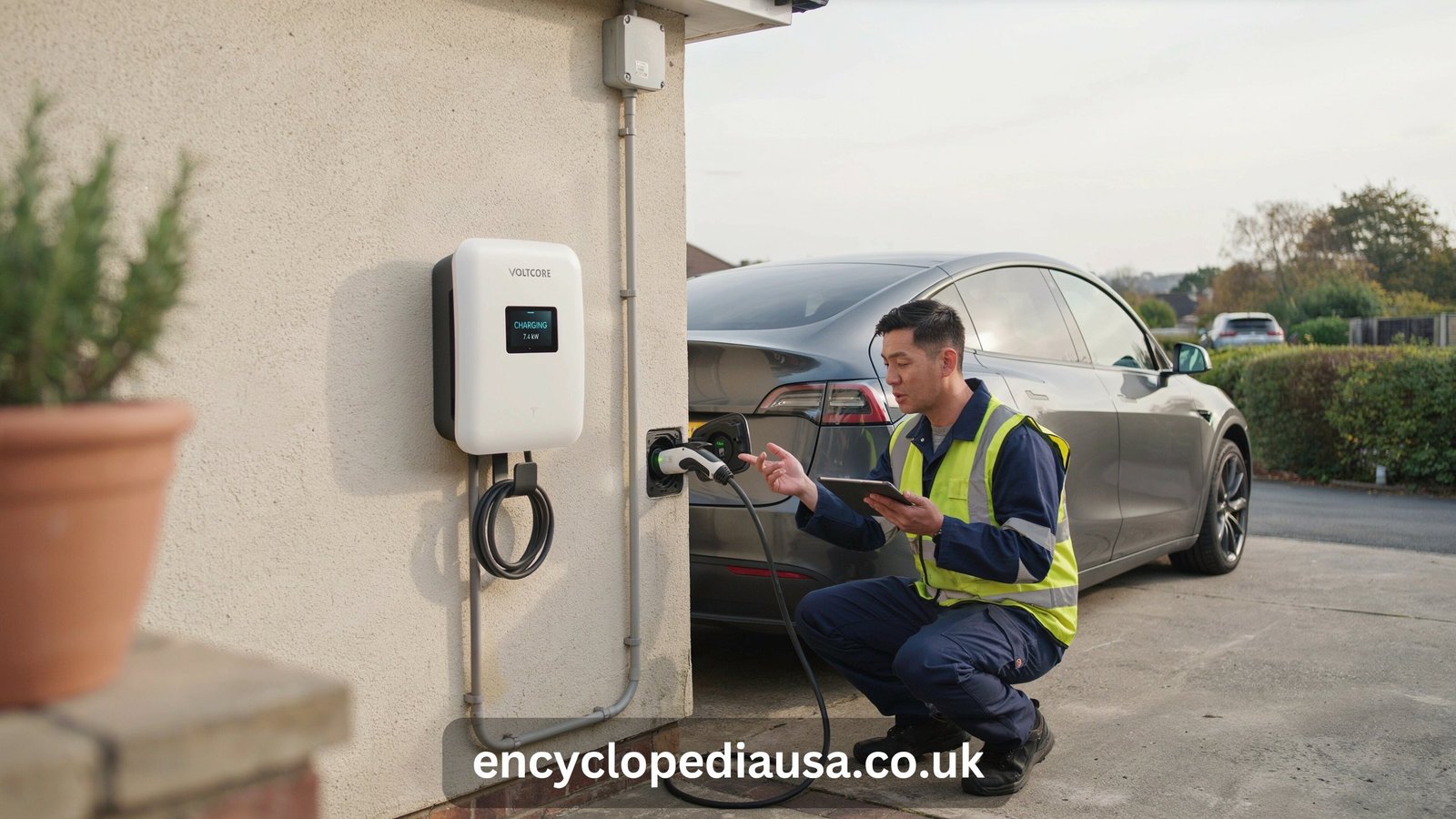
Best Electric Vehicle Charger Installation: Honest Review & Complete Guide
Introduction
You bought an electric vehicle. You love it. But now you are staring at a slow trickle charge through a basic wall outlet, and your car is still not full by morning. Sound familiar?
Electric vehicle charger installation is one of the smartest upgrades you can make as an EV owner. It changes everything about your daily routine. Instead of hunting for public stations or waiting 20+ hours on a slow plug, you wake up every morning to a fully charged car.
In this guide, you will get a complete breakdown of everything that matters: product types, key features, technical specifications, real costs, honest pros and cons, performance data, and a side-by-side comparison. Whether you are a first-time EV owner or upgrading your current setup, this guide will help you make a confident, informed decision.
Product Overview: What Is an EV Charger?
An EV charger, technically called Electric Vehicle Supply Equipment (EVSE), is a device that delivers power from your electrical system to your car. It is not just a cable. It manages the flow of electricity safely and smartly.
There are three main levels of EV charging:
Level 1 Charging This is the most basic option. You simply plug into a standard 120-volt household outlet. No installation needed. But it is painfully slow. Level 1 charging adds only 3 to 5 miles of range per hour. If you drive 40 miles daily, you need 8 to 12 hours just to break even.
Level 2 Charging This is where things get serious. Level 2 chargers use a 240-volt circuit, the same type that powers your dryer or oven. They add 25 to 44 miles of range per hour. Most EVs go from empty to full overnight. This is the sweet spot for home installation and the main focus of this guide.
Level 3 (DC Fast Charging) These are the big guns found at commercial stations. They can charge an EV to 80% in 20 to 40 minutes. But they require extremely high power levels. They are not practical or safe for residential homes.
For most homeowners, a professionally installed Level 2 charger hits the perfect balance of speed, cost, and practicality.
Key Features to Look For
When you shop for a home EV charger, these are the features that actually matter:
Amperage Output Amperage determines how fast your car charges. Most Level 2 chargers range from 16A to 50A. A 32A charger works perfectly for overnight charging. A 48A or 50A model charges faster but may require a panel upgrade. For most drivers, 32A is the practical sweet spot.
Smart Connectivity Modern chargers connect to your home Wi-Fi. You can schedule charging sessions, monitor energy use, and control everything from your smartphone. Smart chargers also let you take advantage of off-peak electricity rates, which can save you real money every month.
Cable Length Standard cables run 18 to 25 feet. Longer cables give you flexibility if your outlet is not perfectly positioned near your car. Always choose at least 20 feet to avoid frustrating reach issues.
Weatherproofing (NEMA Rating) If you install outdoors or in an open garage, check the NEMA rating. NEMA 3R and NEMA 4 ratings handle rain and moisture well. Do not skip this if your parking is even partially exposed.
Plug-In vs. Hardwired Plug-in chargers connect to a NEMA 14-50 outlet. They are portable and easier to uninstall if you move. Hardwired chargers are permanently connected to your electrical panel. They tend to be more reliable and allow higher amperage, but they require professional installation to remove.
Warranty Length Good EV chargers come with 3 to 5 year warranties. Watch out for budget options with 1-year coverage. A charger that fails in year two becomes an expensive headache.
Technical Specifications
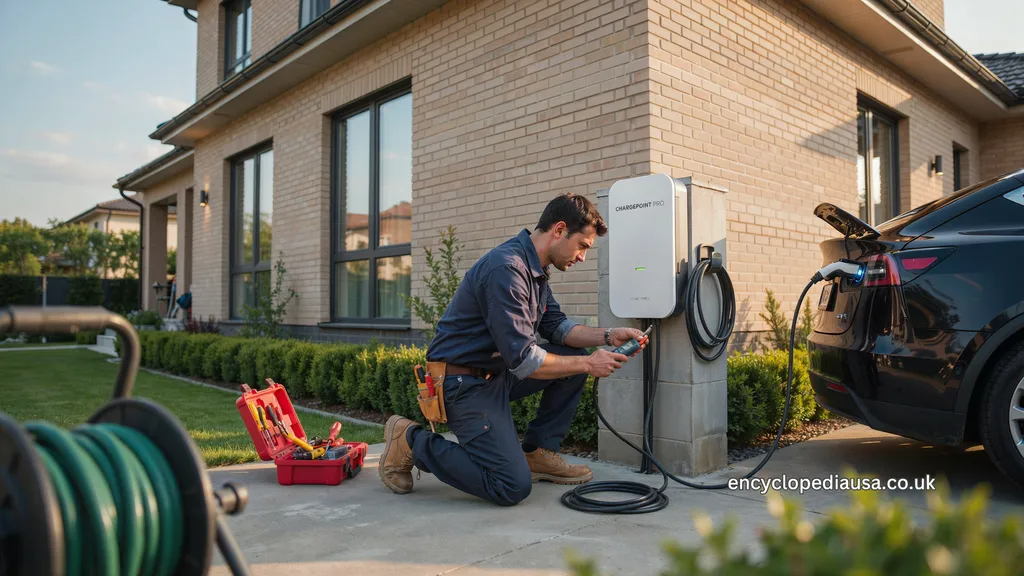
Here is a quick reference for typical Level 2 home charger specs:
| Specification | Typical Range |
|---|---|
| Voltage | 240V |
| Amperage | 16A to 50A |
| Power Output | 3.8 kW to 12 kW |
| Range Added Per Hour | 25 to 44 miles |
| Cable Length | 18 to 25 feet |
| Connector Type | J1772 (universal) or NACS (Tesla standard) |
| Enclosure Rating | NEMA 3R or NEMA 4 |
| Smart Features | Wi-Fi, app control, scheduling |
| Installation Type | Plug-in or hardwired |
| Warranty | 3 to 5 years |
The connector landscape is worth noting. Most non-Tesla EVs use the J1772 connector for Level 2 charging. Tesla vehicles use their own connector but include a J1772 adapter. Starting in 2025 and into 2026, major automakers are shifting to NACS (North American Charging Standard), so future-proofing your setup means checking compatibility carefully before you buy. Visit..
Pros and Cons of Home EV Charger Installation
Pros
Incredible Convenience You plug in at home and wake up to a full charge every single morning. No detours. No waiting in line. No stress.
Significant Cost Savings Home electricity rates are far cheaper than public fast charging. Charging at home typically costs one-third of what DC fast chargers charge you per mile. Over a year, this adds up to over $1,000 in savings for many drivers.
Higher Home Resale Value A properly installed EV charger is a selling point. As EV ownership grows, buyers increasingly look for homes that are EV-ready.
Tax Credits and Rebates The U.S. federal government currently offers a 30% tax credit on EV charger installation costs, up to $1,000. Many states and utility companies stack additional rebates on top of this. Total savings can reach $1,000 to $4,000 depending on your location and chosen equipment.
Faster Charging vs. Level 1 Level 2 charging is 5 to 8 times faster than a standard wall outlet. This single fact alone makes the installation worth every dollar.
Cons
Upfront Installation Cost Professional installation is not cheap. Depending on your home’s electrical setup, total costs can range from $1,200 to $3,000 on average. Complex jobs that require panel upgrades can push beyond $5,000.
Permit Requirements Most jurisdictions require permits for EV charger installation. Skipping permits can invalidate your homeowner’s insurance and cause issues when you sell your home.
Potential Panel Upgrades Older homes with limited electrical capacity may need a main panel upgrade before installation. This alone can add $1,500 to $3,000 to your total project cost.
Not Truly DIY-Friendly While plug-in chargers seem simple, running a new 240V circuit safely requires a licensed electrician in most cases. Incorrect wiring is a serious fire hazard.
Performance: How Well Does It Actually Work?
Here is the honest performance picture:
A standard 32A Level 2 charger delivers roughly 7.2 kW of power. In practical terms, most EVs with 60 to 80 kWh batteries go from 20% to 100% in 8 to 11 hours. That is perfect for overnight charging.
If you drive a high-mileage route daily, a 48A charger pushing 11.5 kW shaves that down to 5 to 7 hours. That matters if you sometimes need a midday top-up.
Smart chargers perform even better over time because you can schedule charging during off-peak hours. In states with time-of-use electricity pricing, this one feature alone can cut your monthly charging bill by 20 to 40%.
The real-world performance gap between a basic plug-in charger and a smart hardwired unit comes down to reliability and data. Smart chargers log every session. You can see your energy use, set charging limits to protect battery health, and get alerts if something goes wrong.
I personally recommend choosing a smart charger from day one. The small extra cost pays for itself in convenience and savings within the first year.
Top EV Charger Comparison
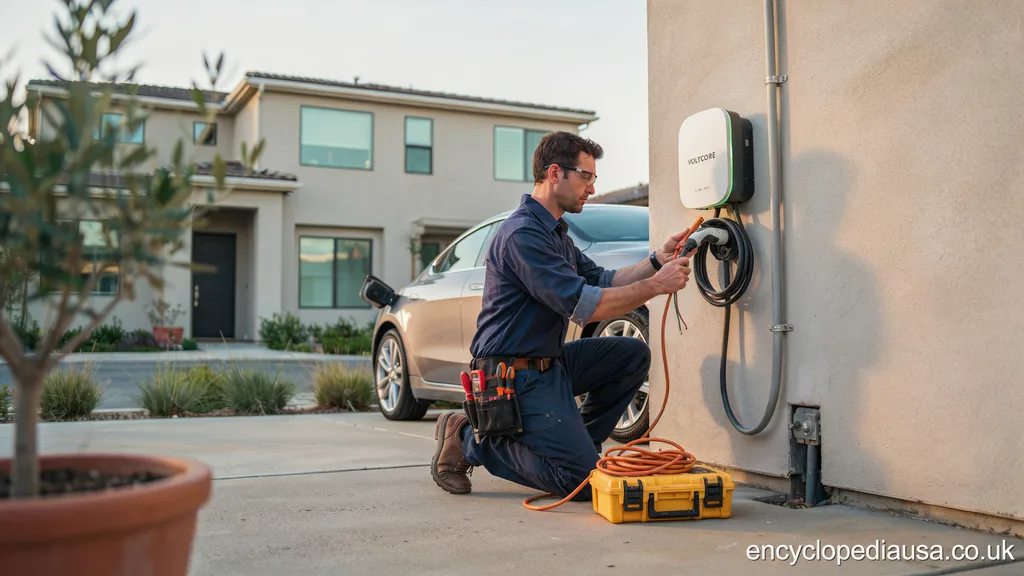
Here is a clear side-by-side breakdown of the most popular home EV charger models in 2025 and 2026:
Emporia Level 2 EV Charger
Best overall value for most homeowners. Delivers 48A and 11.5 kW. Comes with a 24-foot cable, smart app control, energy monitoring, and a NEMA 4 outdoor rating. Price: around $199 to $249 for the unit. Widely praised for reliability and feature depth at its price point.
Tesla Wall Connector (Gen 3)
The go-to choice for Tesla owners. Delivers up to 48A. Hardwired only. Sleek design, Wi-Fi enabled, and weather-resistant. Works with adapters for non-Tesla vehicles. Price: around $350 to $400. Excellent build quality and tight Tesla app integration.
ChargePoint Home Flex
Flexible amperage from 16A to 50A. One of the most versatile chargers on the market. Smart scheduling, app control, and a 23-foot cable. Plug-in or hardwired installation options. Price: around $699 before rebates. ChargePoint has one of the widest utility rebate networks.
JuiceBox 48
A solid performer at 48A with smart features, Alexa and Google Home compatibility, and a clean interface. Weather-rated for outdoor use. Price: around $599 to $649. Works great for tech-savvy users who want deep smart home integration.
Grizzl-E Level 2 Charger
The budget-friendly pick. No fancy app. No Wi-Fi. Just reliable 32A or 40A charging in a rugged, weatherproof case. If you want something that simply works without complexity, this is it. Price: around $199 to $249.
Pricing Breakdown: What You Will Actually Pay
Here is a realistic cost breakdown so you can budget properly:
The Charger Unit Itself Budget-friendly models: $150 to $300 Mid-range smart chargers: $400 to $700 Premium brands: $700 to $900
Professional Installation Labor Simple installs (panel nearby, short wire run): $500 to $800 Typical residential install (50 to 100-foot run): $800 to $1,500 Complex jobs (panel upgrades, long conduit runs): $2,000 to $5,000+
Permits and Inspections Permit fees vary widely by state and city: $45 to $720, with a national average around $297.
Total Average Cost in 2025-2026 Most U.S. homeowners pay between $1,200 and $3,000 for a complete, code-compliant Level 2 home charger installation. The national average sits around $2,100 all in.
Tax Credits and Rebates That Reduce Your Cost Federal tax credit (IRS Form 8911): 30% of total cost, up to $1,000 State rebates: Vary widely; check your state energy office Utility rebates: Many programs offer $200 to $500 back Between these incentives, many homeowners recover $1,000 to $4,000 of their upfront investment.
The Smart Budget Move Get at least three quotes from licensed electricians. Compare them carefully. Ask each one to run a second empty conduit while they are already there. That way, if you add a second EV later, you save massively on future labor costs. More…
Final Review: Is EV Charger Installation Worth It?
The short answer is yes, and it is not even close.
If you own an electric vehicle and still rely on a Level 1 outlet or public charging stations for daily needs, you are making your life harder than it needs to be. A properly installed Level 2 home charger transforms the EV ownership experience. You stop thinking about charging. It just happens while you sleep.
The upfront cost is real. Between $1,200 and $3,000 is meaningful money. But when you factor in the federal tax credit, state rebates, and the $1,000+ per year you save on public charging fees, the math works in your favor. Most homeowners hit payback within one to two years.
Here is what I would tell a friend: do not cheap out on the installation. Hire a licensed electrician. Pull the permit. Choose a reputable smart charger with a solid warranty. And do not skip the second conduit if you think a second EV is even a remote possibility in the next five years.
EV charger installation is not just a purchase. It is an upgrade to your lifestyle, your home, and your long-term finances. The best time to install was when you bought your EV. The second best time is right now
Frequently Asked Questions
1. How long does EV charger installation take? Most installations take 2 to 4 hours. If your electrical panel needs an upgrade or the wire run is long, it can take a full day. Permit approval may add 1 to 2 extra days depending on your city.
2. Do I need a permit to install an EV charger at home? In most U.S. jurisdictions, yes. Installing without a permit can void your homeowner’s insurance, create issues when selling your home, and leave you exposed to safety risks. Always pull the permit.
3. Can I install an EV charger myself? DIY is technically possible if you already have a compatible NEMA 14-50 outlet in place and local codes allow it. However, running a new 240V circuit safely requires a licensed electrician. Incorrect wiring is a fire hazard, and most municipalities require professional work for new circuit installations.
4. What amperage Level 2 charger do I actually need? A 32A charger handles overnight charging perfectly for most drivers. Going to 48A or 50A gives you faster charging but may trigger a panel upgrade requirement. Unless you drive extreme daily mileage, 32A is the practical sweet spot.
5. Will a home EV charger work with any electric vehicle? Almost universally, yes. Nearly all non-Tesla EVs in North America use the J1772 connector for Level 2 charging. Tesla vehicles include a J1772 adapter. As NACS becomes the new North American standard in 2025 and 2026, compatibility is becoming even more universal.
6. How much does an EV charger add to my electricity bill? It depends on your driving habits and local electricity rates. The average EV driver spends roughly $50 to $80 per month on home charging, compared to $150 to $250 per month on gasoline for a comparable vehicle. Scheduling charging during off-peak hours reduces costs further.
7. Can I install an EV charger outside? Yes. Look for chargers with a NEMA 3R or NEMA 4 enclosure rating for outdoor installations. Many popular models, including the Tesla Wall Connector and Emporia Level 2, are weather-rated for outdoor use.
8. What is the difference between a plug-in and a hardwired EV charger? A plug-in charger connects to a NEMA 14-50 outlet. It is portable and easier to take if you move. A hardwired charger connects directly to your electrical panel with no outlet in between. Hardwired units support higher amperage and are more permanently integrated, but require professional work to remove.
9. Are there tax credits available for EV charger installation? Yes. The U.S. federal government currently offers a 30% tax credit on qualified EV charger installation costs, up to $1,000 for residential installations. File IRS Form 8911 when you do your taxes. Many state and utility programs offer additional rebates on top of this.
10. What happens if my electrical panel cannot handle the new charger? Your electrician will let you know after a load calculation. If your panel is maxed out, you will need an upgrade. Panel upgrades typically cost $1,500 to $3,000 and are worth it for both the charger and your overall home electrical safety.
Ready to take the next step? Get at least three quotes from licensed electricians in your area, compare charger models based on your driving habits, and check your state’s utility website for available rebates. The investment pays for itself faster than most people expect. Have questions about your specific setup? Drop them in the comments below — we love helping EV owners make the right call.
About the Author
James Carter is an energy technology writer and EV enthusiast with over eight years of experience covering electric vehicles, home energy systems, and sustainable living. He has tested and reviewed more than 30 EV chargers and consulted with licensed electricians across North America to bring readers accurate, practical guidance. James believes that good information removes the guesswork from major purchases, and he writes every guide the way he would explain it to a close friend.