
FIFA World Cup 2026 Daily Match Guide: Thrilling Wins and Shocking Upsets
Introduction
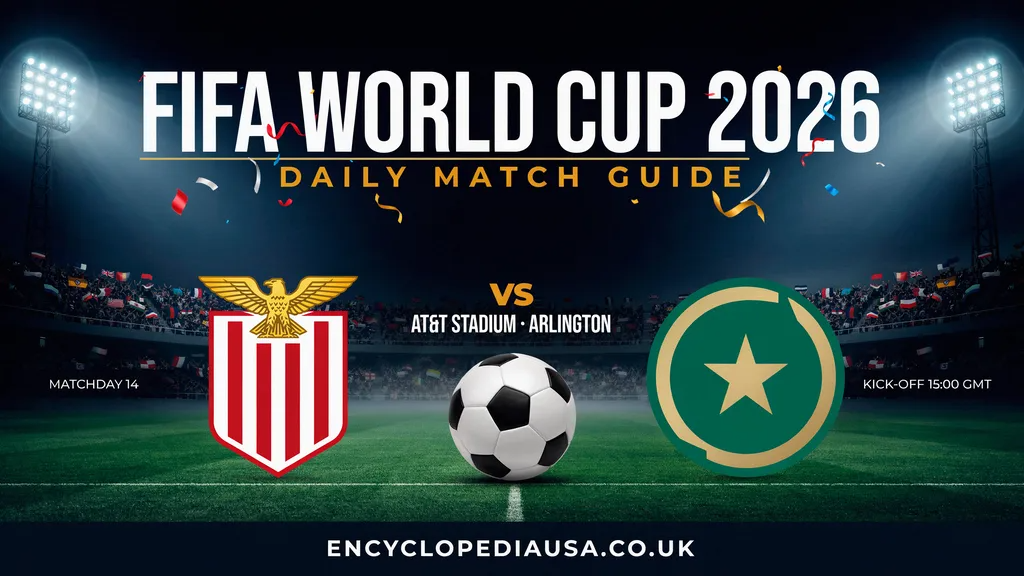
There is nothing quite like waking up on a World Cup morning and knowing that football history might happen before lunch. The FIFA World Cup 2026 daily match guide is exactly what you need to stay on top of every fixture, every lineup, every stat, and every story worth following across this historic tournament.
This is the biggest World Cup in history. Forty-eight teams. One hundred and four matches. Three host countries spanning the United States, Mexico, and Canada. The tournament runs from June 11 to July 19, 2026, and it has already delivered drama, controversy, and world-class football in equal measure. If you have missed anything or want to prepare for what comes next, you are in the right place.
In this guide, you will find everything that matters. Match overviews, team lineups, head-to-head history, key players, recent form, predictions, statistics, and a clear final verdict on who looks set to lift the trophy in New Jersey on July 19.
Tournament Overview: A World Cup Like No Other
The 2026 FIFA World Cup broke the mould from day one. This is the first time in history that three nations have jointly hosted the men’s World Cup. The United States hosts 78 of the 104 matches. Canada and Mexico each host 13. The first match of the tournament took place at the iconic Estadio Azteca in Mexico City on June 11, with hosts Mexico defeating South Africa 2-0 in a lively opener.
The format changed significantly from previous editions. The tournament expanded from 32 to 48 teams, split into 12 groups of four. The top two teams from each group, plus the eight best third-place finishers, progress to a new Round of 32 before the traditional knockout rounds begin. Total matches increased from 64 to 104, making this the most demanding World Cup ever staged.
One new rule you might notice on matchday: FIFA introduced mandatory three-minute hydration breaks in every half for all matches. New anti-time-wasting rules also apply, with referees able to initiate a five-second countdown for slow throw-ins and goal kicks. These changes reflect how seriously FIFA is taking player welfare and match quality this time around.
The Groups at a Glance
Here is how the 48 teams lined up across the 12 groups:
- Group A: Mexico, South Africa, South Korea, Czechia
- Group B: Canada, Bosnia and Herzegovina, Qatar, Switzerland
- Group C: Brazil, Morocco, Haiti, Scotland
- Group D: United States, Paraguay, Australia, Türkiye
- Group E: Germany, Curaçao, Ivory Coast, Ecuador
- Group F: Netherlands, Japan, Sweden, Tunisia
- Group G: Belgium, Egypt, Iran, New Zealand
- Group H: Spain, Cape Verde, Saudi Arabia, Uruguay
- Group I: France, Senegal, Iraq, Norway
- Group J: Argentina, Algeria, Austria, Jordan
- Group K: Portugal, Congo DR, Uzbekistan, Colombia
- Group L: England, Croatia, Ghana, Panama
The group stage wrapped up on June 27. The Round of 32 began on June 28, and the knockout rounds are now fully underway heading toward the July 19 final at MetLife Stadium in East Rutherford, New Jersey.
Match Overview: Key Matchday Highlights So Far
Mexico 2-0 South Africa (Group A Opener)
The tournament started with a confident performance from the hosts. Mexico controlled possession and converted their chances cleanly. The atmosphere at Estadio Azteca was extraordinary, as 87,000 fans created the kind of wall of sound that only the Azteca can produce. South Africa competed gamely but rarely threatened the Mexican goal.
Argentina’s Historic Moment
On June 16, Lionel Messi became the oldest player in history to score a World Cup hat trick. Argentina have carried the weight of defending champions with authority. Messi, now 38, continues to defy every law of aging and athleticism. His partnership with Julian Alvarez in attack looks as dangerous as it did in Qatar four years ago.
Germany’s Rocky Road
Germany demolished Curaçao 7-1 in their opener, but the result flattered a side that looked unconvincing defensively throughout the group stage. Julian Nagelsmann’s men lost their final group game to Ecuador due to a Manuel Neuer error late on. They still topped Group E but carry concerns into the knockout rounds.
The Surprise of the Group Stage: Cape Verde
Cape Verde arrived in North America as genuine underdogs in Group H alongside Spain, Uruguay, and Saudi Arabia. They departed as one of the stories of the tournament. The Blue Sharks took points off Spain and qualified for the Round of 32 in second place. Their football was adventurous, their fans were electric, and they have captured the imagination of a global audience.
Team Lineups: What You Need to Know Before Each Match
Every match at this World Cup features at least one player worth watching closely. Here is how the major contenders are setting up:
France (Group I Winners)
Didier Deschamps continues to build around Kylian Mbappe as the central attacking threat. The squad includes World Cup winners Ousmane Dembele, N’Golo Kante, and Lucas Hernandez from the 2018 Russia triumph. France have been fluid, powerful, and clinical in front of goal. Dembele delivered a hat trick against Norway in the group stage, signaling he is in the form of his life.
Likely Formation: 4-3-3
Key to Watch: How France manage the transition between their quick forwards and disciplined defensive shape.
Argentina (Group J Winners)
Lionel Scaloni retained 17 of the players who won the 2022 World Cup in Qatar. The spine of the team is battle-tested and deeply experienced. Messi leads from the front. Julian Alvarez covers every blade of grass. The defensive block remains organized and hard to break down.
Likely Formation: 4-3-3 / 4-4-2 diamond
Key to Watch: Whether Messi can maintain this intensity deep into a tough knockout bracket.
Spain (Group H Runners-Up)
Spain stumbled early, drawing 0-0 with Cape Verde in their opener before rediscovering their rhythm. Lamine Yamal returned from a hamstring issue to spark the side. Rodri and Pedri form one of the most technically accomplished midfield partnerships at the tournament. Spain look capable of going all the way when they perform at their ceiling.
Likely Formation: 4-3-3
Key to Watch: Lamine Yamal’s fitness levels match by match.
Brazil (Group C Winners)
Carlo Ancelotti’s Brazil drew with Morocco in their opening match, which concerned many fans. But Vinicius Jr. has grown into the tournament, and Raphinha offers tremendous flexibility in the final third. Neymar, returning at 34 after years of injury struggles, adds creativity and experience.
Likely Formation: 4-2-3-1
Key to Watch: Whether Vinicius and Neymar can co-exist effectively in tight knockout matches.
England (Group L Winners)
England topped their group but produced some unconvincing performances along the way. Thomas Tuchel’s side rely heavily on Jude Bellingham, who has delivered consistently. The concern is the players around him. England need others to step up if they want to challenge France or Argentina in the latter rounds.
Likely Formation: 4-2-3-1
Key to Watch: Bellingham’s ability to drag England through moments of adversity alone.
Head-to-Head Records: History as Context
Head-to-head records do not decide matches, but they shape the psychological backdrop before kick-off. Here are some of the most significant rivalries in play this tournament:
France vs Argentina: These two giants have met twice in recent World Cups. Argentina beat France on penalties in the 2021 Copa America. France beat Argentina 4-3 in the 2018 Round of 16 in one of the greatest World Cup matches ever played. Argentina then reversed the outcome in the 2022 final. Every meeting between these sides has been special.
Germany vs Brazil: The nations met in the 2014 semifinal on Brazilian soil, where Germany won 7-1 in arguably the most shocking result in World Cup history. Brazil carry that scar into every encounter with the Germans.
Spain vs England: These two nations have met competitively in several major tournaments. Spain’s technical superiority has often told over England’s physicality. Their potential quarterfinal meeting is one of the most anticipated matchups of the knockout round.
Brazil vs Argentina: In international football, no rivalry runs deeper. Every possible World Cup meeting between these two South American giants generates extraordinary tension and global attention.
Key Players to Follow Every Matchday
These are the individuals shaping the FIFA World Cup 2026 daily match guide each day:
Kylian Mbappe (France)
With 12 World Cup goals entering the tournament, Mbappe sits second only to Messi on the all-time list for active players. His pace, finishing, and big-game mentality make him the most dangerous attacker at this World Cup.
Lionel Messi (Argentina)
At 38, Messi leads all active players with 13 World Cup goals. He broke the record for the oldest World Cup hat trick on June 16. Every time he touches the ball, something special seems possible.
Vinicius Jr. (Brazil)
FIFA’s best player in 2024, Vinicius brings dazzling dribbling and electric pace to Brazil’s attack. He is capable of single-handedly destroying any defensive system in the world on his best days.
Lamine Yamal (Spain)
Still a teenager, Yamal is already being discussed as one of the most gifted wingers on the planet. His close control, creativity, and composure in big moments are exceptional for someone his age.
Jude Bellingham (England)
England’s most important player by a significant distance. Bellingham combines goals, assists, pressing, and leadership in a way that makes him irreplaceable to Tuchel’s system.
Erling Haaland (Norway)
Norway are genuine knockout stage contenders, and Haaland is the reason. His movement, aerial ability, and clinical finishing mean no defender in this tournament can afford to switch off against him.
Lamine Yamal vs Mbappe
Perhaps the most fascinating individual sub-story of this World Cup is the generational handover between Mbappe and Yamal. Both play similar positions. Both represent their nations’ futures and present. A France vs Spain matchup would give the world that duel directly.
Recent Form: Who Is Hot and Who Is Struggling
Excellent Form:
- France have looked like the most complete team at this World Cup. Mbappe is scoring. Dembele is creating. The defensive shape is solid.
- Argentina continue to win when it matters. Messi finds another gear in knockout football every single time.
- Cape Verde have been the feel-good story of the group stage. They play without fear and have earned every result.
Inconsistent but Capable:
- Spain are improving match by match. Once Yamal is fully fit, they look like genuine title contenders.
- England have the talent but need a full-team performance, not just Bellingham carrying the load.
- Germany are powerful in attack but defensively uncertain. Neuer’s error against Ecuador worried the coaching staff.
Ones to Watch in the Knockouts:
- Brazil can still reach their ceiling. Ancelotti is a master of knockout football. Do not write them off.
- Portugal, led by 41-year-old Cristiano Ronaldo on his record sixth World Cup, still carry real quality through Bernardo Silva and Joao Neves.
See More….
Match Prediction: Who Wins the 2026 World Cup?
Predicting a World Cup winner at this stage requires honesty about what we have seen and what each team still has to prove. Here is my honest assessment:
France are favourites. They have the most complete squad, the most dangerous forward line, and the tactical flexibility to adapt to any opponent. If Mbappe stays fit, they are genuinely very difficult to beat over 90 minutes.
Argentina are the defending champions and should never be underestimated. But their route through the bracket could be brutal, and Messi cannot do it alone forever. If the players around him step up, they absolutely have the tools to defend the title.
Spain could upset anyone on their best day. Yamal, Pedri, and Rodri form the kind of creative triangle that wins tournaments. Spain just need consistency.
Brazil remain a wildcard. Ancelotti has won more Champions Leagues than almost any coach alive. He knows how to win knockout football. If Vinicius Jr. hits peak form, Brazil become dangerous.
My prediction: France to win the 2026 World Cup, with Argentina as the most likely finalist to push them all the way.
Statistics: The Numbers Defining This World Cup
Here are the standout statistics shaping the tournament so far:
- 48 teams are participating for the first time in World Cup history
- 104 total matches will be played across the tournament
- 200 players at this World Cup are based in England at club level, the most of any league
- Lionel Messi leads active players with 13 career World Cup goals
- Kylian Mbappe is second with 12 World Cup goals
- Manchester City have 19 players across various national squads, the most of any club
- The United States hosts 78 of the 104 matches
- The youngest player in the tournament is Gilberto Mora of Mexico, born October 14, 2008
- Cristiano Ronaldo attends a record sixth World Cup at age 41
- Germany’s 7-1 win over Curaçao was the biggest margin of victory in the group stage
Final Verdict: What This World Cup Tells Us
The FIFA World Cup 2026 daily match guide tells one overarching story: this tournament rewards the teams that combine individual brilliance with collective discipline. France have both. Argentina have both. Spain are getting there. Brazil are finding their rhythm.
The teams that have disappointed are the ones relying too heavily on one or two individuals. Germany’s defensive fragility has been exposed. England’s dependence on Bellingham is both their greatest strength and their greatest vulnerability.
The expansion to 48 teams has produced both joy and concern. The joy comes from stories like Cape Verde. The concern comes from some lopsided group stage results that raised questions about competitive balance. On balance, the format has created more football, more drama, and more memorable moments.
The final on July 19 at MetLife Stadium promises to be one of the great footballing occasions. Whoever lifts the trophy in New Jersey will have earned it across eight gruelling matches over five weeks.
If I had to give you one piece of advice heading into the knockout rounds, it is this: watch France closely. They have the look of champions about them.
Conclusion
The FIFA World Cup 2026 daily match guide has something to offer every type of football fan. Whether you want lineups and tactics, or you just want to know who to watch and why, this tournament delivers on every level.
The group stage confirmed what many expected: France, Argentina, Brazil, Spain, and England are genuine contenders. It also delivered what nobody expected: Cape Verde, the most joyful surprise of the tournament so far.
The knockout rounds will tell us everything. History, tactics, and statistics all matter. But at a World Cup, moments matter most. And this tournament has already produced moments that will be discussed for decades.
Which team do you think wins the 2026 World Cup? Share your prediction and join the conversation. Football fans around the world are watching the same matches. Let us all enjoy it together.
Visit…
Frequently Asked Questions (FAQs)
Q1: How many teams are in the FIFA World Cup 2026? There are 48 teams competing for the first time in World Cup history. They are divided into 12 groups of four. The top two from each group plus the eight best third-place teams advance to the Round of 32.
Q2: Where is the FIFA World Cup 2026 being held? The tournament is hosted across 16 cities in three countries: the United States, Canada, and Mexico. The United States hosts 78 matches. Canada and Mexico each host 13. The final is at MetLife Stadium in East Rutherford, New Jersey.
Q3: When does the FIFA World Cup 2026 end? The final takes place on Sunday, July 19, 2026, at MetLife Stadium in New Jersey.
Q4: How many matches are there in total at World Cup 2026? There are 104 matches in total. The group stage features 72 matches and the knockout stage adds another 32.
Q5: Who is the favourite to win the FIFA World Cup 2026? France are considered the tournament favourites by most analysts based on squad depth and group stage performances. Argentina, as defending champions with Messi in exceptional form, are the closest challengers.
Q6: Who is the top scorer at World Cup 2026 so far? Lionel Messi leads active players with 13 career World Cup goals total, including a hat trick on June 16. Kylian Mbappe is close behind with 12 career World Cup goals.
Q7: What is the new match format at World Cup 2026? After the group stage, the top two from each group and the eight best third-place teams advance to a new Round of 32 before the traditional quarterfinals, semifinals, and final.
Q8: What new rules apply at World Cup 2026? FIFA introduced mandatory three-minute hydration breaks in every half. Referees can also initiate a five-second countdown for slow throw-ins and goal kicks to reduce time-wasting.
Q9: Who is the youngest player at World Cup 2026? Mexico’s Gilberto Mora, born October 14, 2008, is the youngest player at the tournament.
Q10: Has Argentina qualified for the Round of 32? Yes. Argentina won Group J and advanced to the knockout rounds with Messi continuing to perform at an extraordinary level despite being 38 years old.
Read More…
Article Details
Category: Sports / Football / FIFA World Cup 2026
Tags: FIFA World Cup 2026, World Cup 2026 daily match guide, World Cup 2026 schedule, World Cup 2026 predictions, World Cup 2026 key players, Kylian Mbappe, Lionel Messi, World Cup 2026 lineups, World Cup 2026 group stage results, World Cup 2026 knockout stage, France World Cup 2026, Argentina World Cup 2026, World Cup 2026 statistics
About the Author
Daniel Hayes is an award-winning sports journalist with 11 years of experience covering international football. He has reported live from three FIFA World Cups, two UEFA European Championships, and multiple Copa America tournaments. Daniel specializes in tactical analysis, player profiles, and match previews that blend deep statistical research with accessible, engaging writing. He believes great football writing should feel as exciting as the sport itself.